
Painted Tibetan 'Dragon' Storage Chest - 18thC
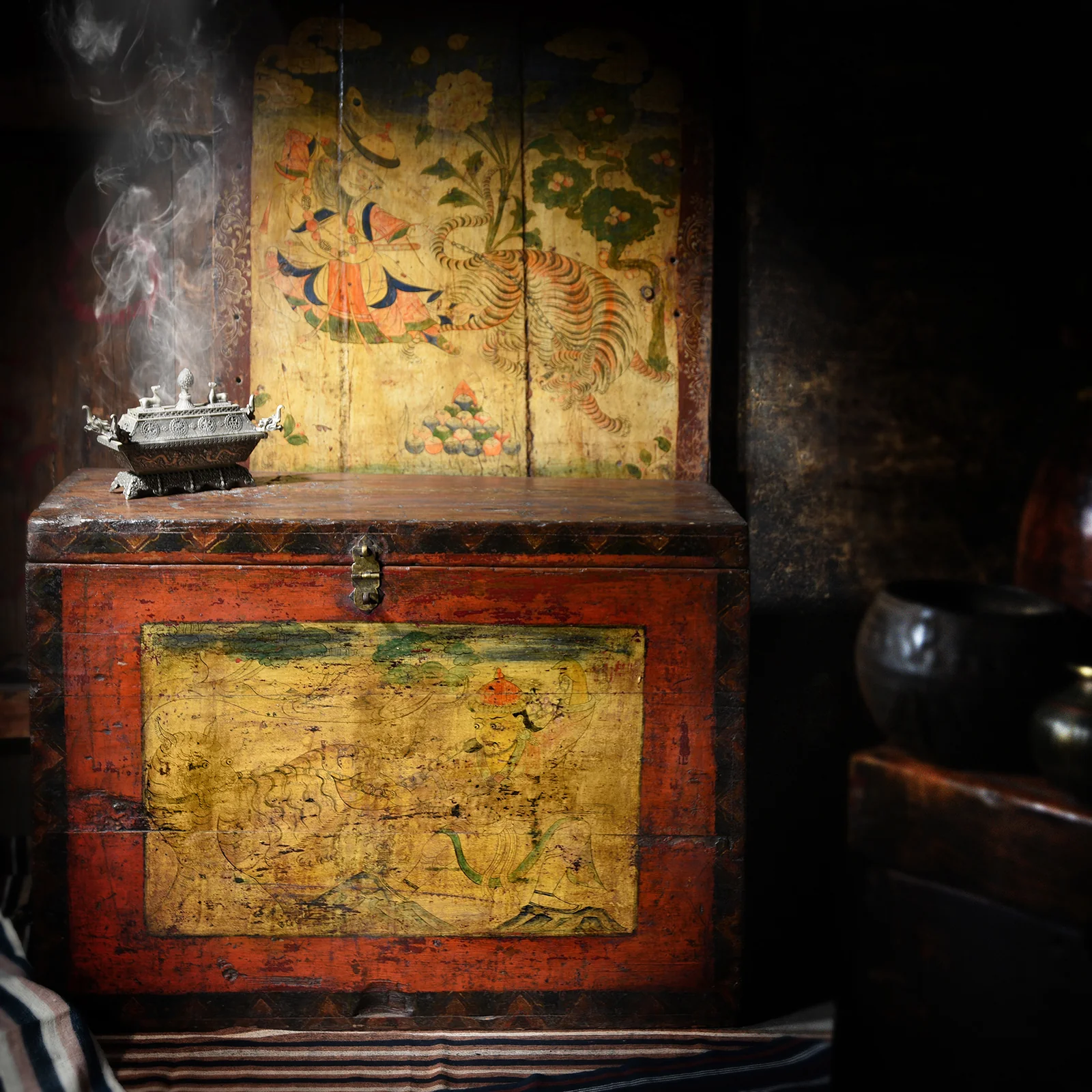
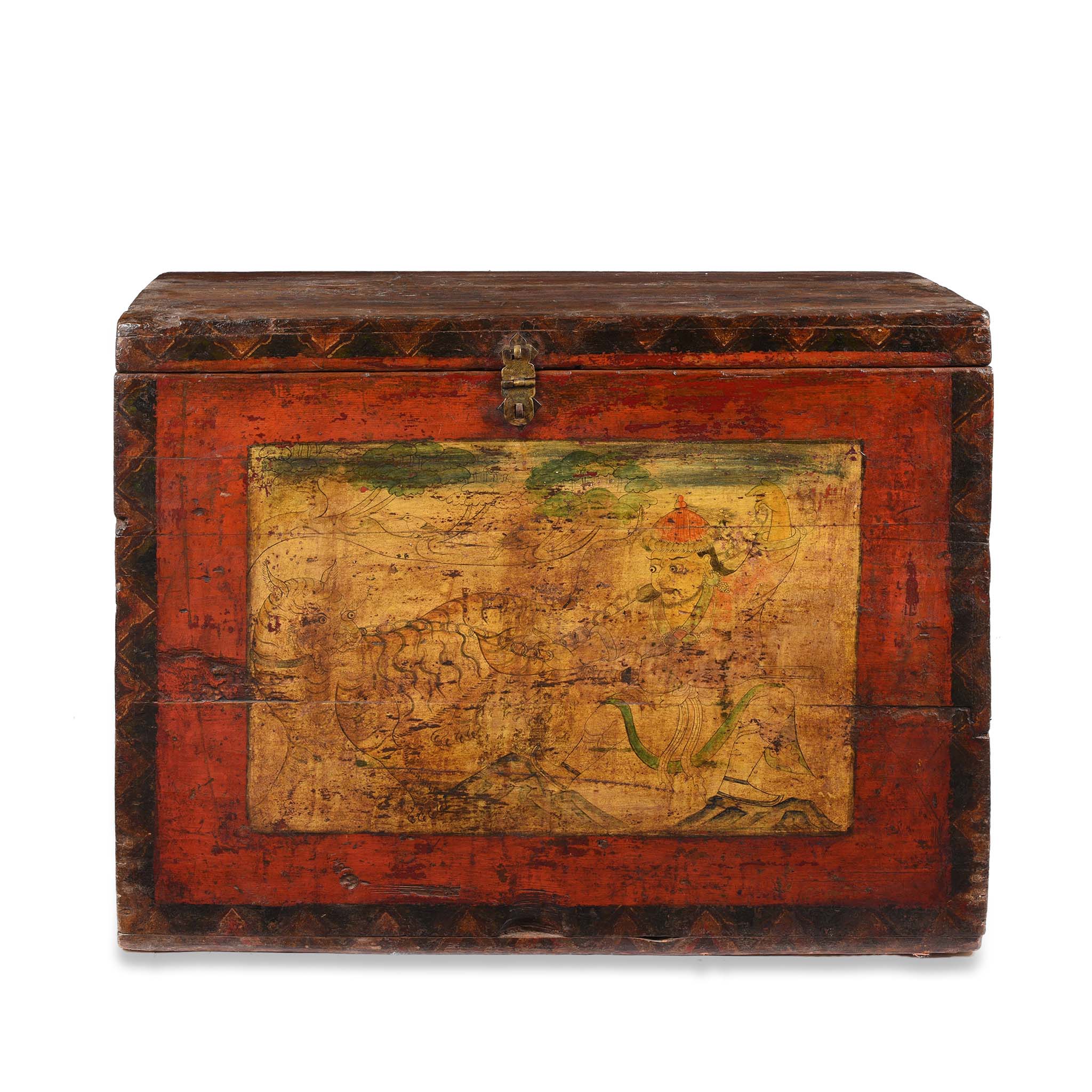
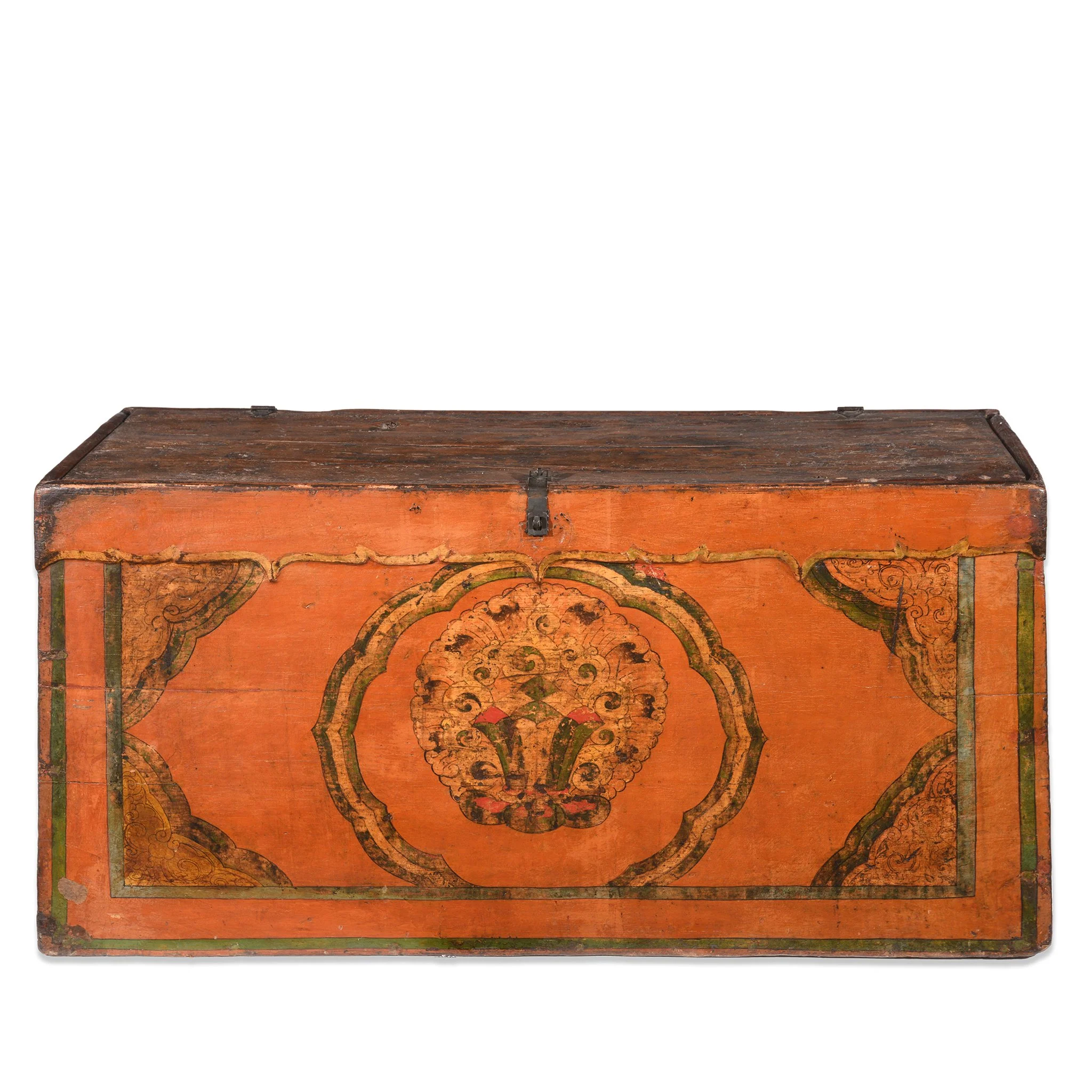
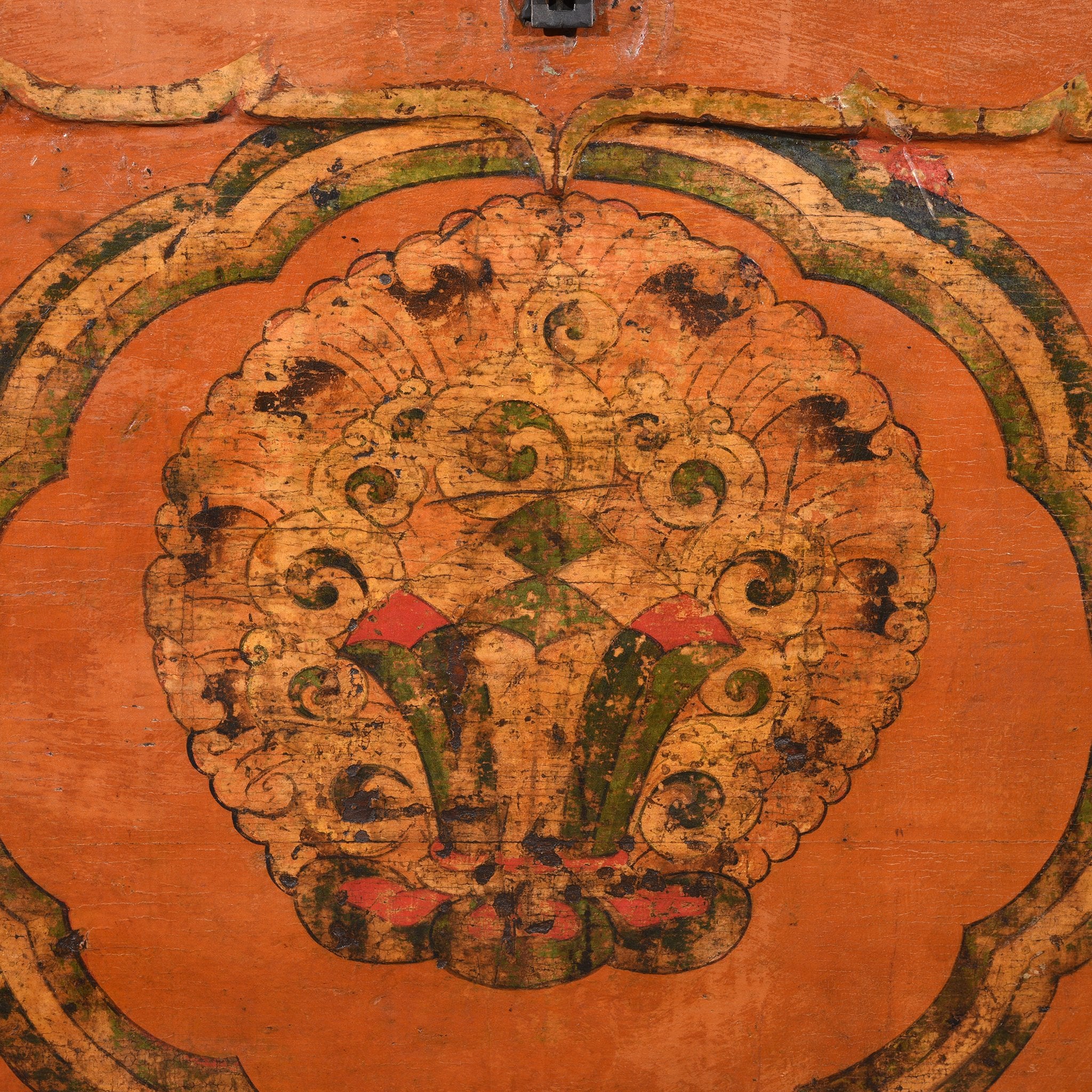
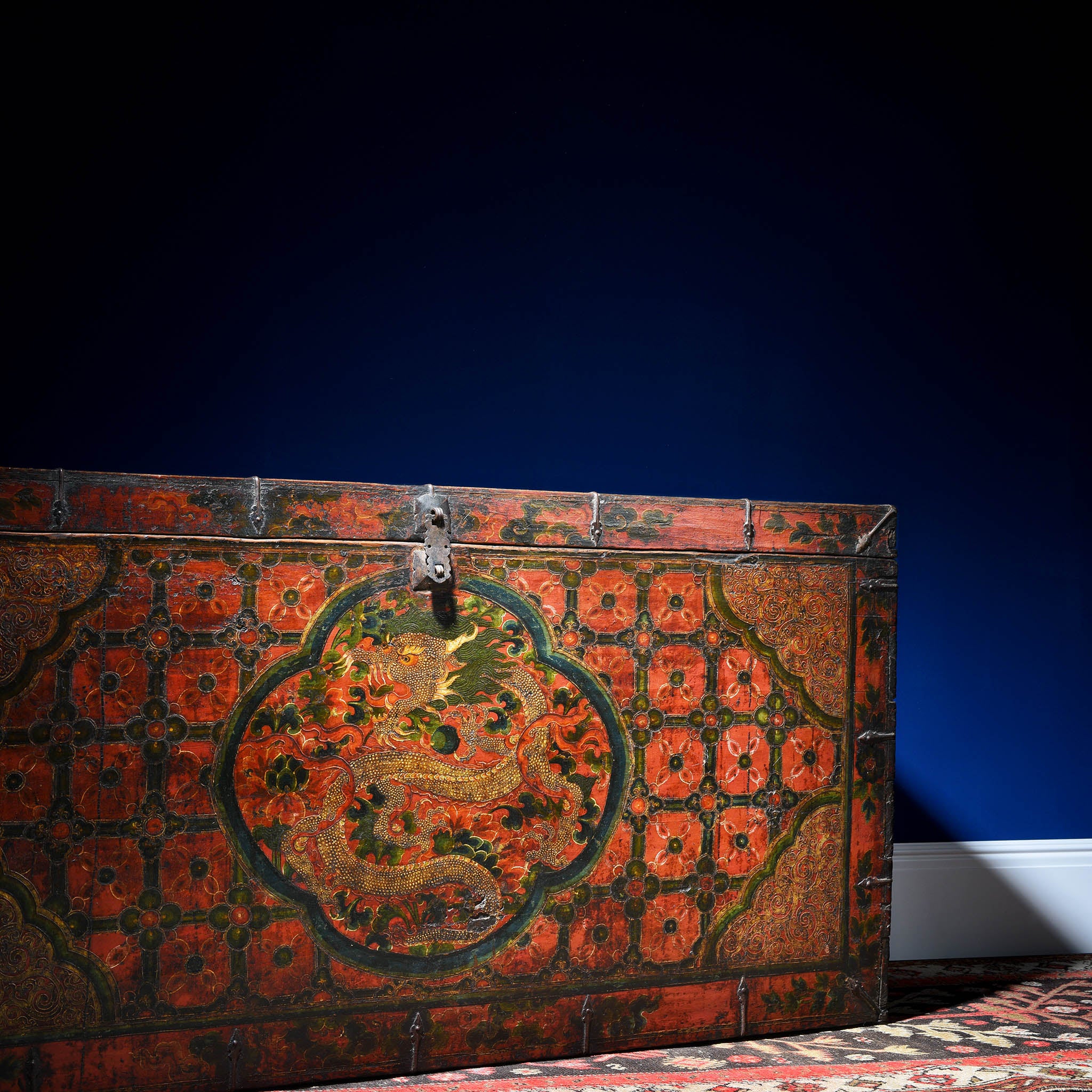
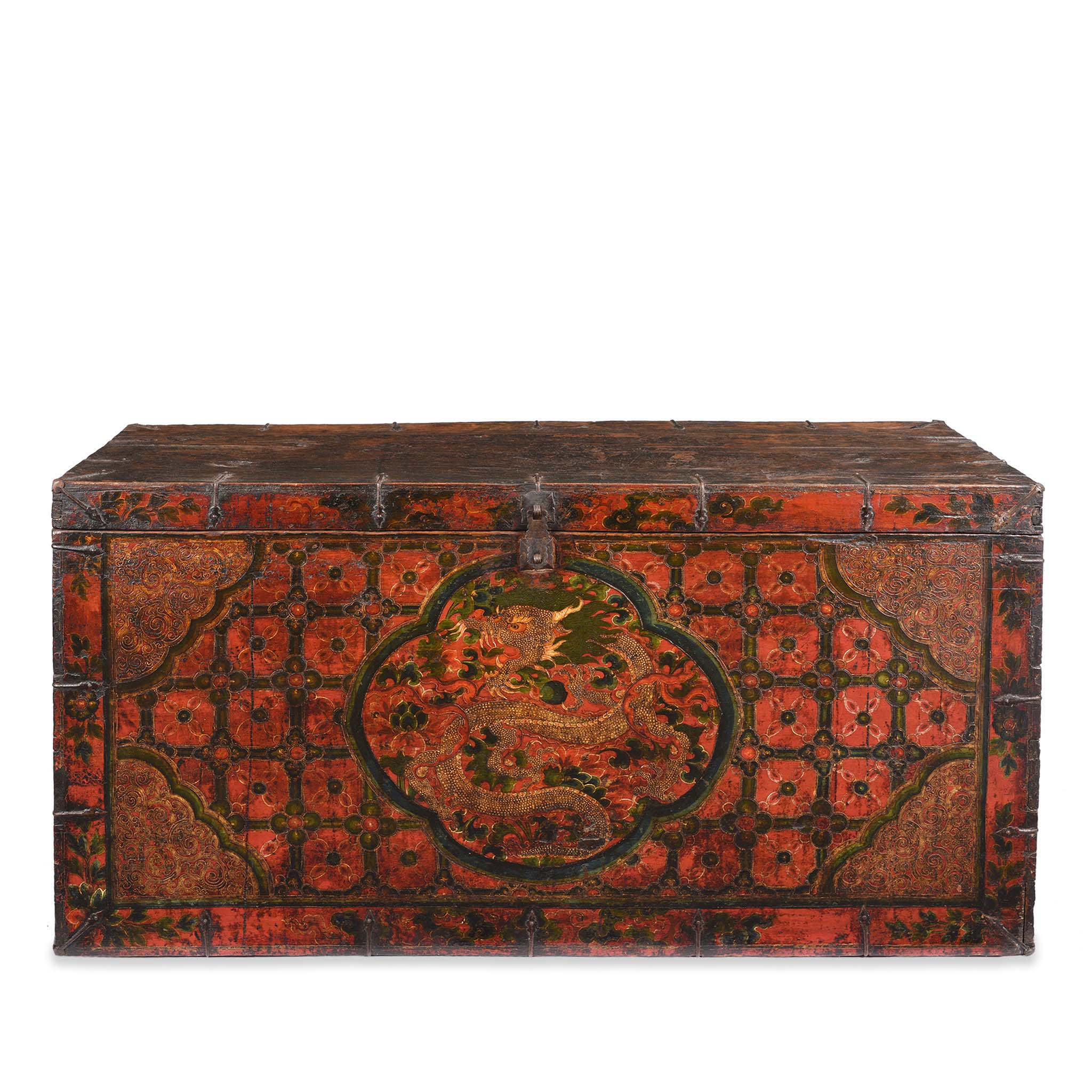
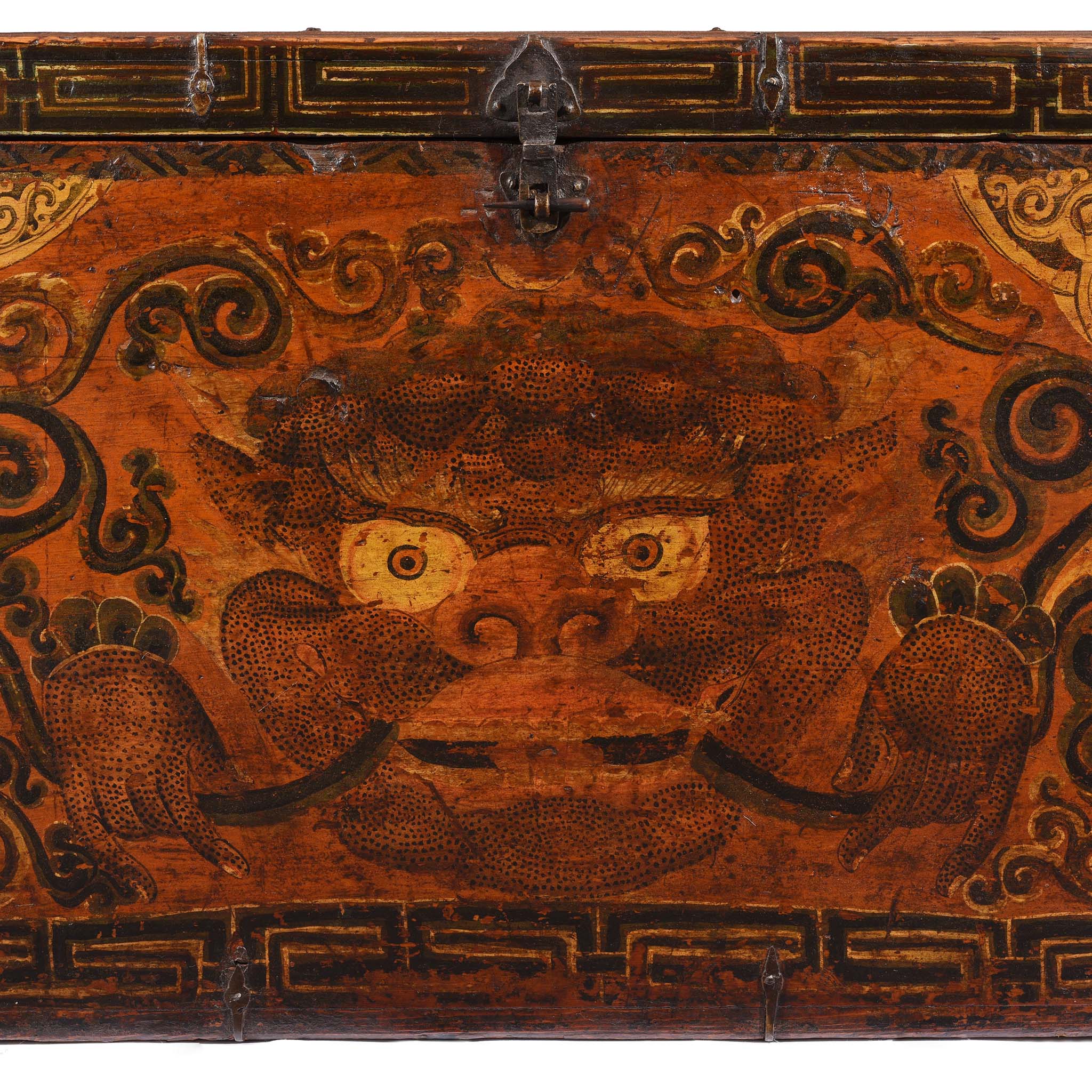
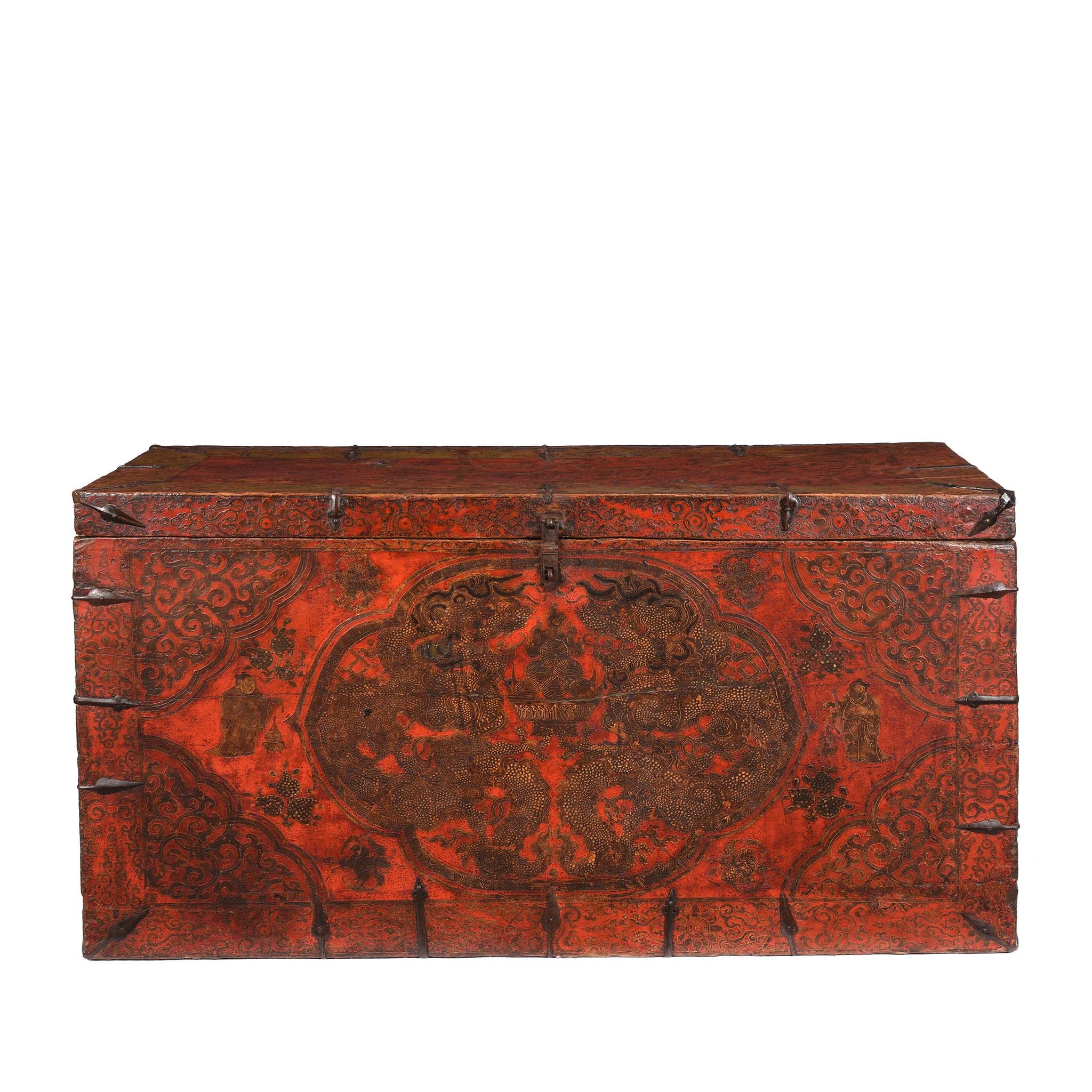
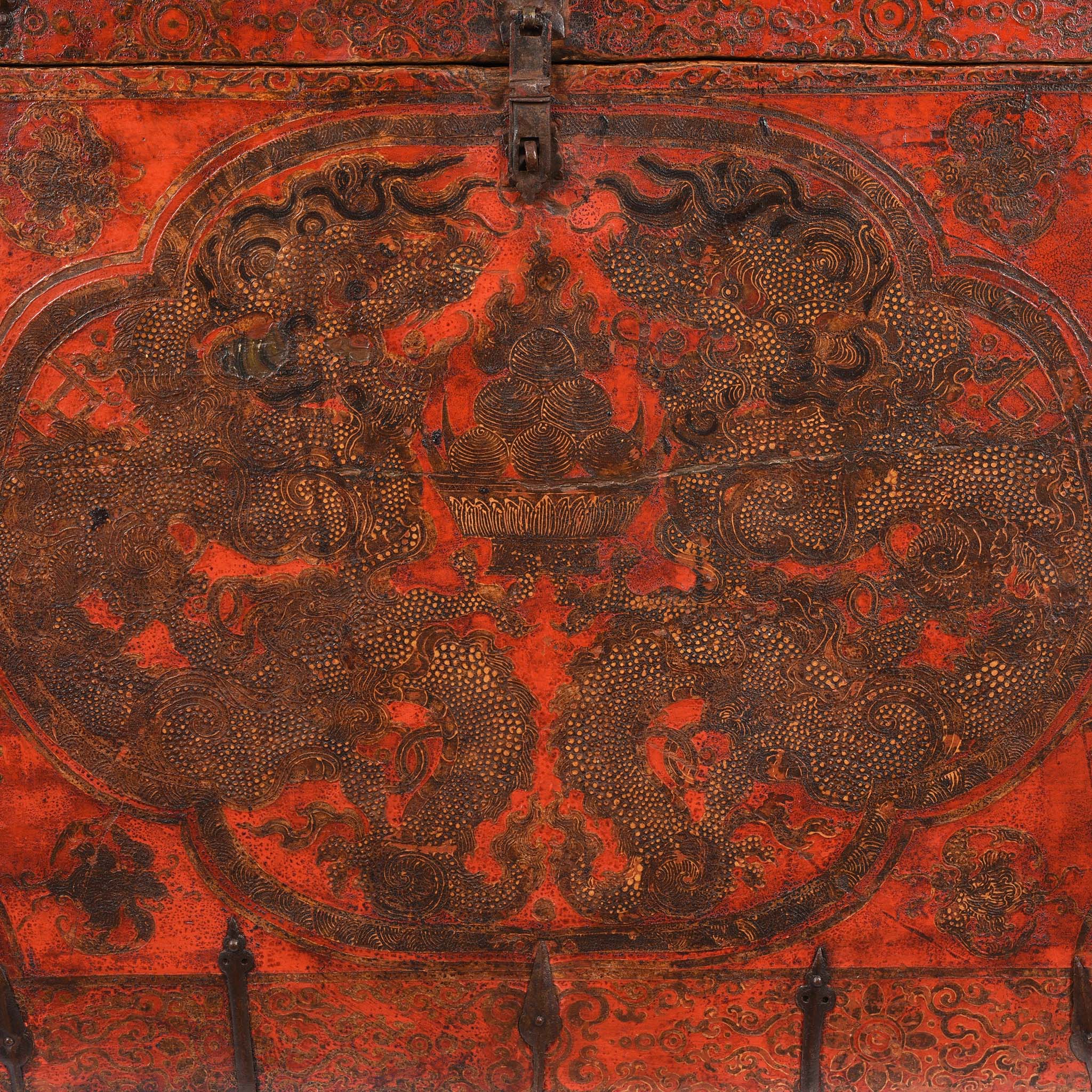
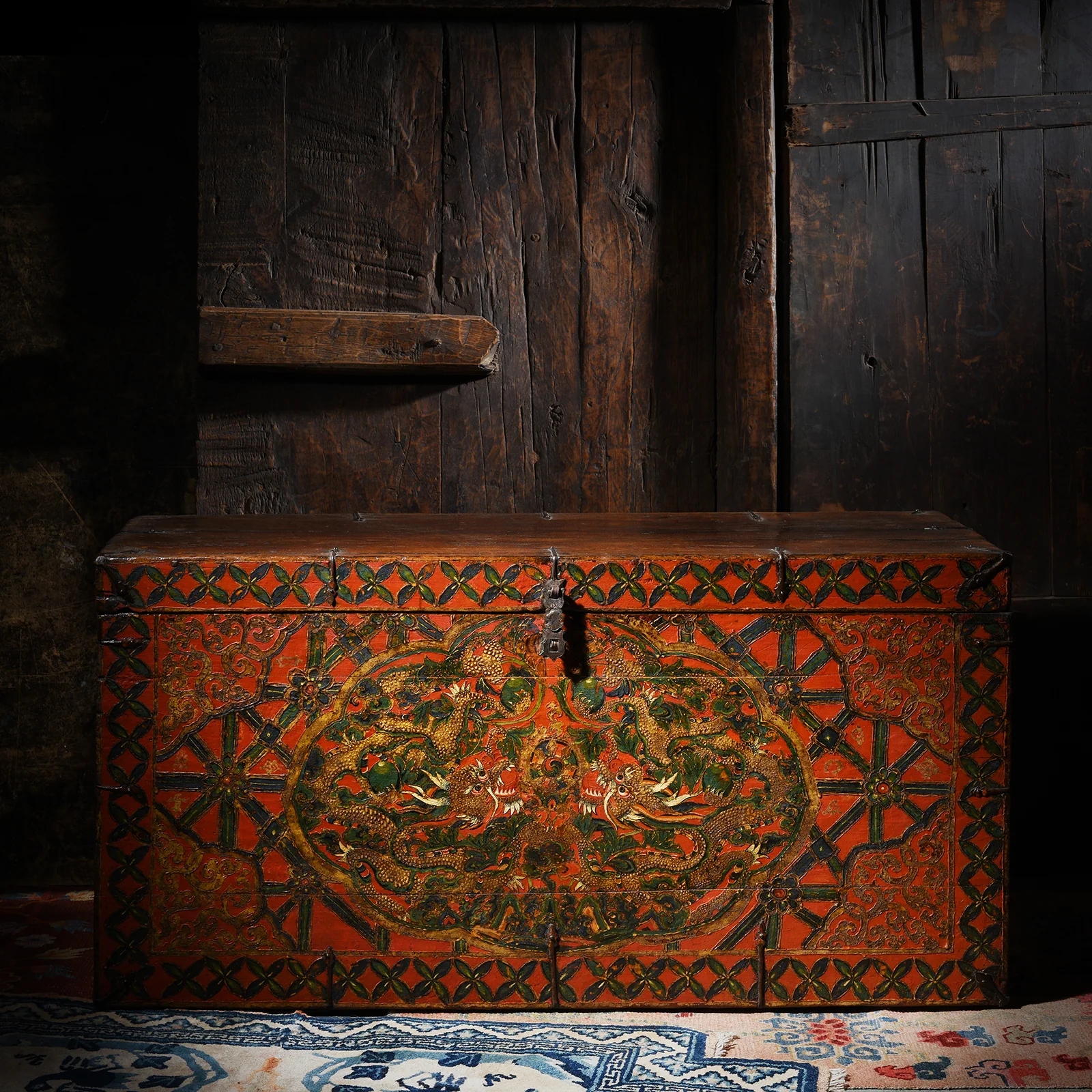
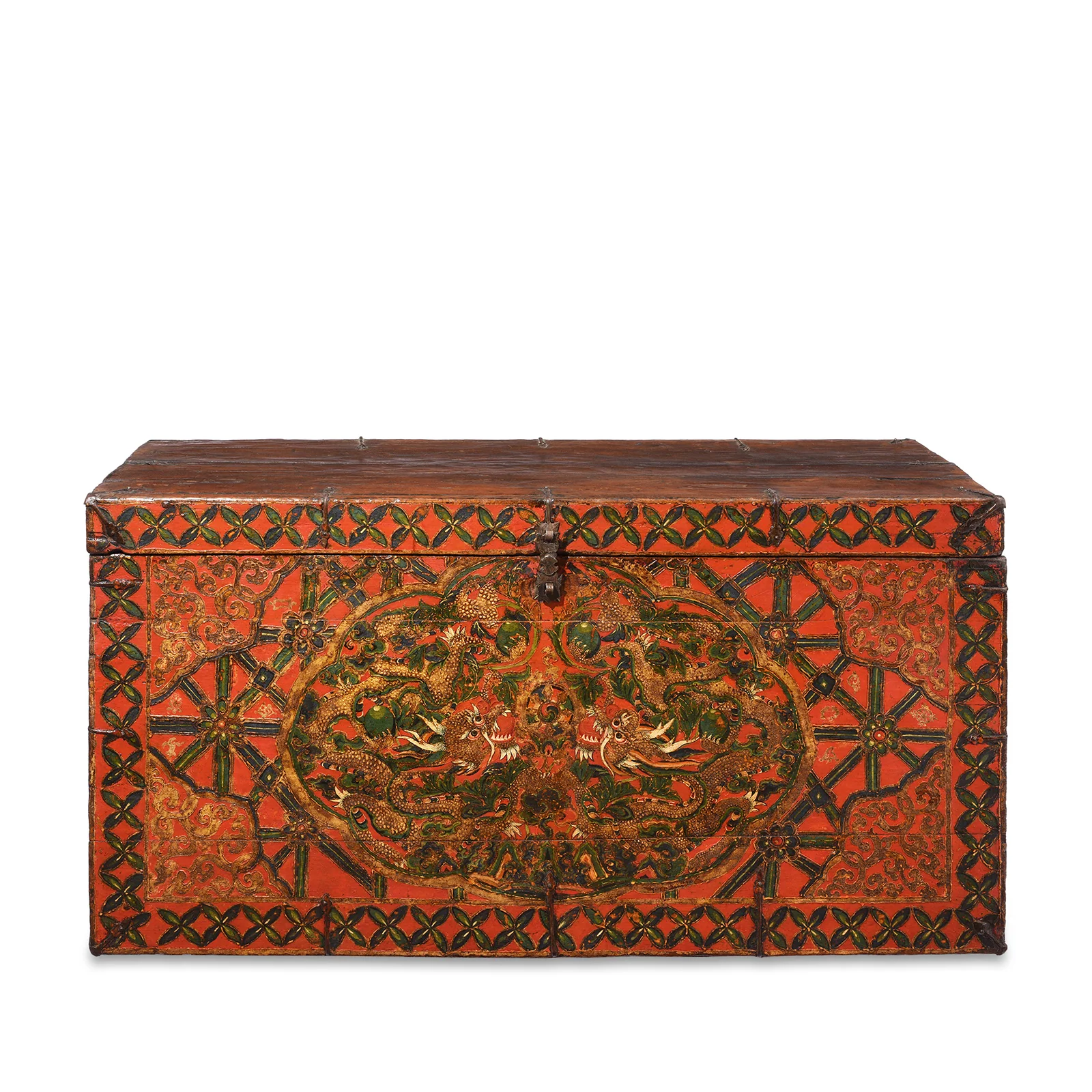
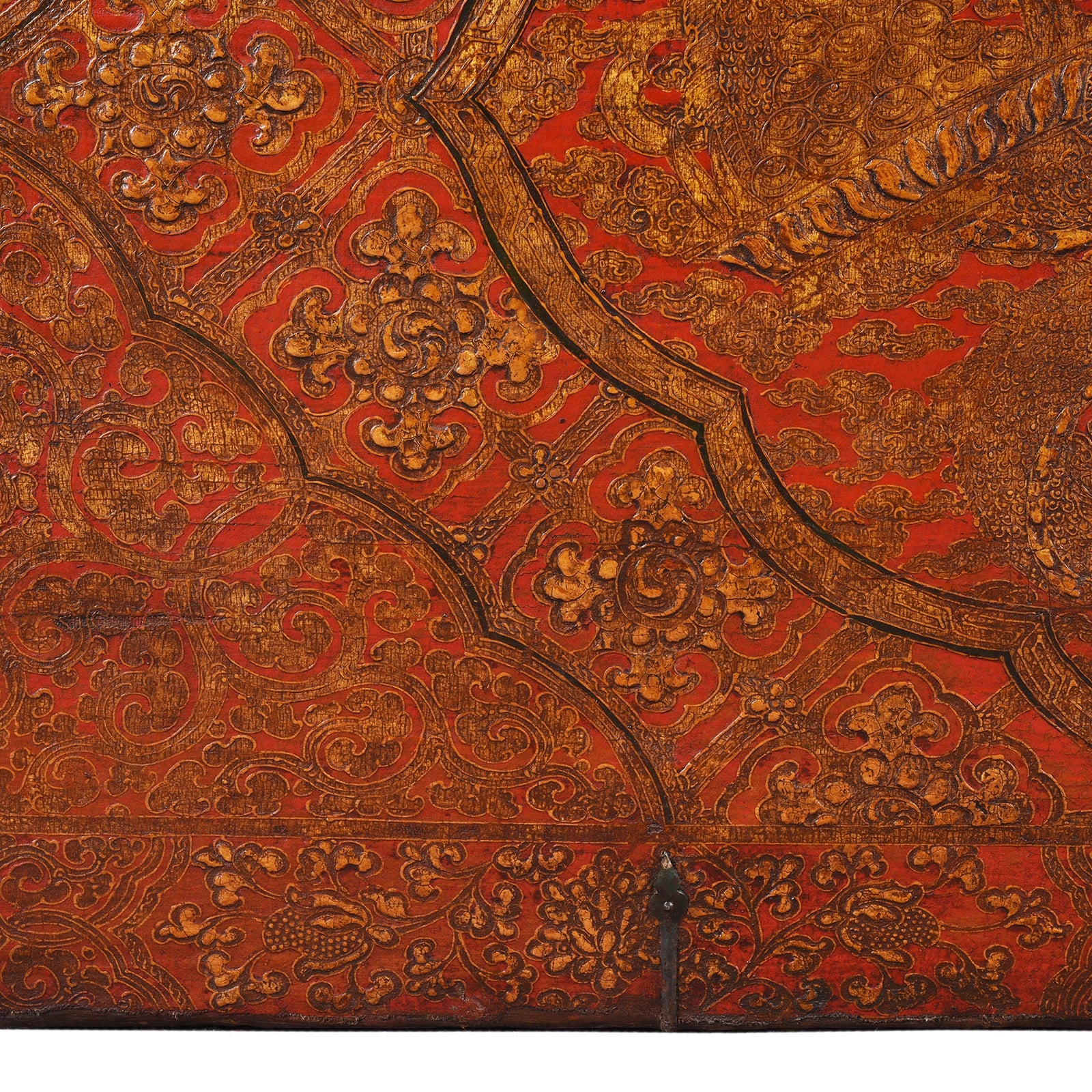
This gold & red 18th century Central Tibetan chest was originally destined for use in monasteries. Two opposing dragons support a vase of The Seven Gems inside a central cartouche. The designs are created in luxurious kyung bur raised gessowork suggesting this was an expensive commission by a wealthy patron for a monastery.
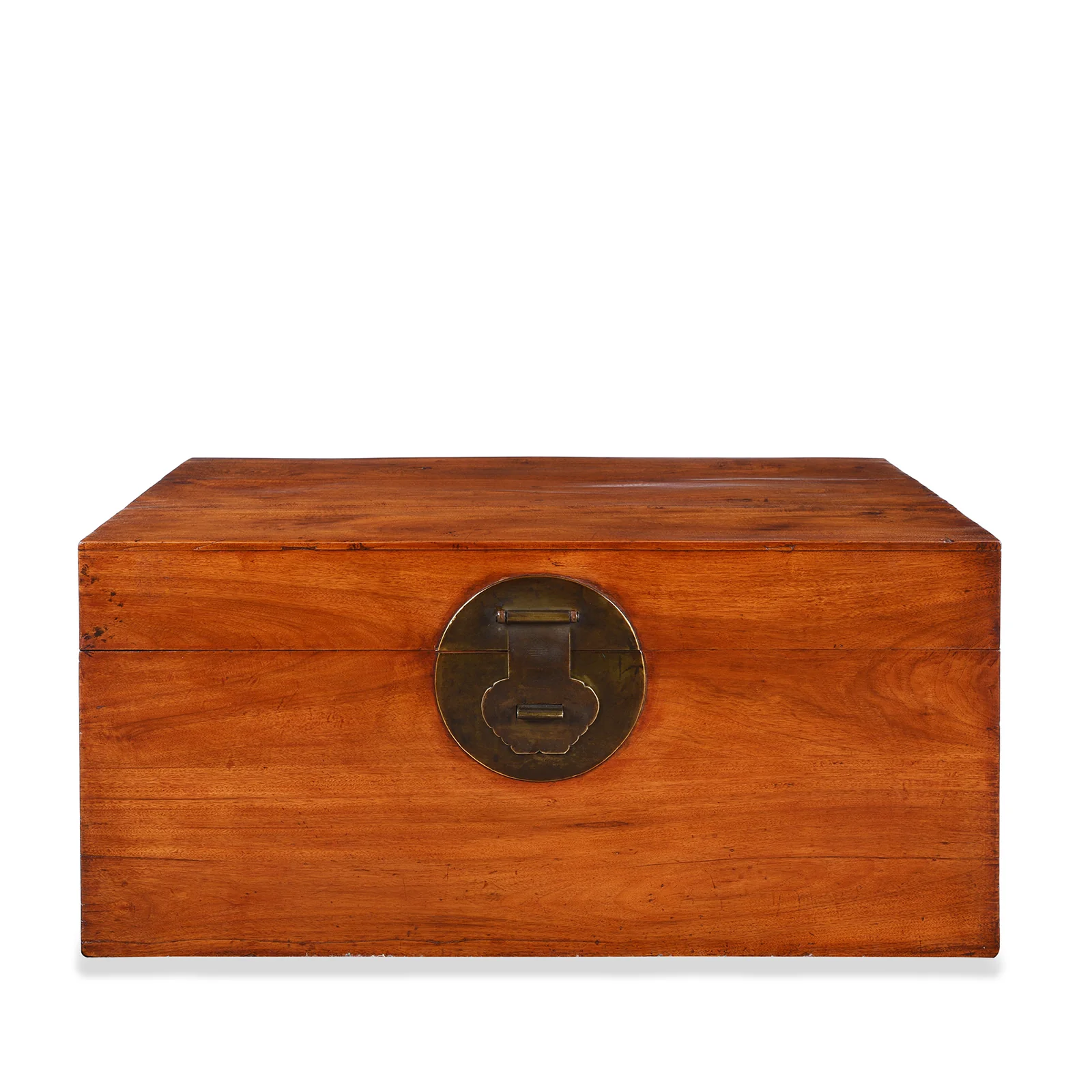
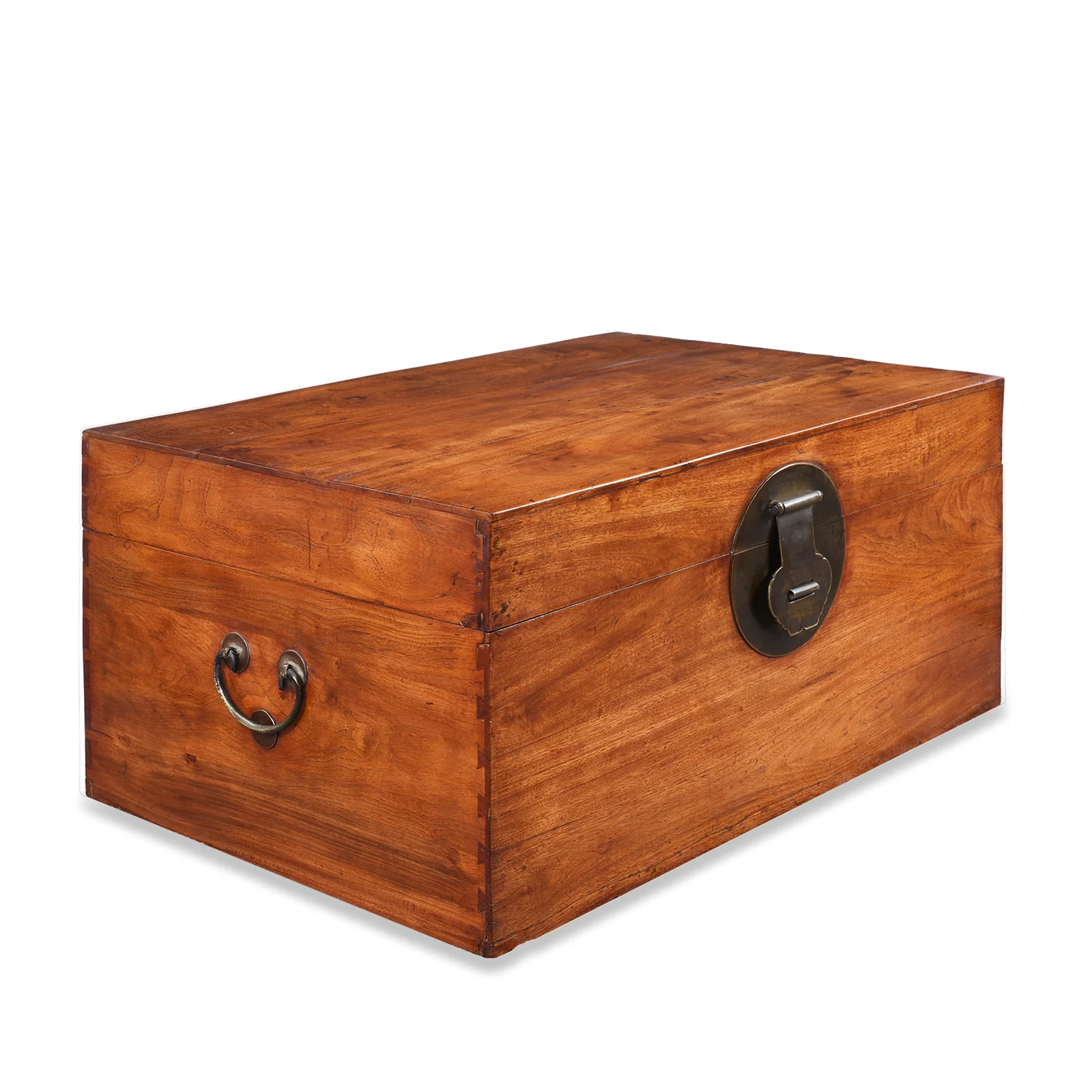
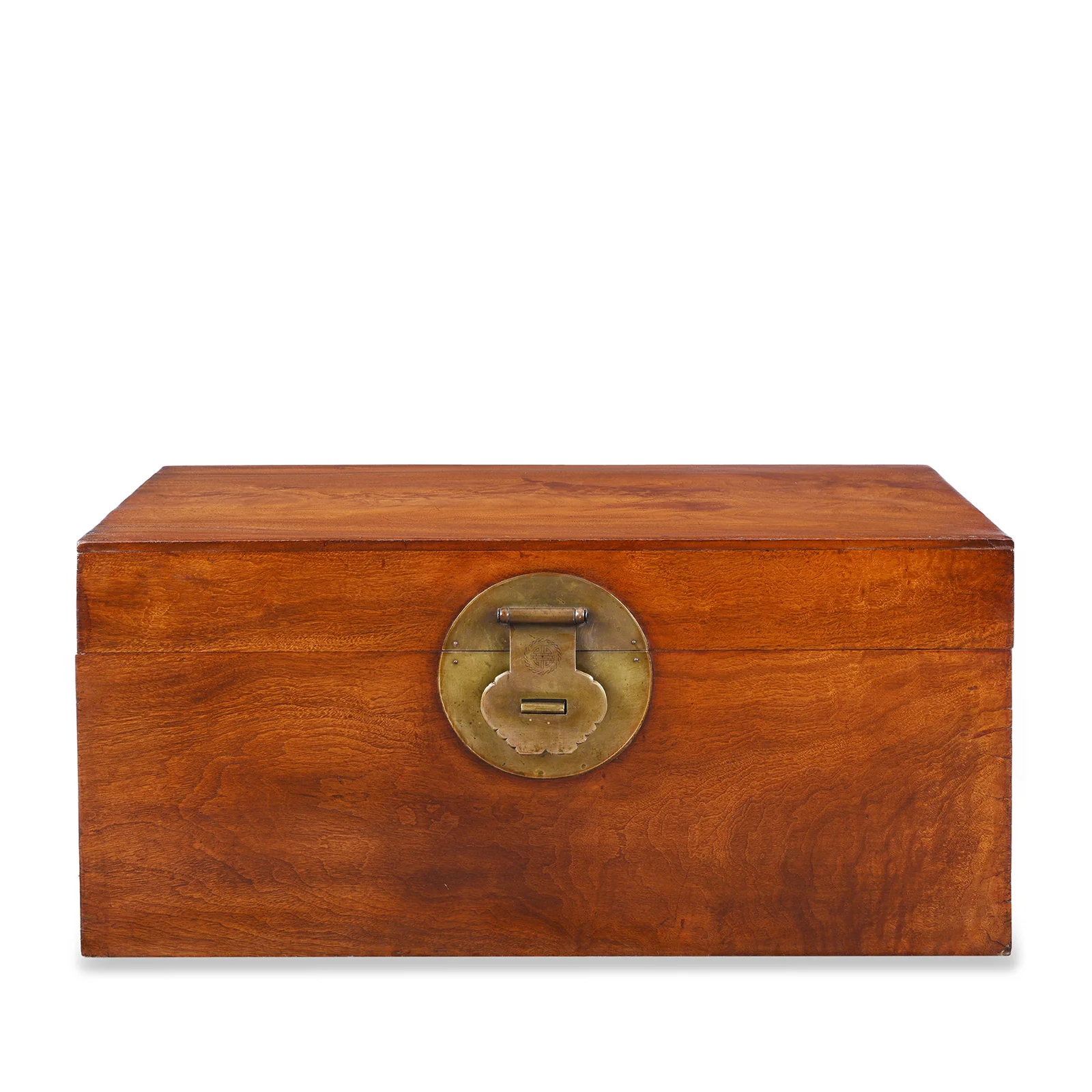
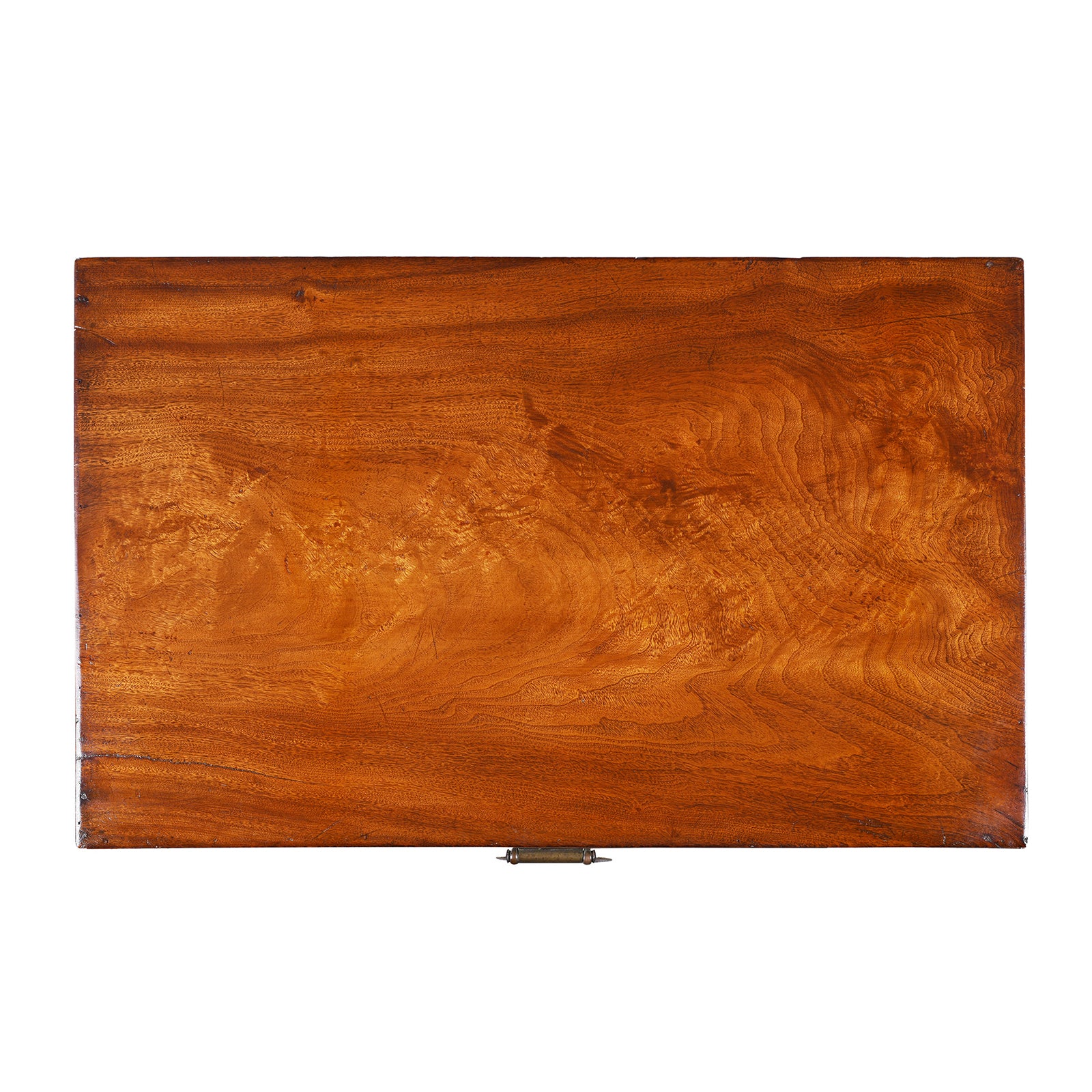
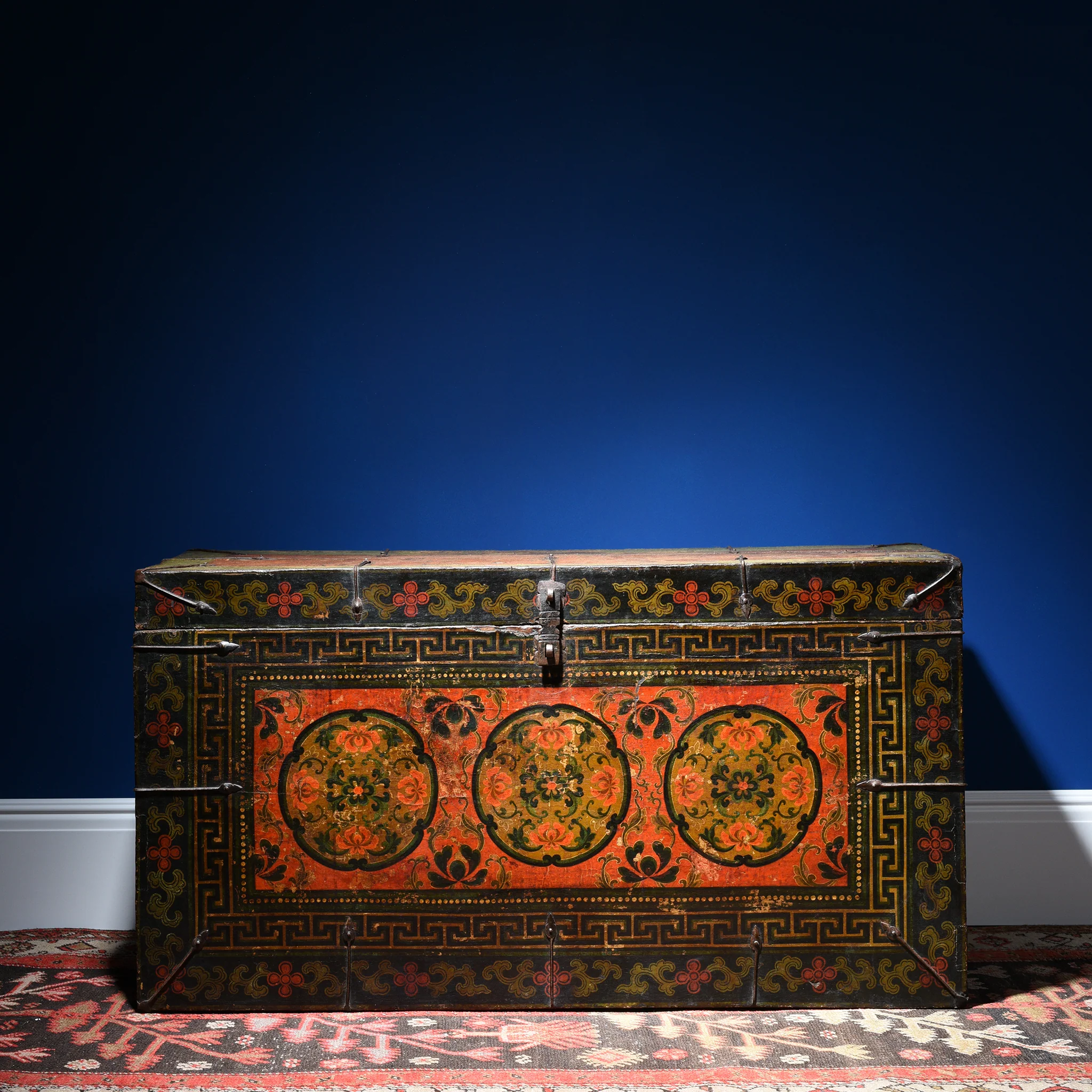
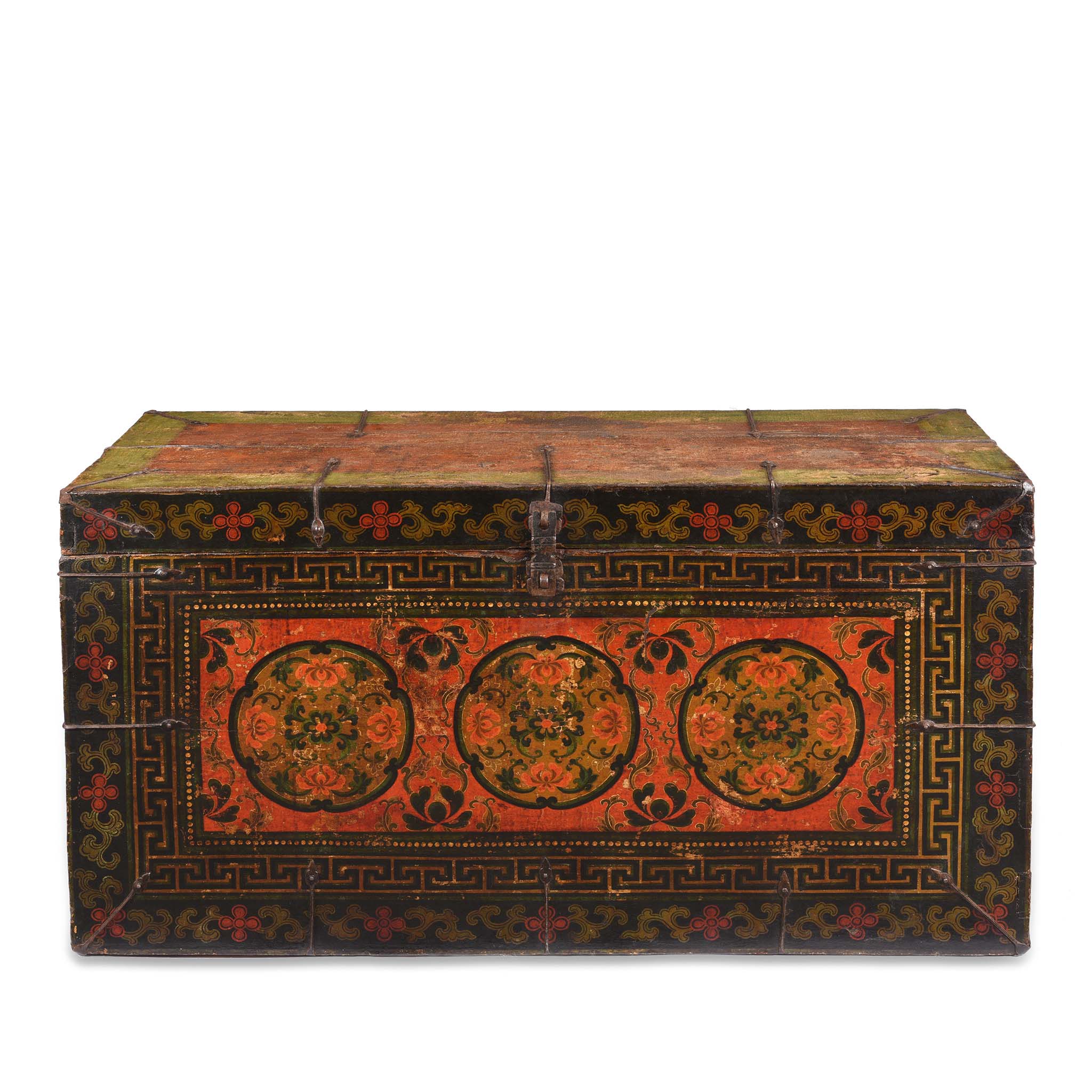
Tibetan chests and trunks were used as storage in homes and monasteries. Boxes are normally made from cedar, pine or poplar. This chest is unusually painted on the sides and top. The front is painted onto fabric applied to the wood and bound with hand beaten iron.
The dragon (druk in Tibetan) is a symbol of power and authority and was associated with the water element rather than fire as in the west. The dragon is an ancient symbol recognisable examples can be found as early as the Han dynasty (206 BC - AD 211).
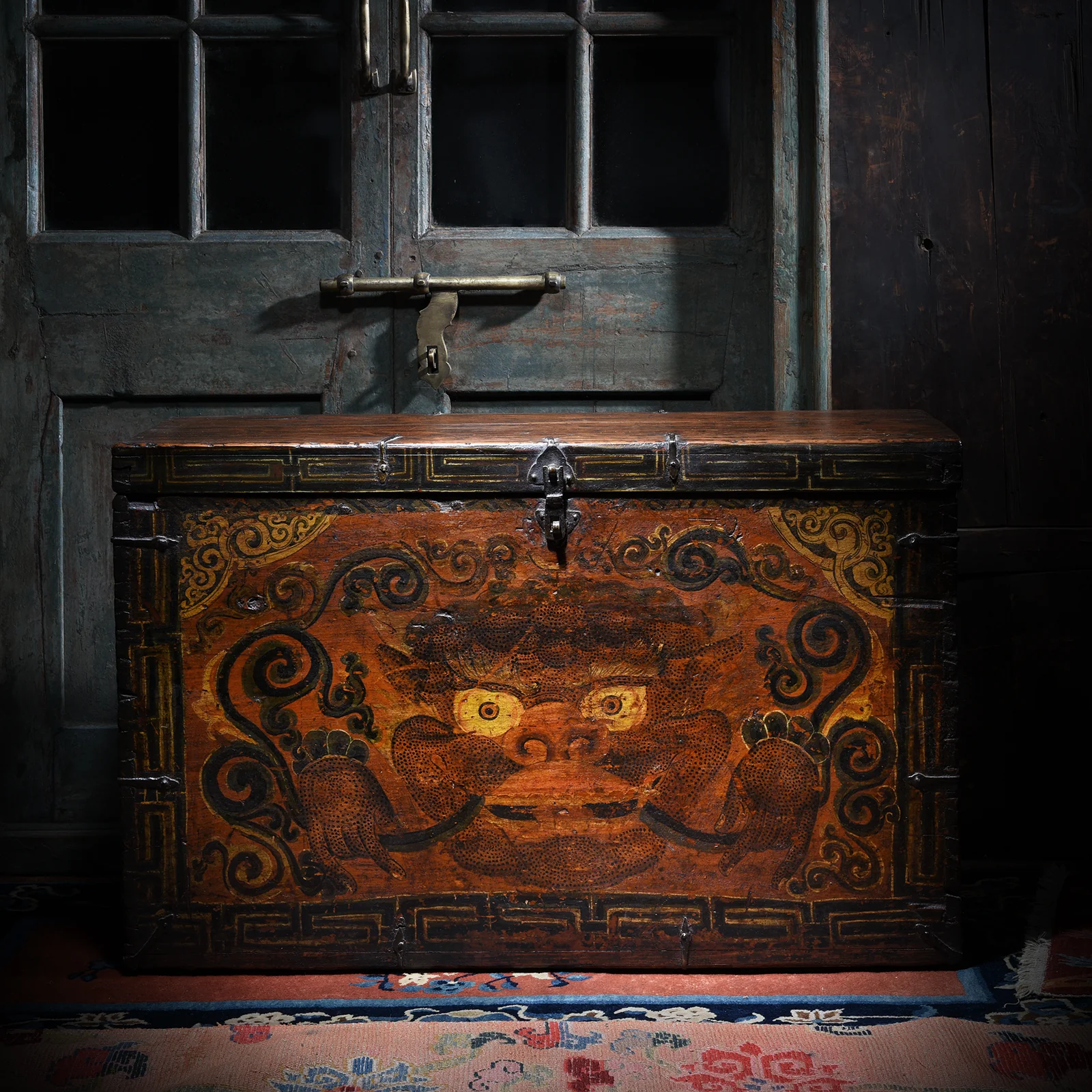
Tibetan chests and trunks were used as storage in homes and monasteries. Boxes are normally made from cedar, pine or poplar. If they are painted it is usually just the front and 2 sides. They can either be painted directly on the wood or on older pieces onto a fabric applied to the wood. The colours and designs used are very decorative.
The crimson foreground is decorated in vibrant polychrome pigments with a central panel enclosing a ferocious writhing dragon carrying a tray of wish granting jewels amongst clouds
The dragon (druk in Tibetan) is a symbol of power and authority and was associated with the water element rather than fire as in the west. The dragon is an ancient symbol recognisable examples can be found as early as the Han dynasty (206 BC - AD 211).
From Tibet
UK Delivery Charge - except Highlands & Islands £40
More delivery options available at checkout
Original: $7,311.16
-65%$7,311.16
$2,558.91More Images




Painted Tibetan 'Dragon' Storage Chest - 18thC
This gold & red 18th century Central Tibetan chest was originally destined for use in monasteries. Two opposing dragons support a vase of The Seven Gems inside a central cartouche. The designs are created in luxurious kyung bur raised gessowork suggesting this was an expensive commission by a wealthy patron for a monastery.
Tibetan chests and trunks were used as storage in homes and monasteries. Boxes are normally made from cedar, pine or poplar. This chest is unusually painted on the sides and top. The front is painted onto fabric applied to the wood and bound with hand beaten iron.
The dragon (druk in Tibetan) is a symbol of power and authority and was associated with the water element rather than fire as in the west. The dragon is an ancient symbol recognisable examples can be found as early as the Han dynasty (206 BC - AD 211).
Tibetan chests and trunks were used as storage in homes and monasteries. Boxes are normally made from cedar, pine or poplar. If they are painted it is usually just the front and 2 sides. They can either be painted directly on the wood or on older pieces onto a fabric applied to the wood. The colours and designs used are very decorative.
The crimson foreground is decorated in vibrant polychrome pigments with a central panel enclosing a ferocious writhing dragon carrying a tray of wish granting jewels amongst clouds
The dragon (druk in Tibetan) is a symbol of power and authority and was associated with the water element rather than fire as in the west. The dragon is an ancient symbol recognisable examples can be found as early as the Han dynasty (206 BC - AD 211).
From Tibet
UK Delivery Charge - except Highlands & Islands £40
More delivery options available at checkout
Product Information
Product Information
Shipping & Returns
Shipping & Returns
Description
This gold & red 18th century Central Tibetan chest was originally destined for use in monasteries. Two opposing dragons support a vase of The Seven Gems inside a central cartouche. The designs are created in luxurious kyung bur raised gessowork suggesting this was an expensive commission by a wealthy patron for a monastery.
Tibetan chests and trunks were used as storage in homes and monasteries. Boxes are normally made from cedar, pine or poplar. This chest is unusually painted on the sides and top. The front is painted onto fabric applied to the wood and bound with hand beaten iron.
The dragon (druk in Tibetan) is a symbol of power and authority and was associated with the water element rather than fire as in the west. The dragon is an ancient symbol recognisable examples can be found as early as the Han dynasty (206 BC - AD 211).
Tibetan chests and trunks were used as storage in homes and monasteries. Boxes are normally made from cedar, pine or poplar. If they are painted it is usually just the front and 2 sides. They can either be painted directly on the wood or on older pieces onto a fabric applied to the wood. The colours and designs used are very decorative.
The crimson foreground is decorated in vibrant polychrome pigments with a central panel enclosing a ferocious writhing dragon carrying a tray of wish granting jewels amongst clouds
The dragon (druk in Tibetan) is a symbol of power and authority and was associated with the water element rather than fire as in the west. The dragon is an ancient symbol recognisable examples can be found as early as the Han dynasty (206 BC - AD 211).
From Tibet
UK Delivery Charge - except Highlands & Islands £40
More delivery options available at checkout