
Japanese Kakesuzuri Funa Dansu From Sado Island - Edo Period
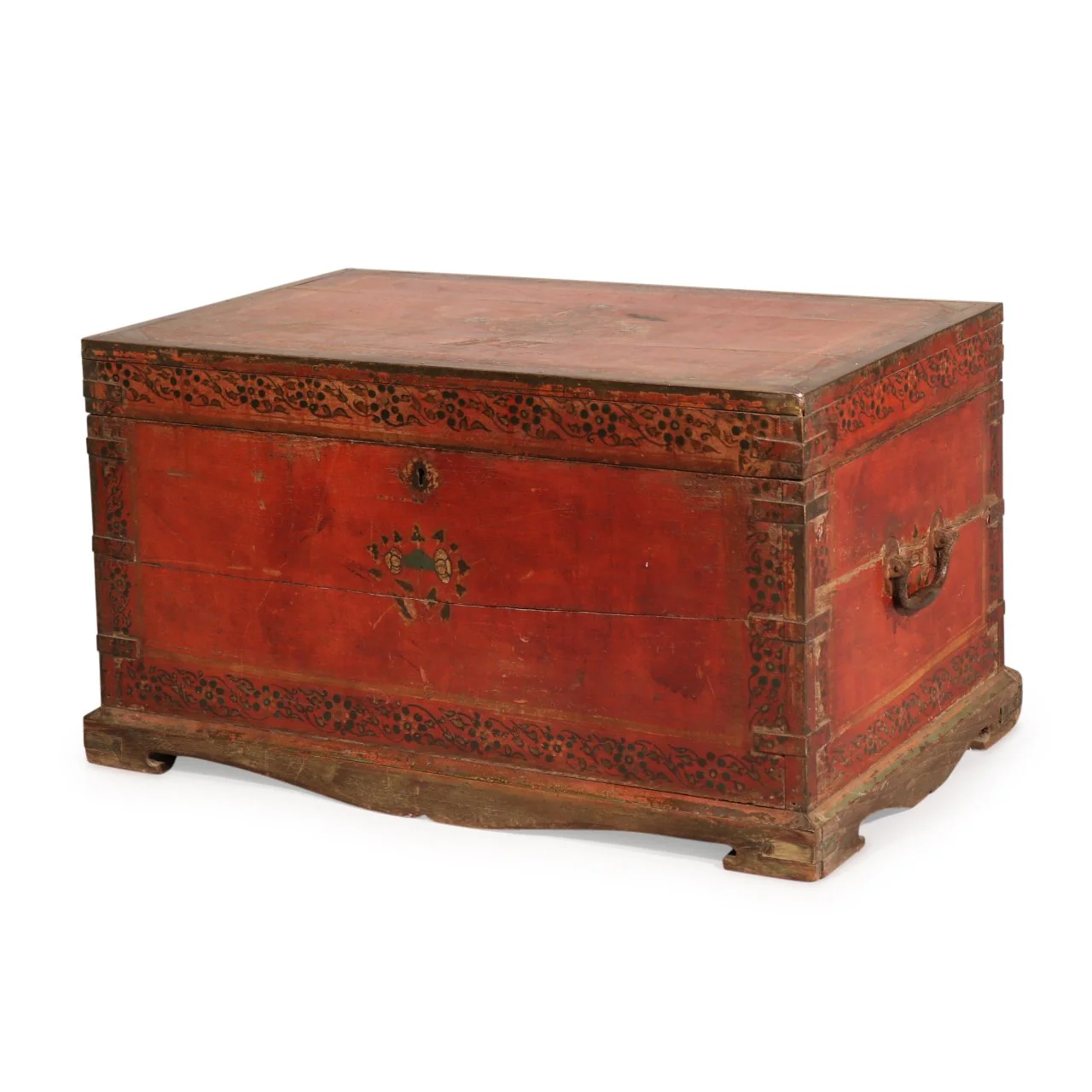
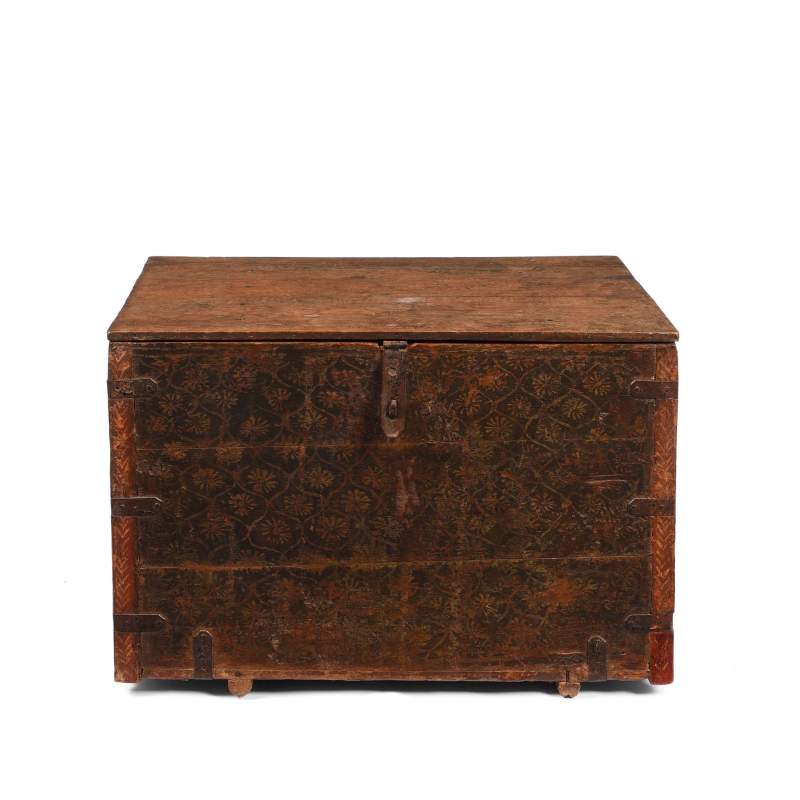
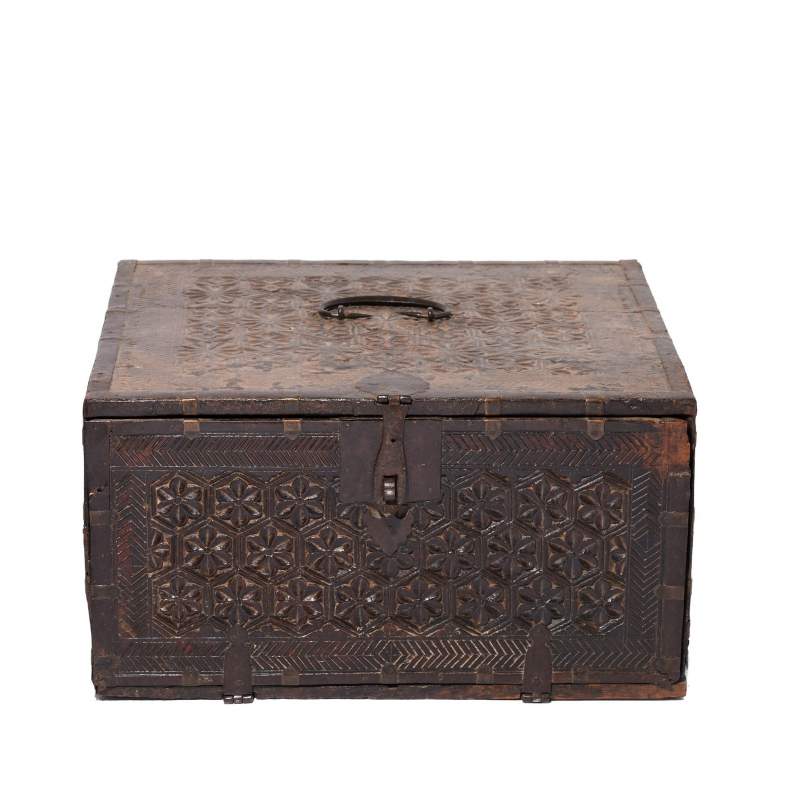
This rare Japanese maritime chest, a funa dansu of the kakesuzuri type, exemplifies the ingenuity and craftsmanship of Edo-period shipboard furniture. Executed in the juji-gata (cross-face) style€”first introduced in 1814€”it dates to the second quarter of the 19th century and was designed for the demanding life of a sea merchant or ship captain.
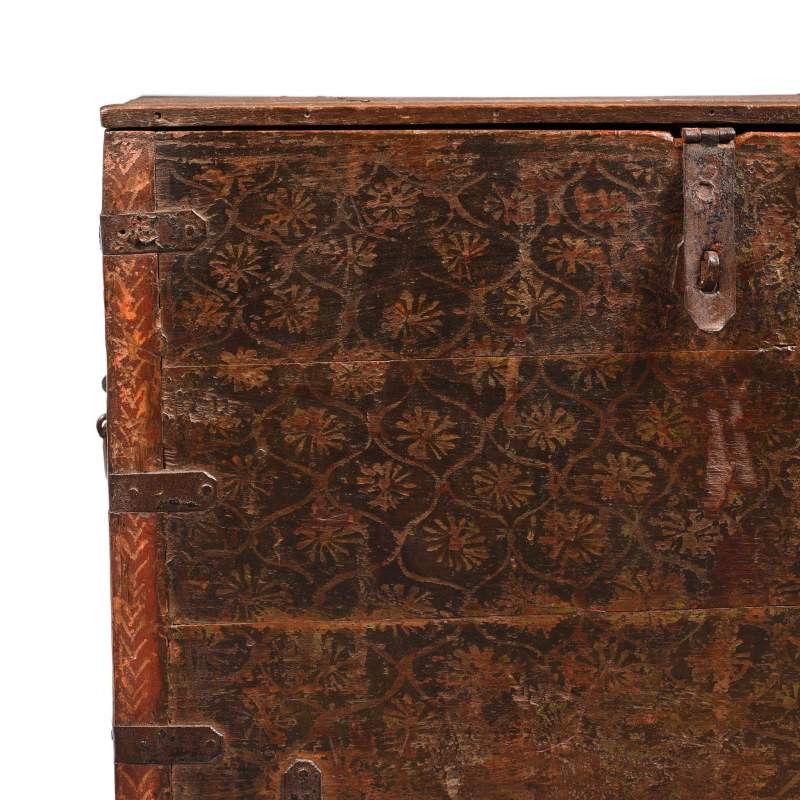
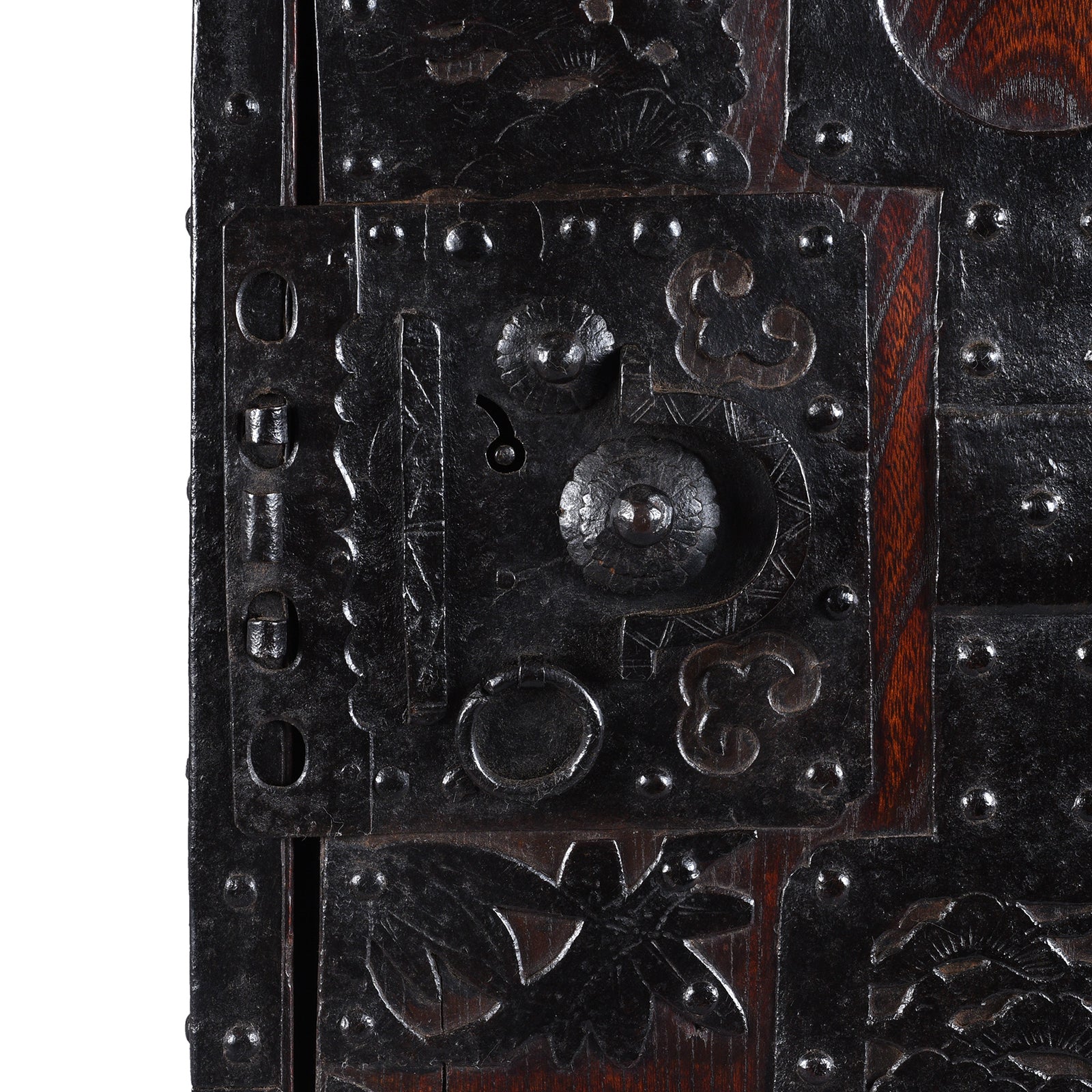
Fashioned from lustrous keyaki (red elm / zelkova), the chest€™s richly grained surfaces glow beneath a deep reddish-brown patina, enhanced by nearly two centuries of age. Its robust ironwork€”riveted plates, engraved lock hardware, and decorative mounts€”forms a fortress-like façade that both protected and proclaimed status. The iron panels display engraved motifs and symbolic flourishes, lending an almost architectural presence to this compact chest.
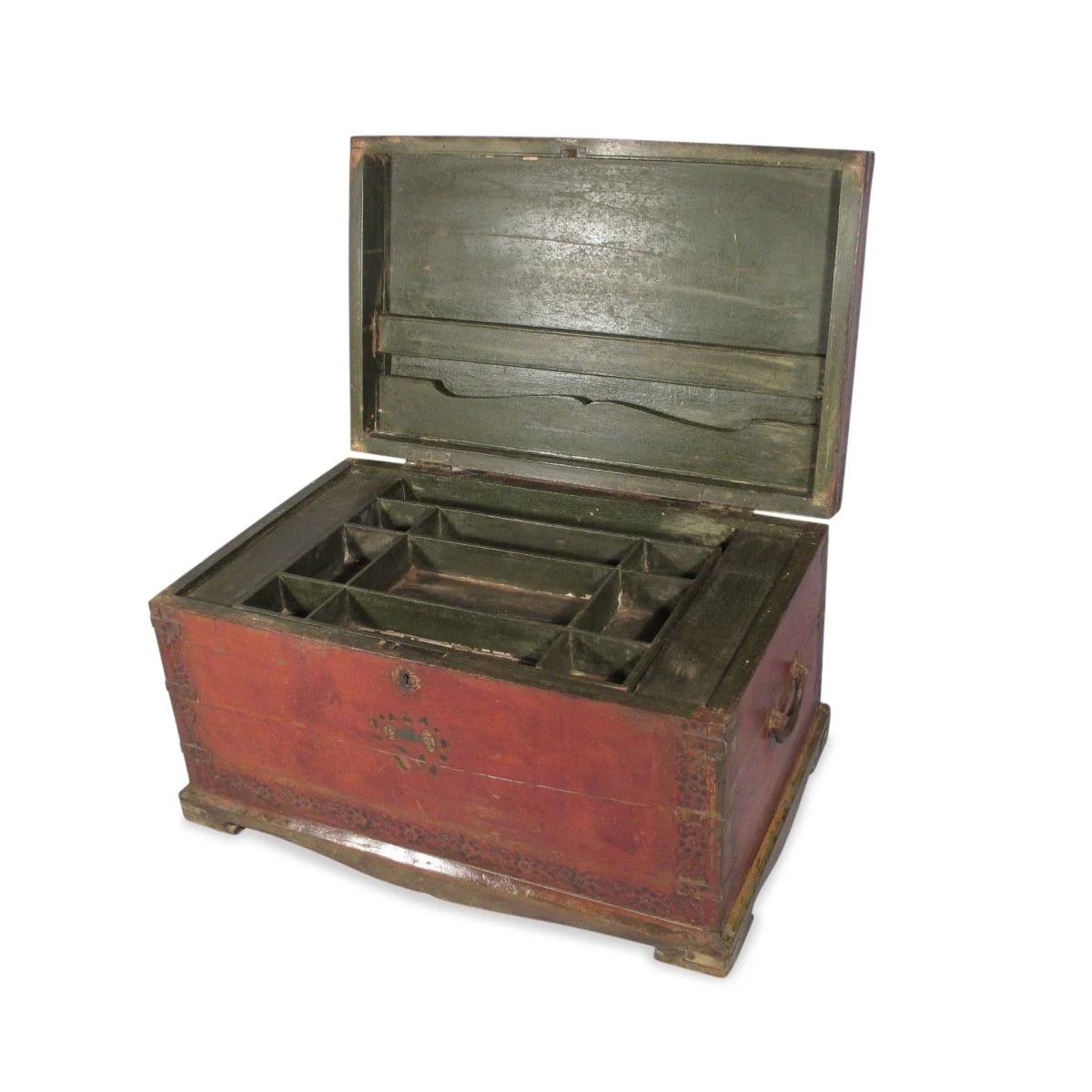
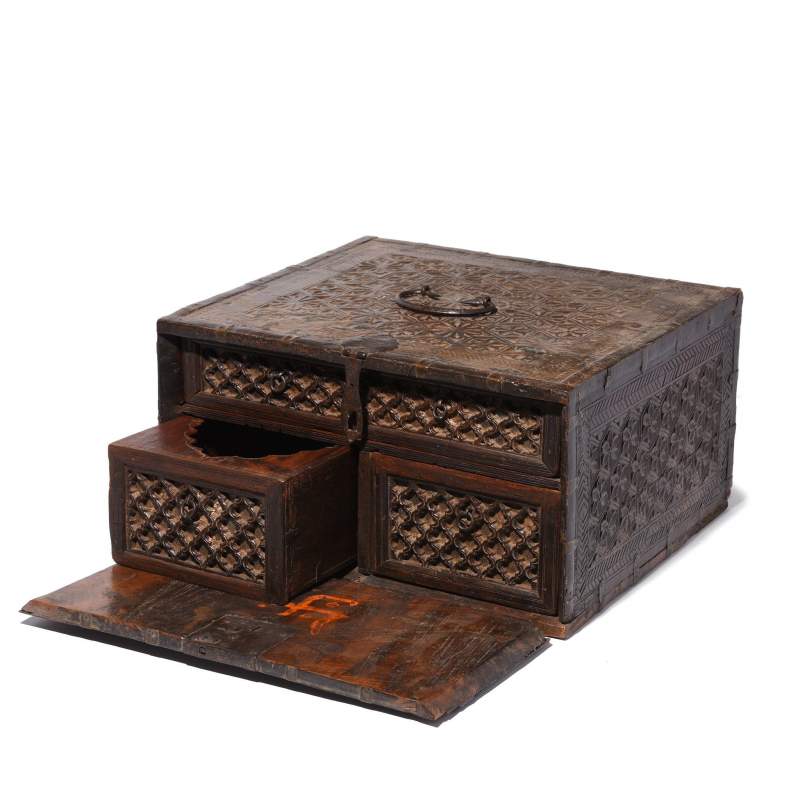
Inside, the chest reveals multiple fitted drawers for valuables, with a concealed compartment cleverly hidden behind the lower left drawer. Such secret spaces, designed to protect coin, contracts, or personal seals, were a hallmark of Edo-period funa dansu. The door locks with an elaborate iron mechanism, complete with a rotating clasp and lock plate embellished with engraved details.
This chest is likely from Ogi, on Sado Island (Niigata Prefecture), a famed centre of maritime chest production during the late Edo period. Ogi€™s workshops supplied captains plying Japan€™s coastal trade routes, producing chests admired for both utility and artistry.
Comparable examples are preserved in important collections: one is illustrated in Kazuko Koizumi€™s €œTraditional Japanese Chests,€� Fig.42, and another resides in the Victoria and Albert Museum (London), underscoring the rarity and cultural importance of this form.
- Origin: Japan, likely Ogi, Sado Island, Niigata Prefecture
- Date: Edo Period, circa 1830s
- Materials: Red elm (keyaki / zelkova), black iron mounts
- Features: Kakesuzuri type; juji-gata (cross-face) style; riveted ironwork; engraved lock plates; multiple drawers; secret compartment
- Condition: Excellent antique condition with rich patina; minor wear consistent with age and use
- Dimensions: W37 x D46 x H43 cm
A remarkable Edo-period chest of enduring beauty and maritime heritage.
Original: $2,314.68
-65%$2,314.68
$810.14More Images


Japanese Kakesuzuri Funa Dansu From Sado Island - Edo Period
This rare Japanese maritime chest, a funa dansu of the kakesuzuri type, exemplifies the ingenuity and craftsmanship of Edo-period shipboard furniture. Executed in the juji-gata (cross-face) style€”first introduced in 1814€”it dates to the second quarter of the 19th century and was designed for the demanding life of a sea merchant or ship captain.
Fashioned from lustrous keyaki (red elm / zelkova), the chest€™s richly grained surfaces glow beneath a deep reddish-brown patina, enhanced by nearly two centuries of age. Its robust ironwork€”riveted plates, engraved lock hardware, and decorative mounts€”forms a fortress-like façade that both protected and proclaimed status. The iron panels display engraved motifs and symbolic flourishes, lending an almost architectural presence to this compact chest.
Inside, the chest reveals multiple fitted drawers for valuables, with a concealed compartment cleverly hidden behind the lower left drawer. Such secret spaces, designed to protect coin, contracts, or personal seals, were a hallmark of Edo-period funa dansu. The door locks with an elaborate iron mechanism, complete with a rotating clasp and lock plate embellished with engraved details.
This chest is likely from Ogi, on Sado Island (Niigata Prefecture), a famed centre of maritime chest production during the late Edo period. Ogi€™s workshops supplied captains plying Japan€™s coastal trade routes, producing chests admired for both utility and artistry.
Comparable examples are preserved in important collections: one is illustrated in Kazuko Koizumi€™s €œTraditional Japanese Chests,€� Fig.42, and another resides in the Victoria and Albert Museum (London), underscoring the rarity and cultural importance of this form.
- Origin: Japan, likely Ogi, Sado Island, Niigata Prefecture
- Date: Edo Period, circa 1830s
- Materials: Red elm (keyaki / zelkova), black iron mounts
- Features: Kakesuzuri type; juji-gata (cross-face) style; riveted ironwork; engraved lock plates; multiple drawers; secret compartment
- Condition: Excellent antique condition with rich patina; minor wear consistent with age and use
- Dimensions: W37 x D46 x H43 cm
A remarkable Edo-period chest of enduring beauty and maritime heritage.
Product Information
Product Information
Shipping & Returns
Shipping & Returns
Description
This rare Japanese maritime chest, a funa dansu of the kakesuzuri type, exemplifies the ingenuity and craftsmanship of Edo-period shipboard furniture. Executed in the juji-gata (cross-face) style€”first introduced in 1814€”it dates to the second quarter of the 19th century and was designed for the demanding life of a sea merchant or ship captain.
Fashioned from lustrous keyaki (red elm / zelkova), the chest€™s richly grained surfaces glow beneath a deep reddish-brown patina, enhanced by nearly two centuries of age. Its robust ironwork€”riveted plates, engraved lock hardware, and decorative mounts€”forms a fortress-like façade that both protected and proclaimed status. The iron panels display engraved motifs and symbolic flourishes, lending an almost architectural presence to this compact chest.
Inside, the chest reveals multiple fitted drawers for valuables, with a concealed compartment cleverly hidden behind the lower left drawer. Such secret spaces, designed to protect coin, contracts, or personal seals, were a hallmark of Edo-period funa dansu. The door locks with an elaborate iron mechanism, complete with a rotating clasp and lock plate embellished with engraved details.
This chest is likely from Ogi, on Sado Island (Niigata Prefecture), a famed centre of maritime chest production during the late Edo period. Ogi€™s workshops supplied captains plying Japan€™s coastal trade routes, producing chests admired for both utility and artistry.
Comparable examples are preserved in important collections: one is illustrated in Kazuko Koizumi€™s €œTraditional Japanese Chests,€� Fig.42, and another resides in the Victoria and Albert Museum (London), underscoring the rarity and cultural importance of this form.
- Origin: Japan, likely Ogi, Sado Island, Niigata Prefecture
- Date: Edo Period, circa 1830s
- Materials: Red elm (keyaki / zelkova), black iron mounts
- Features: Kakesuzuri type; juji-gata (cross-face) style; riveted ironwork; engraved lock plates; multiple drawers; secret compartment
- Condition: Excellent antique condition with rich patina; minor wear consistent with age and use
- Dimensions: W37 x D46 x H43 cm
A remarkable Edo-period chest of enduring beauty and maritime heritage.