
Masala Box From Rajasthan - Ca 1900
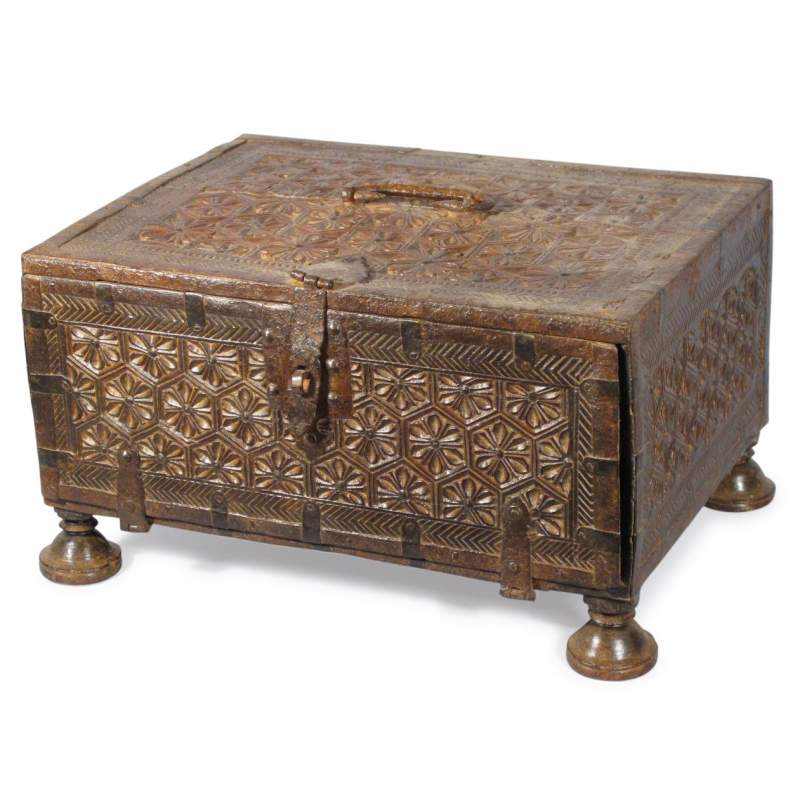
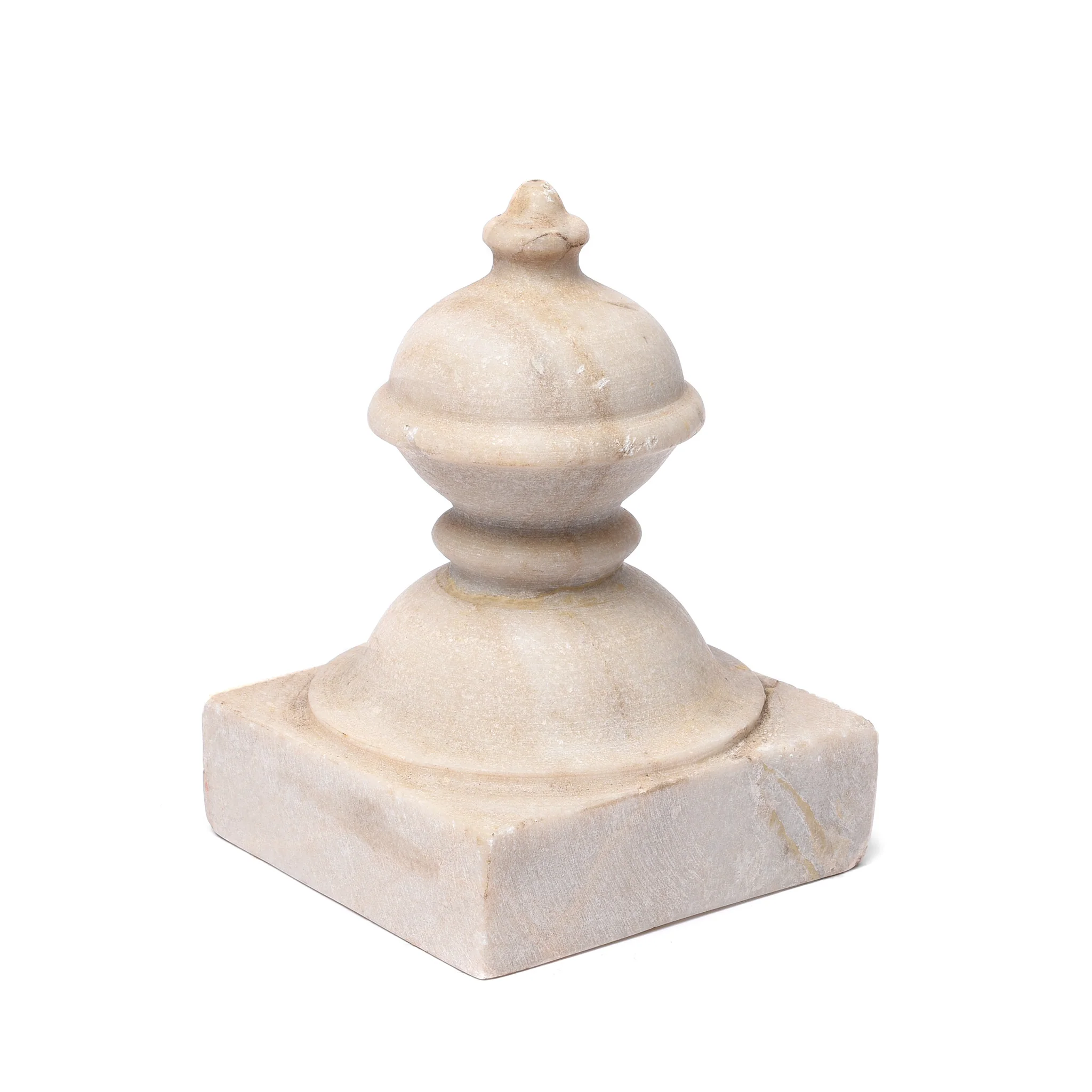
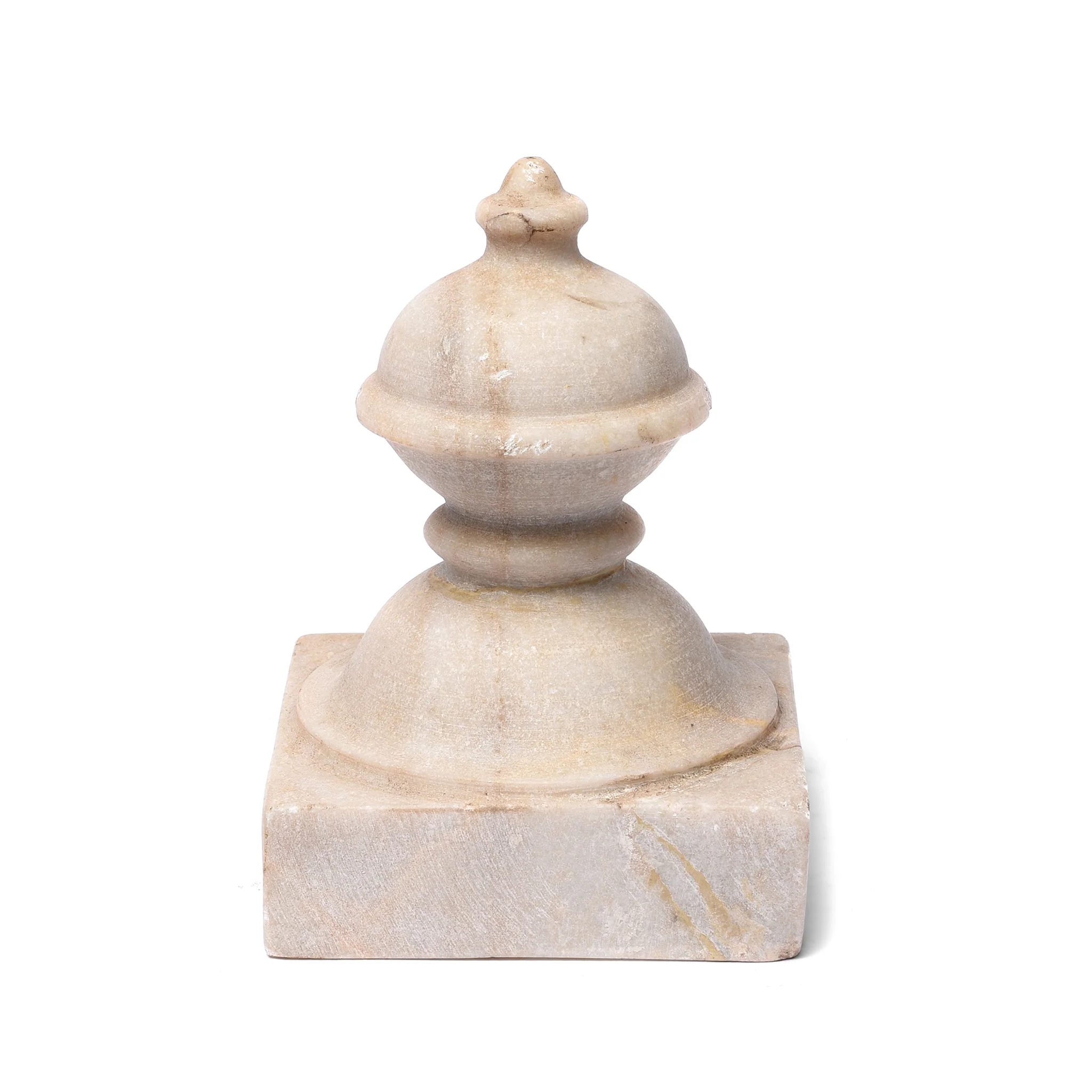
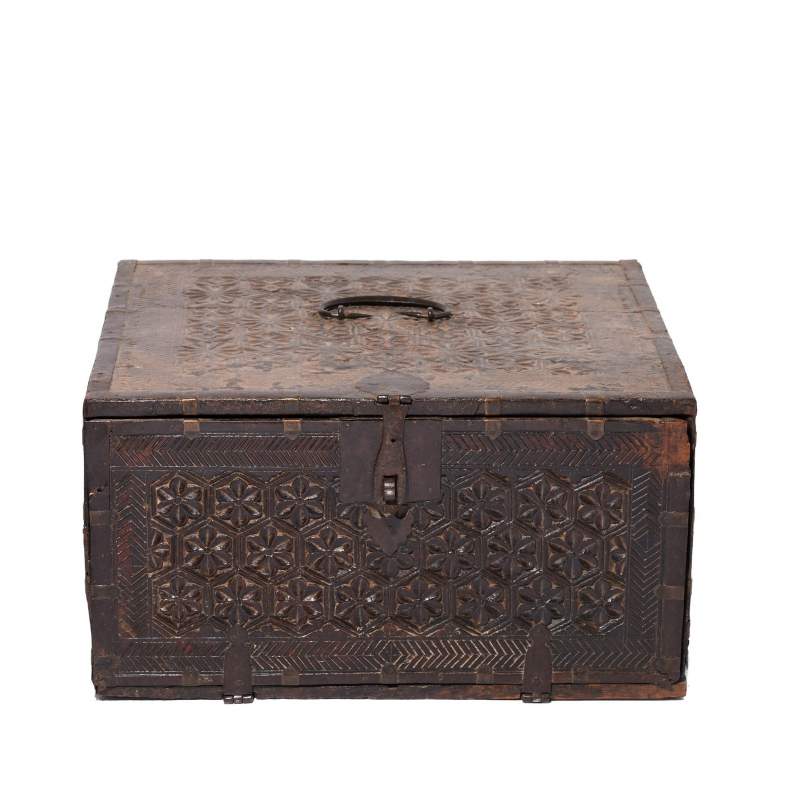
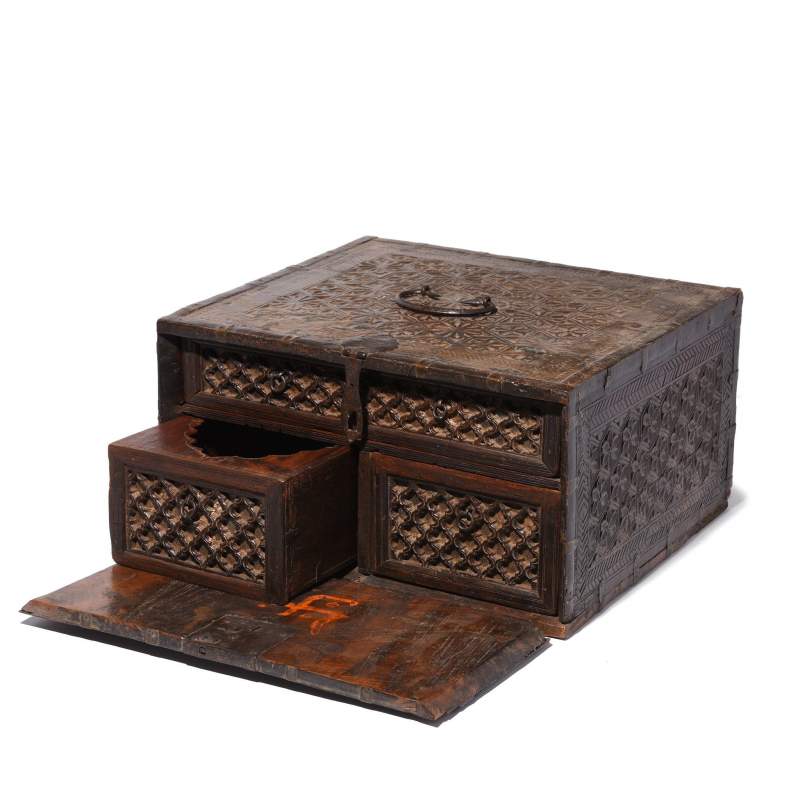
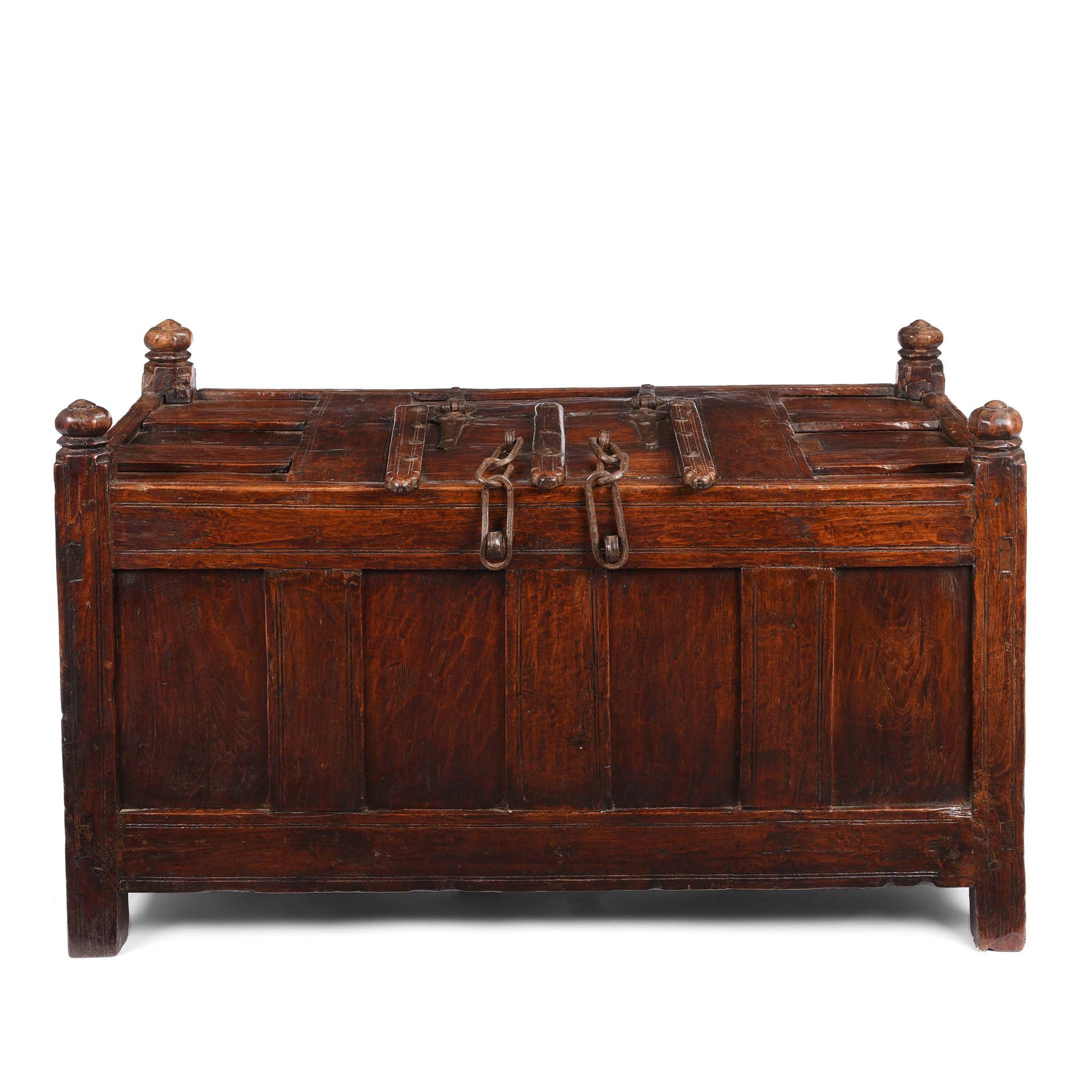
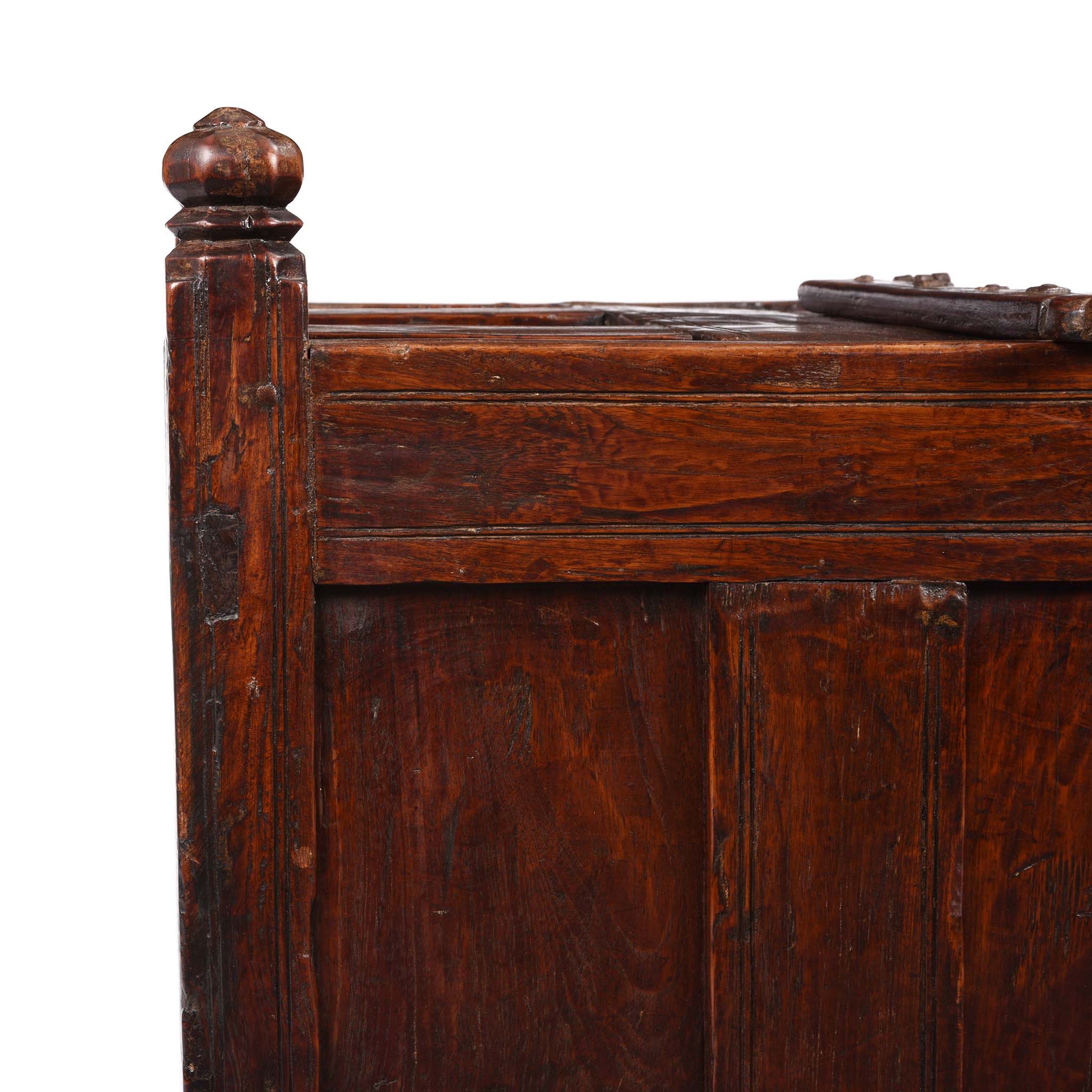
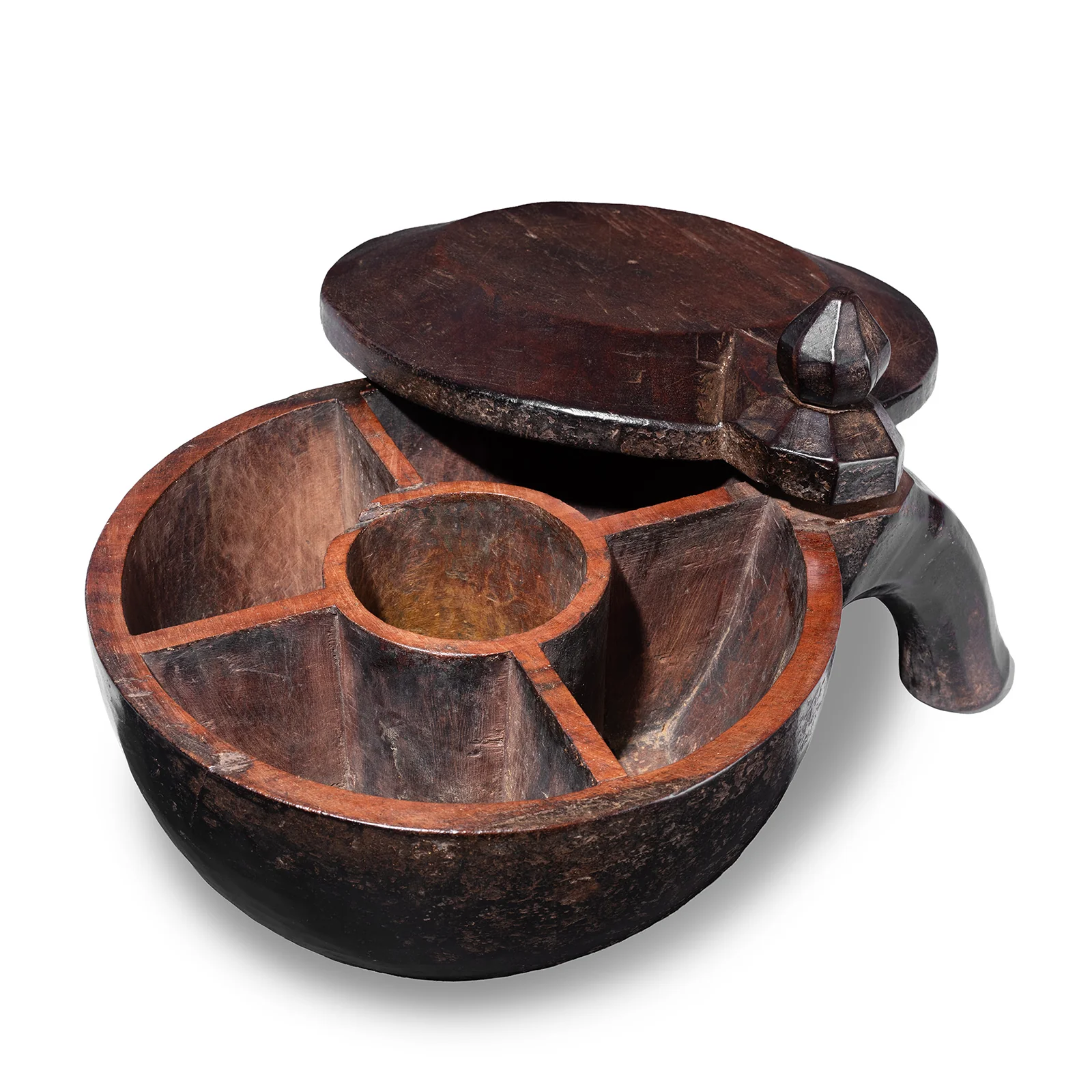
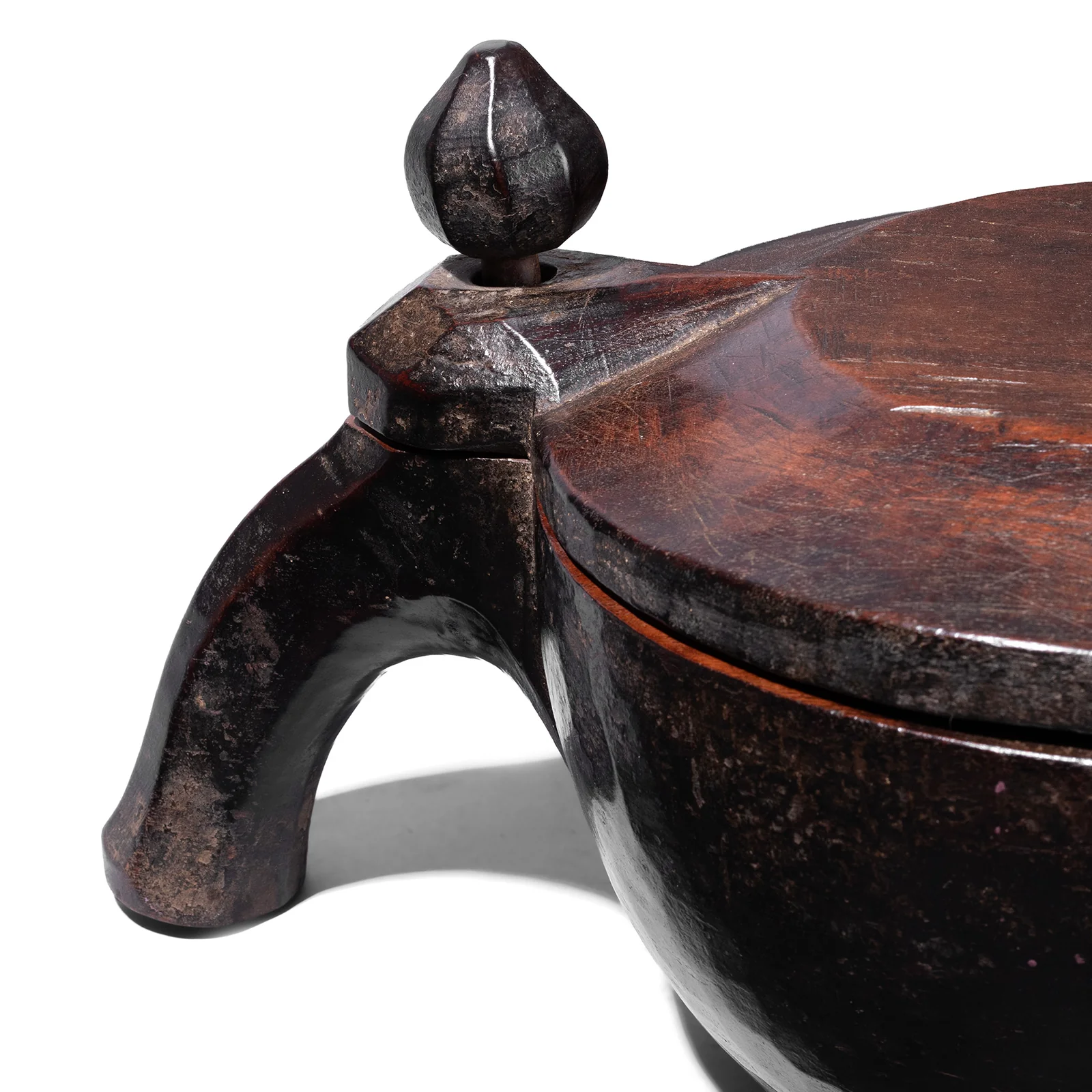
This beautifully shaped carved teak masala box comes from the Banswara tribal region of southern Rajasthan and dates to the 19th century. Like many examples from the area, it is carved from a single piece of dense teak wood, giving it a pleasing weight and a smooth, tactile surface. The domed lid pivots open from a sculptural finial, revealing five interior compartments—four for spices and one central well—originally used for storing essential ingredients in a tribal village kitchen.
Although often associated with tika boxes due to their similar construction, this form is distinctly a masala (spice) box, valued for its practicality as well as its beauty. The gently curved handle and deep bowl-like body create an elegant, almost zoomorphic silhouette, while the dark patina shows generations of handling and use. Each one is unique, and these pieces look wonderful displayed individually or as part of a group, making them ideal gifts for collectors of rural Indian craft and ethnographic objects.
- Origin: Banswara, Southern Rajasthan, India
- Date: 19th Century
- Materials: Carved teak wood
- Features: Single-piece construction; domed pivoting lid; sculptural finial; five interior spice compartments; deep patina
- Condition: Worn surface and patina consistent with age and use
- Dimensions: W29 x D38 x H22 cm
Original: $193.00
-65%$193.00
$67.55More Images
Masala Box From Rajasthan - Ca 1900
This beautifully shaped carved teak masala box comes from the Banswara tribal region of southern Rajasthan and dates to the 19th century. Like many examples from the area, it is carved from a single piece of dense teak wood, giving it a pleasing weight and a smooth, tactile surface. The domed lid pivots open from a sculptural finial, revealing five interior compartments—four for spices and one central well—originally used for storing essential ingredients in a tribal village kitchen.
Although often associated with tika boxes due to their similar construction, this form is distinctly a masala (spice) box, valued for its practicality as well as its beauty. The gently curved handle and deep bowl-like body create an elegant, almost zoomorphic silhouette, while the dark patina shows generations of handling and use. Each one is unique, and these pieces look wonderful displayed individually or as part of a group, making them ideal gifts for collectors of rural Indian craft and ethnographic objects.
- Origin: Banswara, Southern Rajasthan, India
- Date: 19th Century
- Materials: Carved teak wood
- Features: Single-piece construction; domed pivoting lid; sculptural finial; five interior spice compartments; deep patina
- Condition: Worn surface and patina consistent with age and use
- Dimensions: W29 x D38 x H22 cm
Product Information
Product Information
Shipping & Returns
Shipping & Returns
Description
This beautifully shaped carved teak masala box comes from the Banswara tribal region of southern Rajasthan and dates to the 19th century. Like many examples from the area, it is carved from a single piece of dense teak wood, giving it a pleasing weight and a smooth, tactile surface. The domed lid pivots open from a sculptural finial, revealing five interior compartments—four for spices and one central well—originally used for storing essential ingredients in a tribal village kitchen.
Although often associated with tika boxes due to their similar construction, this form is distinctly a masala (spice) box, valued for its practicality as well as its beauty. The gently curved handle and deep bowl-like body create an elegant, almost zoomorphic silhouette, while the dark patina shows generations of handling and use. Each one is unique, and these pieces look wonderful displayed individually or as part of a group, making them ideal gifts for collectors of rural Indian craft and ethnographic objects.
- Origin: Banswara, Southern Rajasthan, India
- Date: 19th Century
- Materials: Carved teak wood
- Features: Single-piece construction; domed pivoting lid; sculptural finial; five interior spice compartments; deep patina
- Condition: Worn surface and patina consistent with age and use
- Dimensions: W29 x D38 x H22 cm