Gilt Black Lacquer Chinese Export Shrine Cabinet - Ca 1820
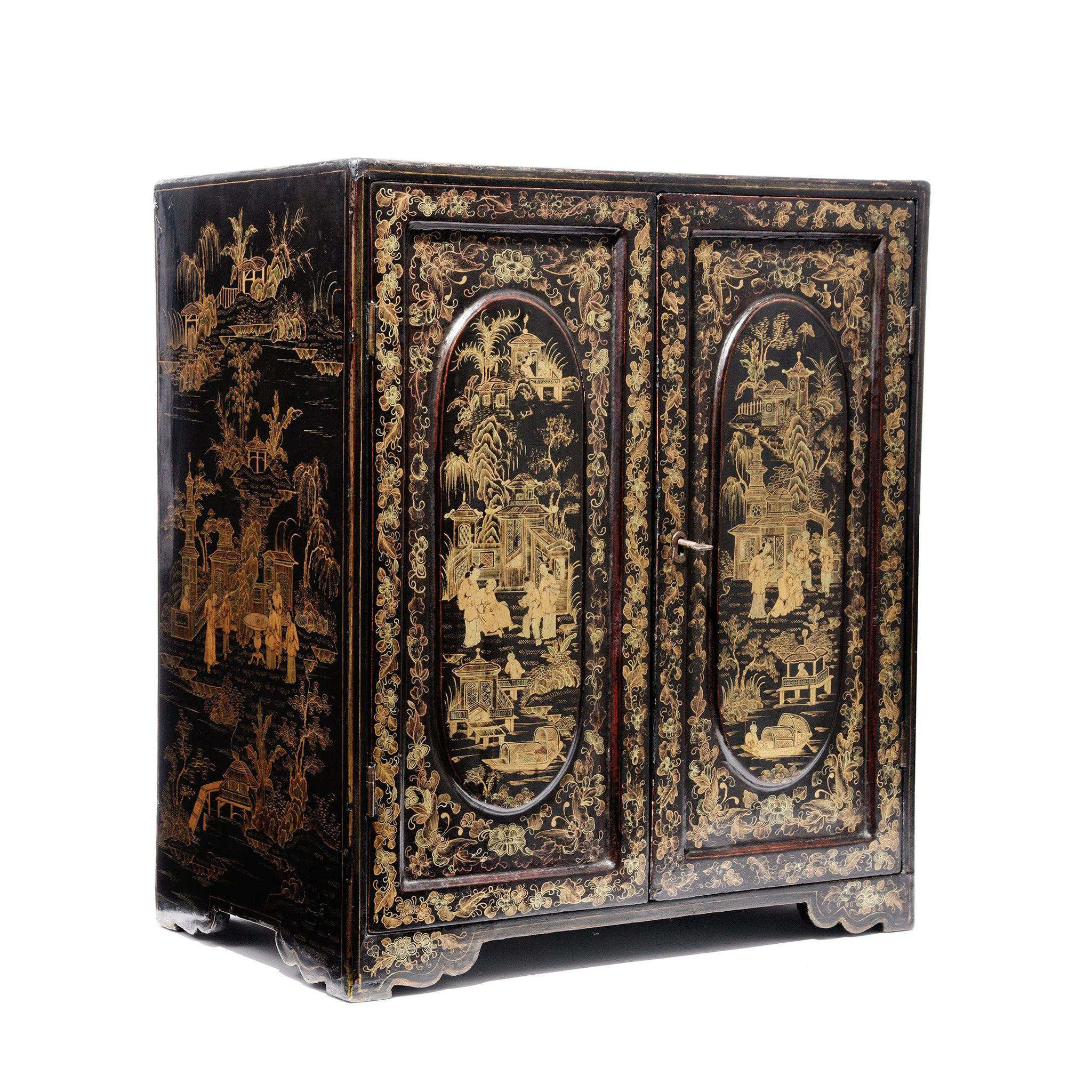
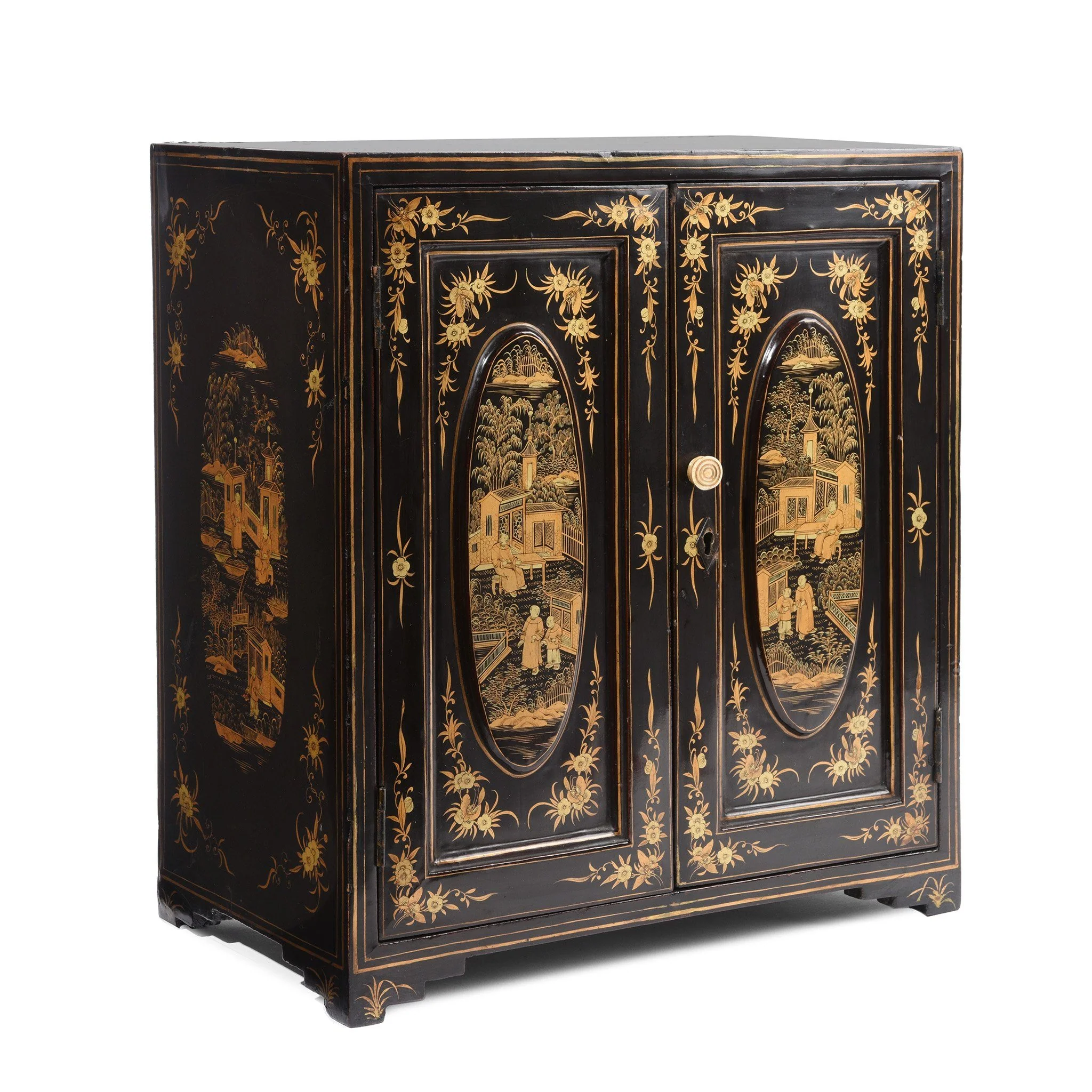
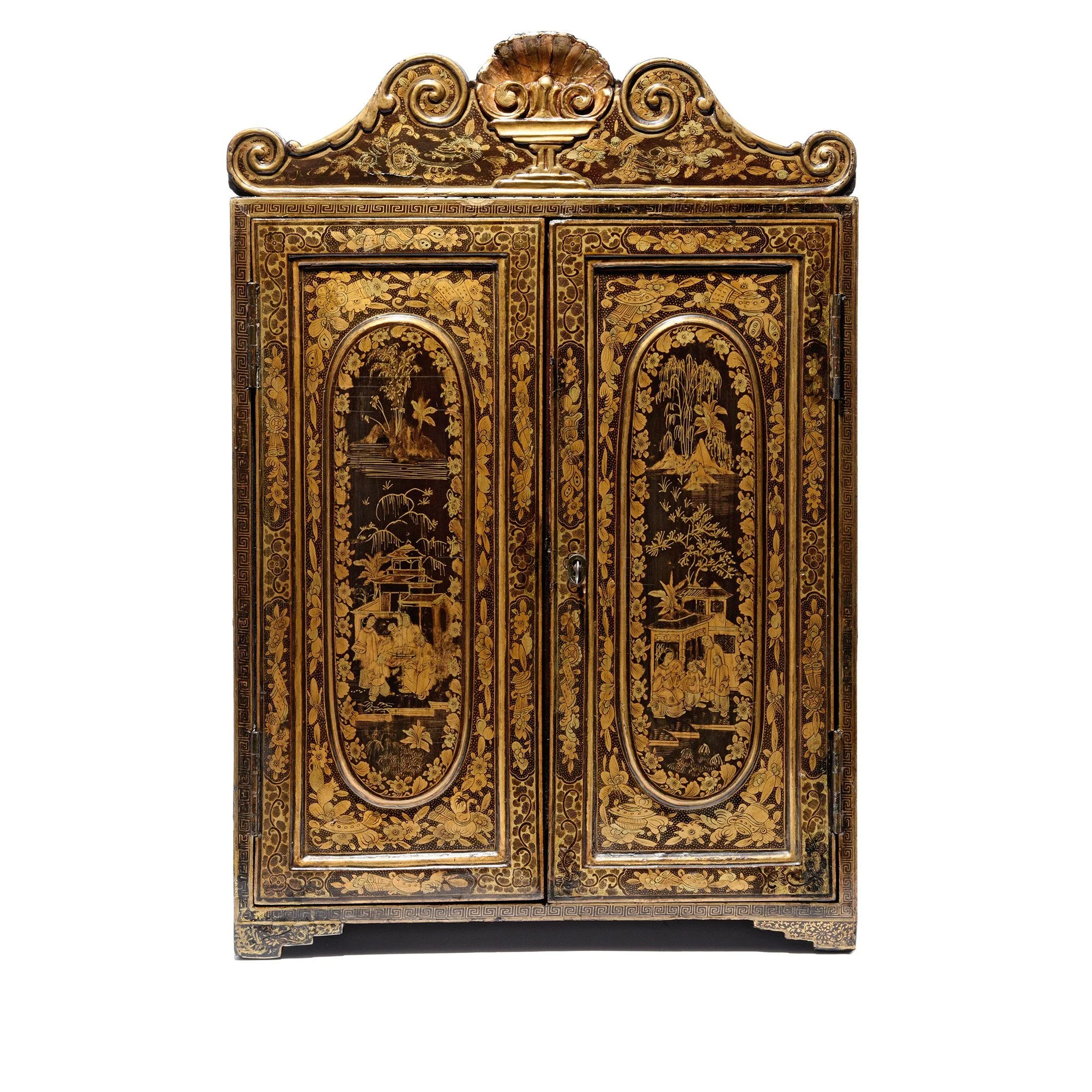
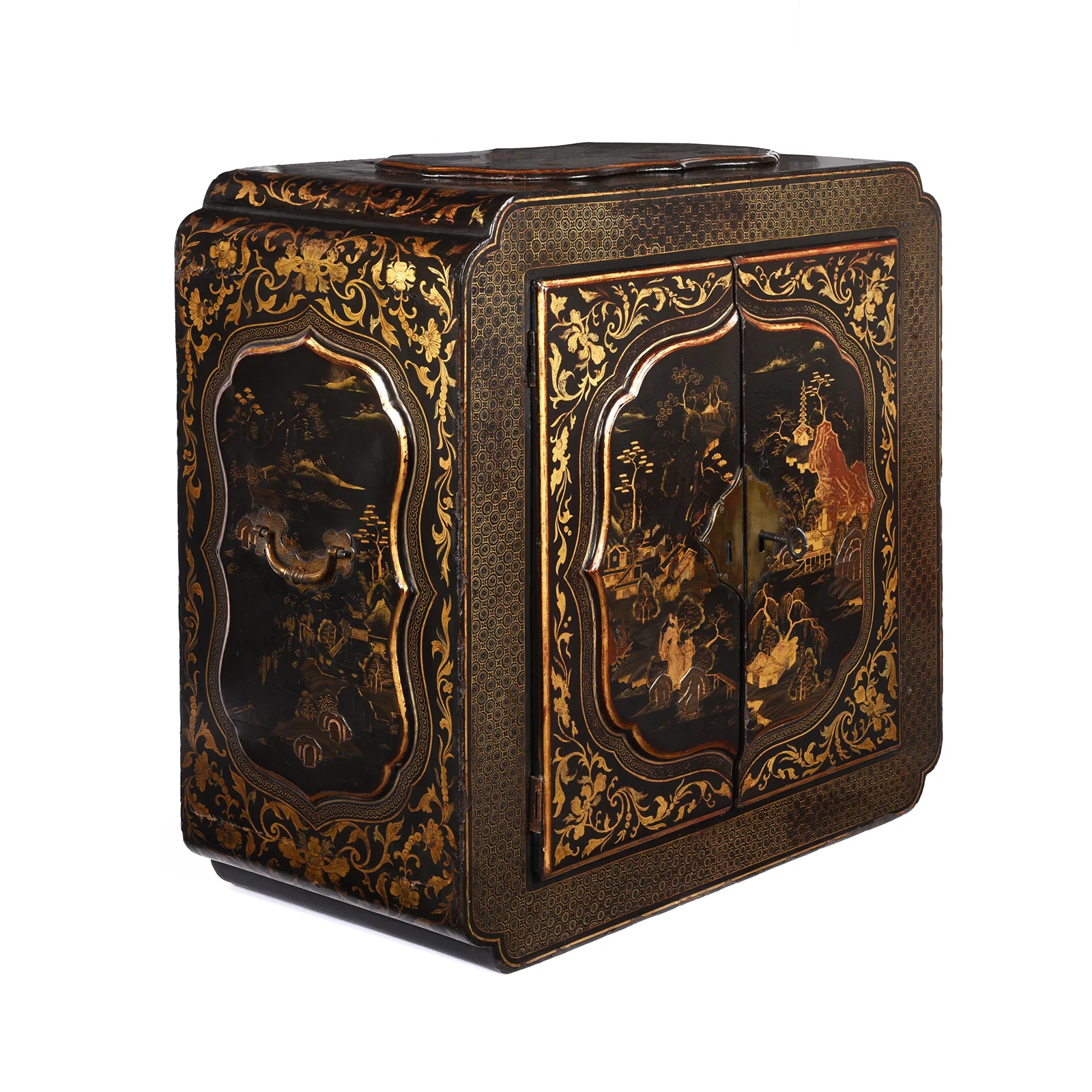
This excellent Chinese export cabinet is one of a kind, deeply unusual in form, and comes with excellent provenance. It's one of the highest quality Chinese export cabinets we've seen and is on par with many of the pieces in the Peabody Essex Museum, the leading museum for Canton export ware.
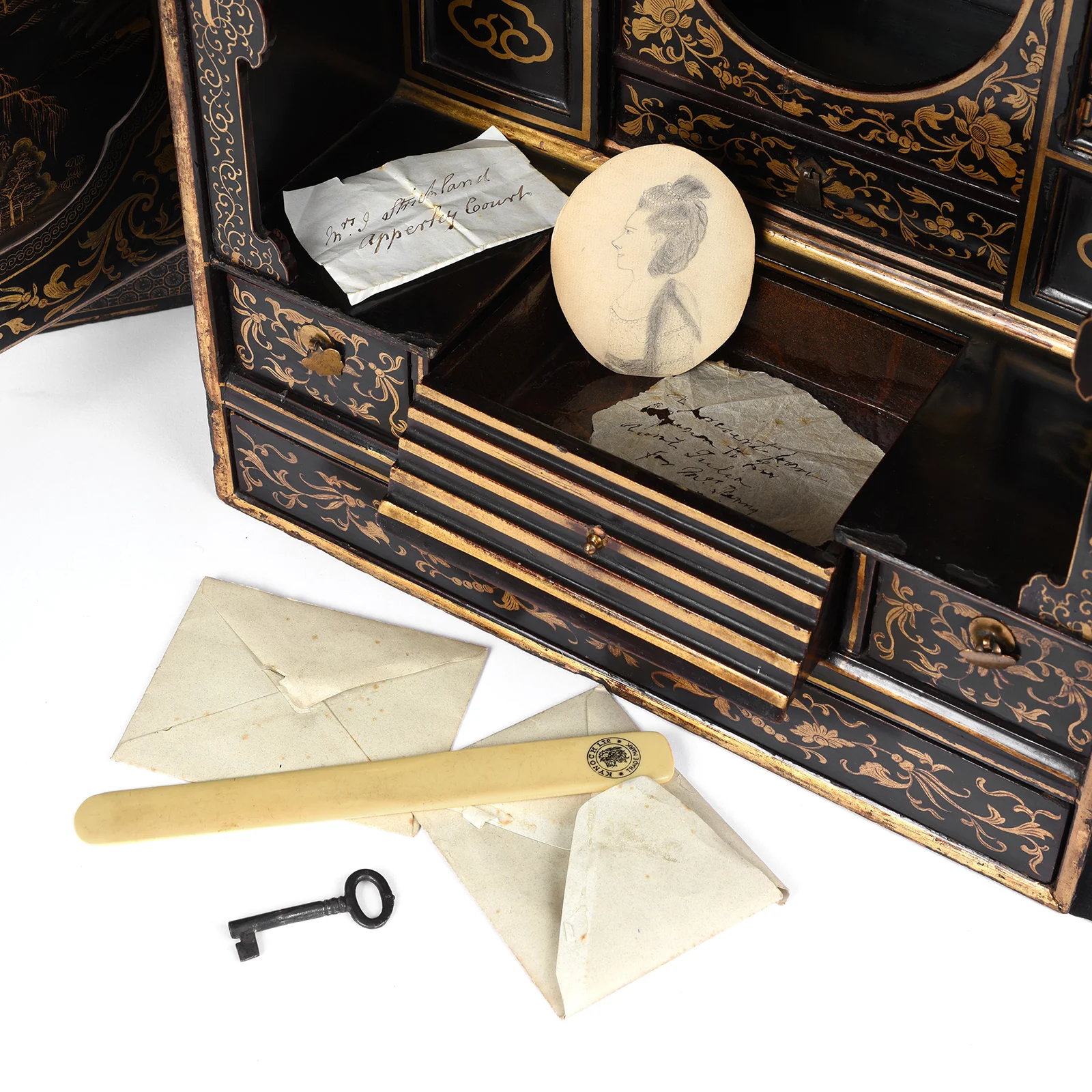
The cabinet was made in Canton in the early 19th century and merges traditional Chinese black lacquer & maki-e gilt work with British brass hardware & depictions of Japanese style shrines. This cabinet was purchased from Apperly Court in Gloucestershire and was purchased by Algernon Strickland (1816 - 18/09/1835) as a present to his 'Aunt Julia' (Juliana Sabrina Strickland 1765 - 21/09/1849) for 'Fanny Strickland' (Frances Strickland, Algernon's sister 1803 - 10/04/1888). As Algernon died in 1835 of Yellow Fever, this cabinet was made before 1832.
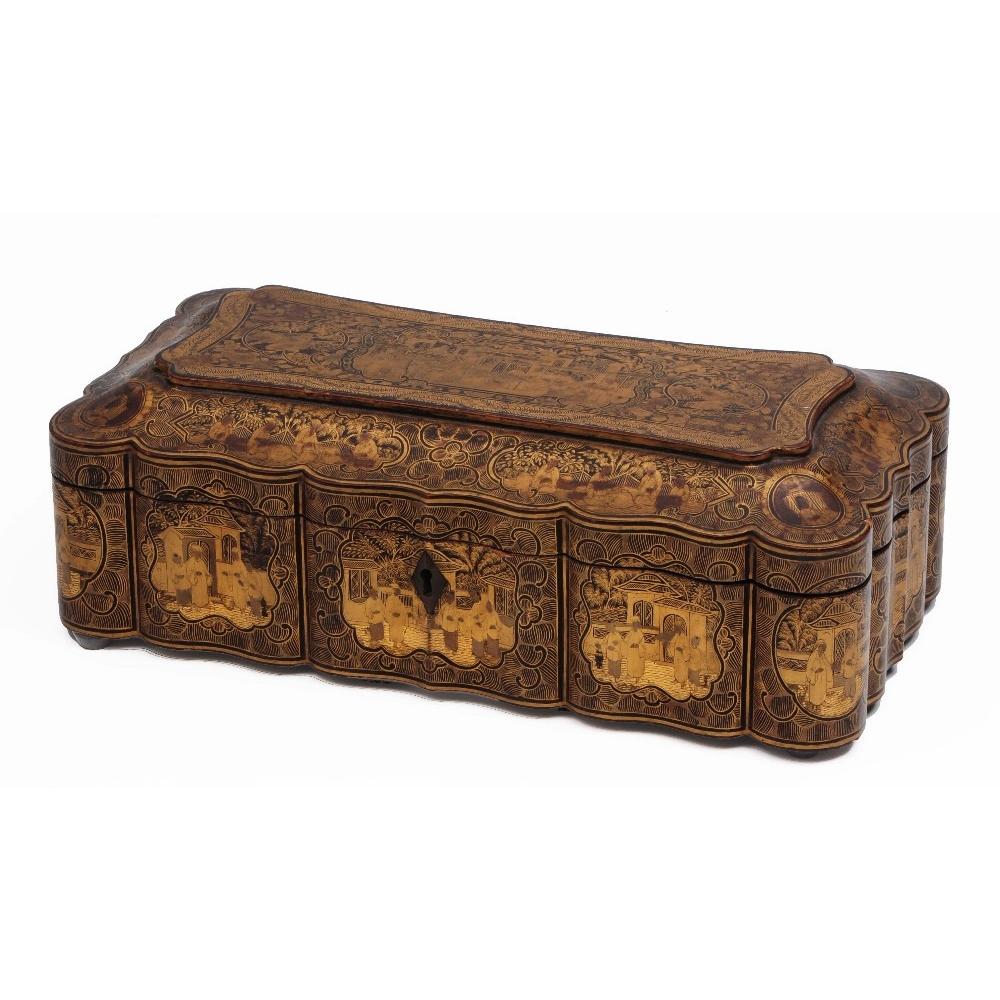
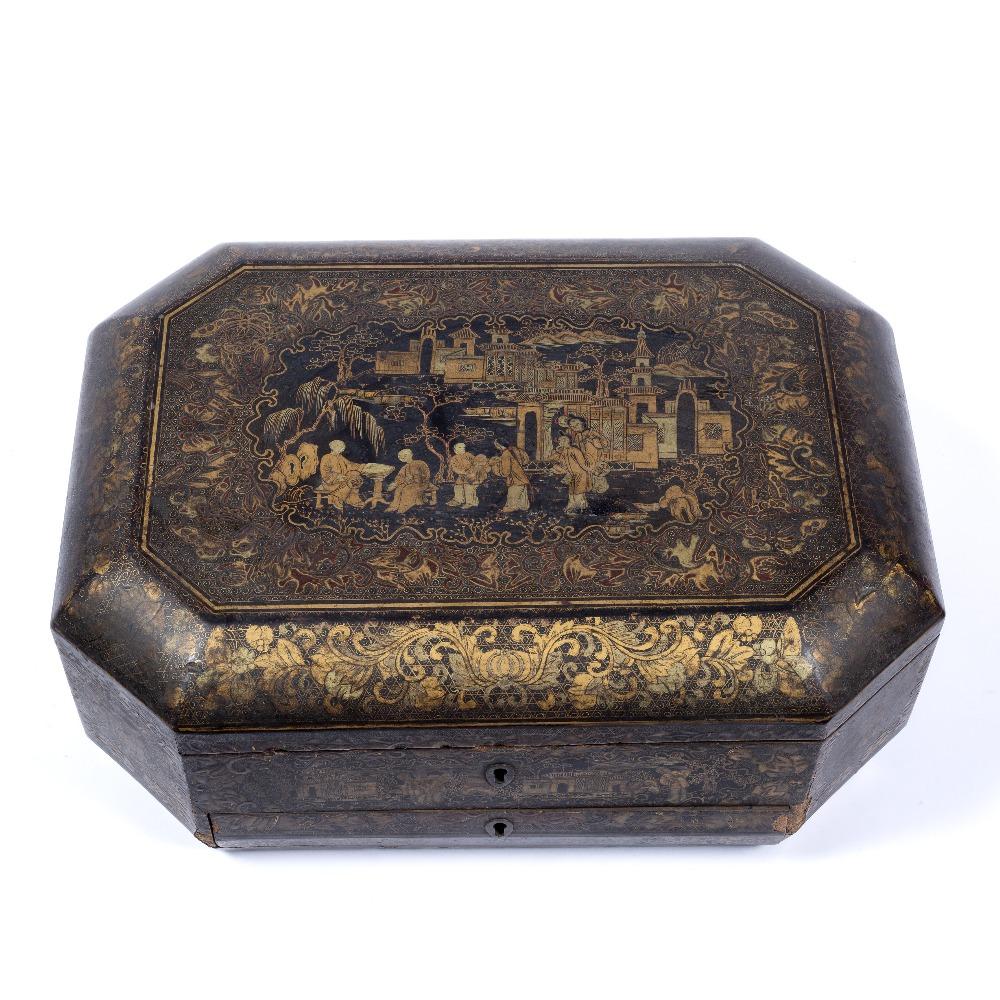
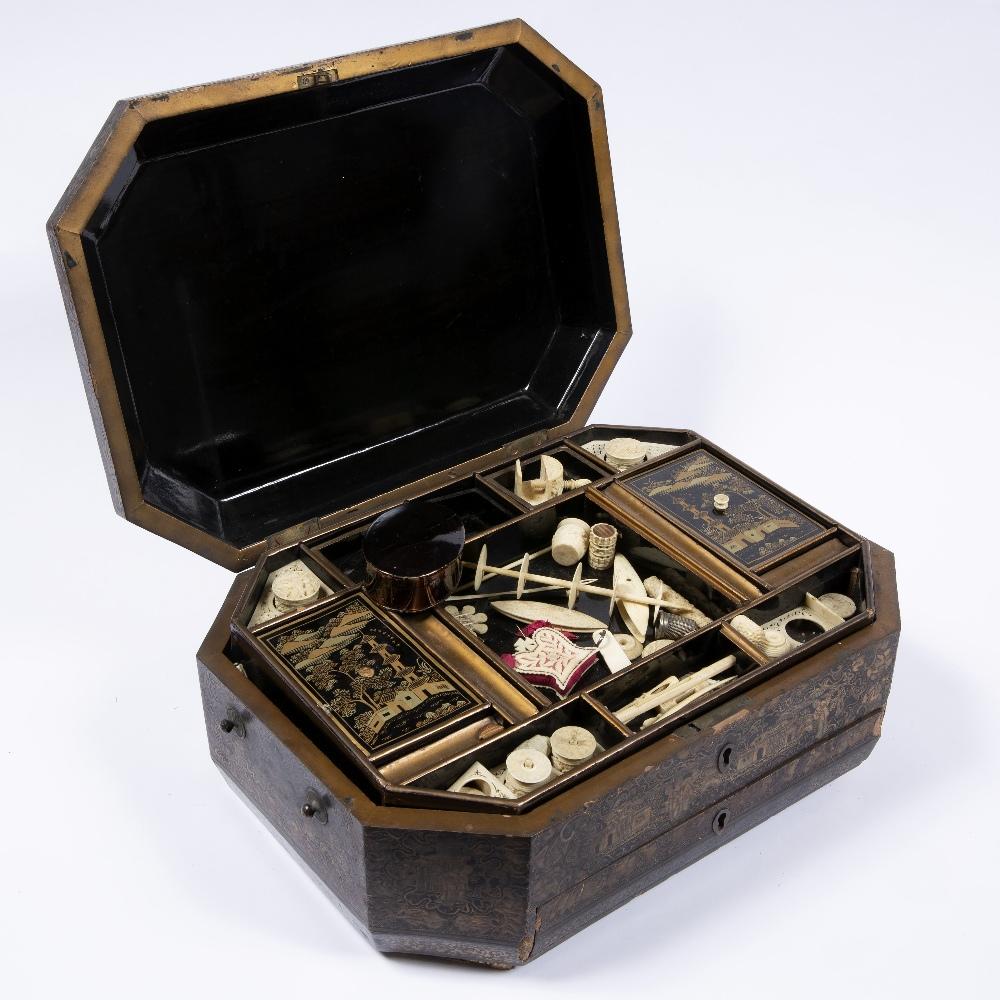
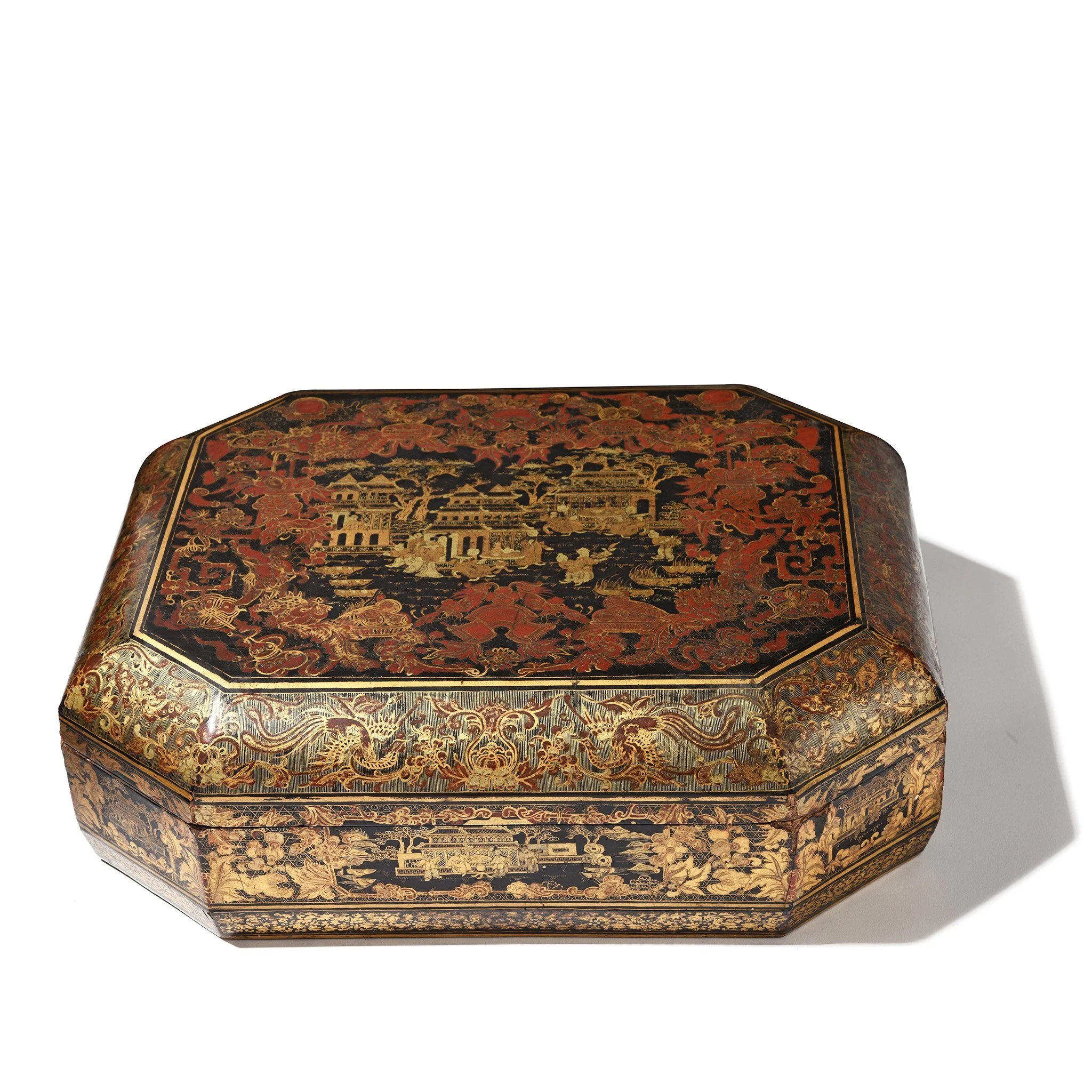
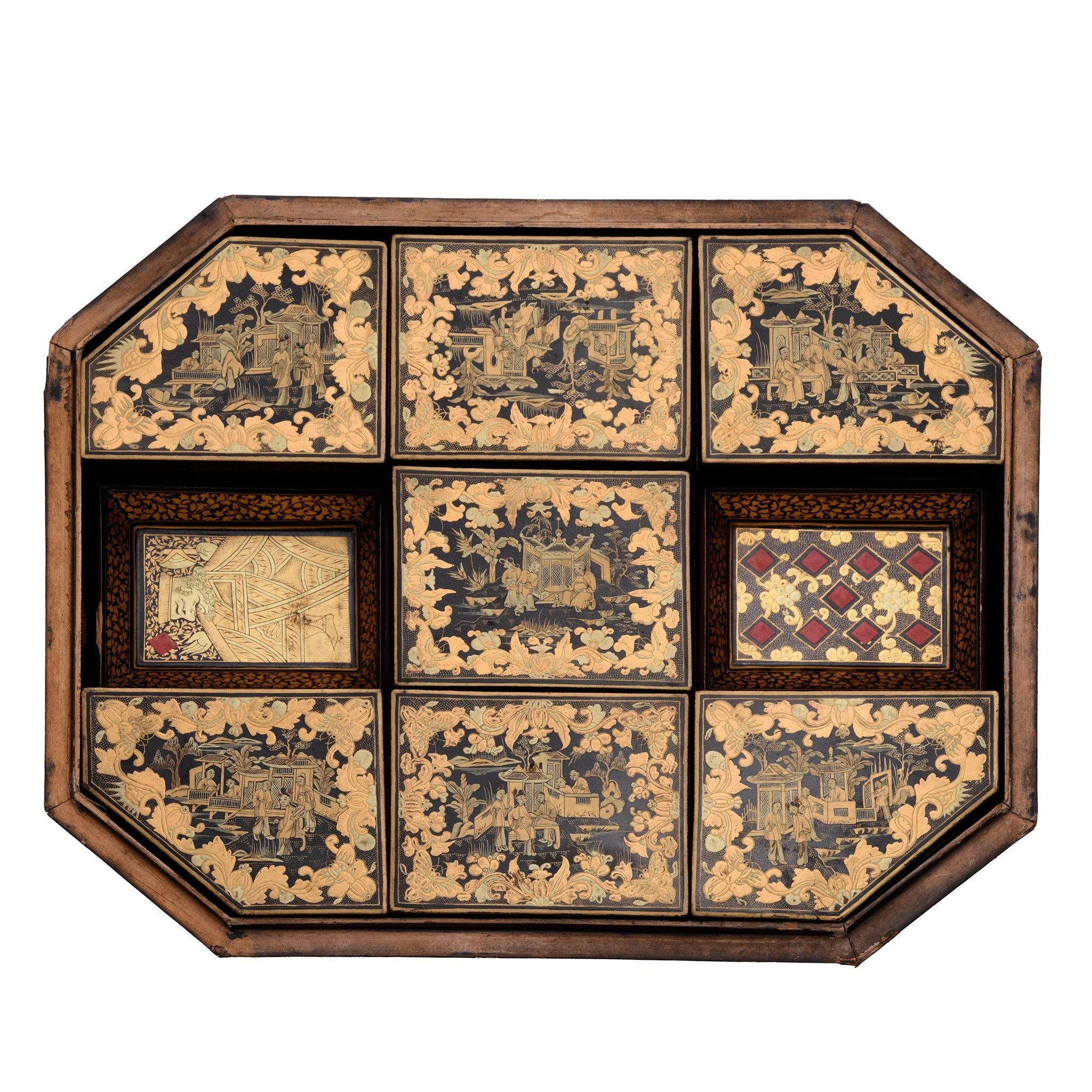
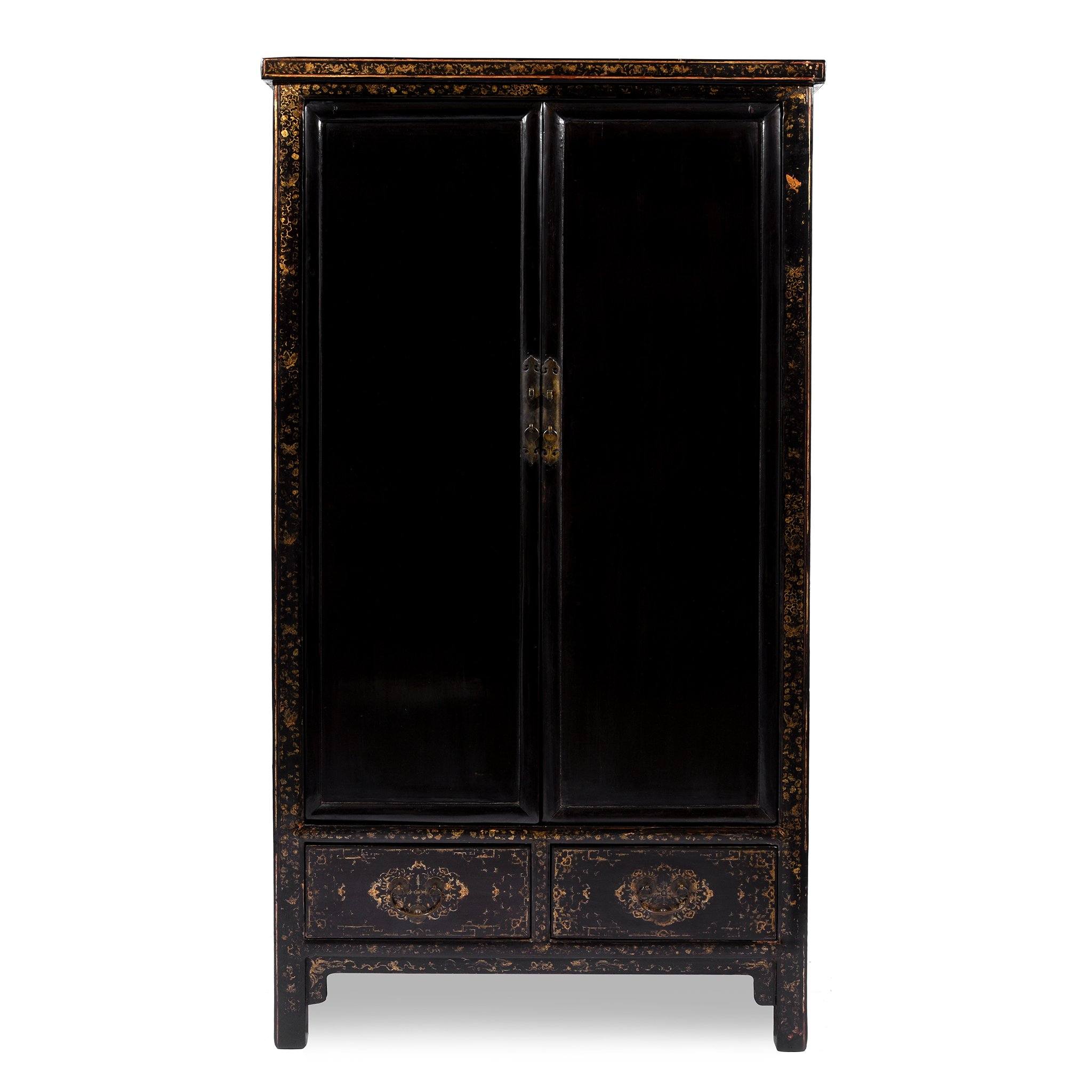
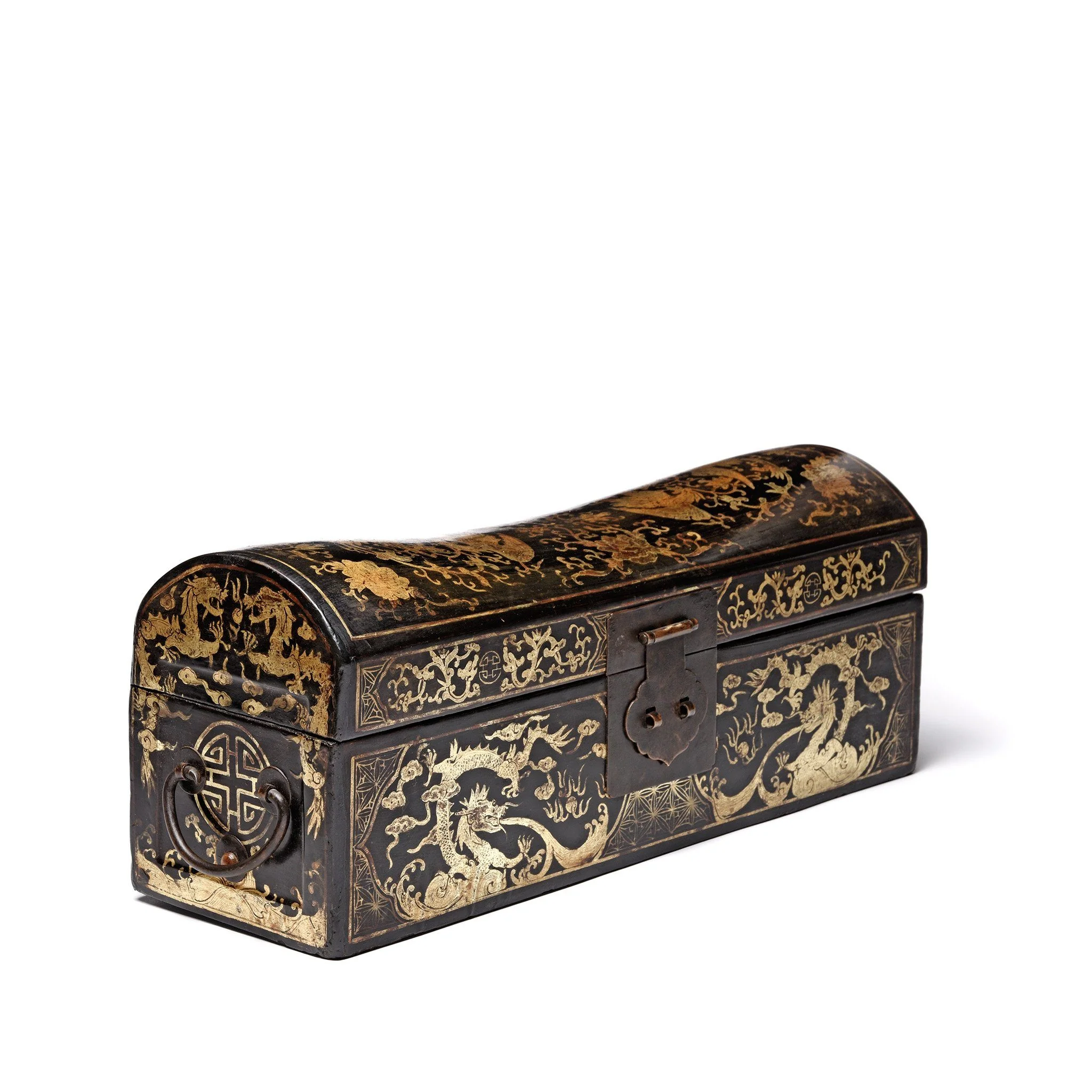
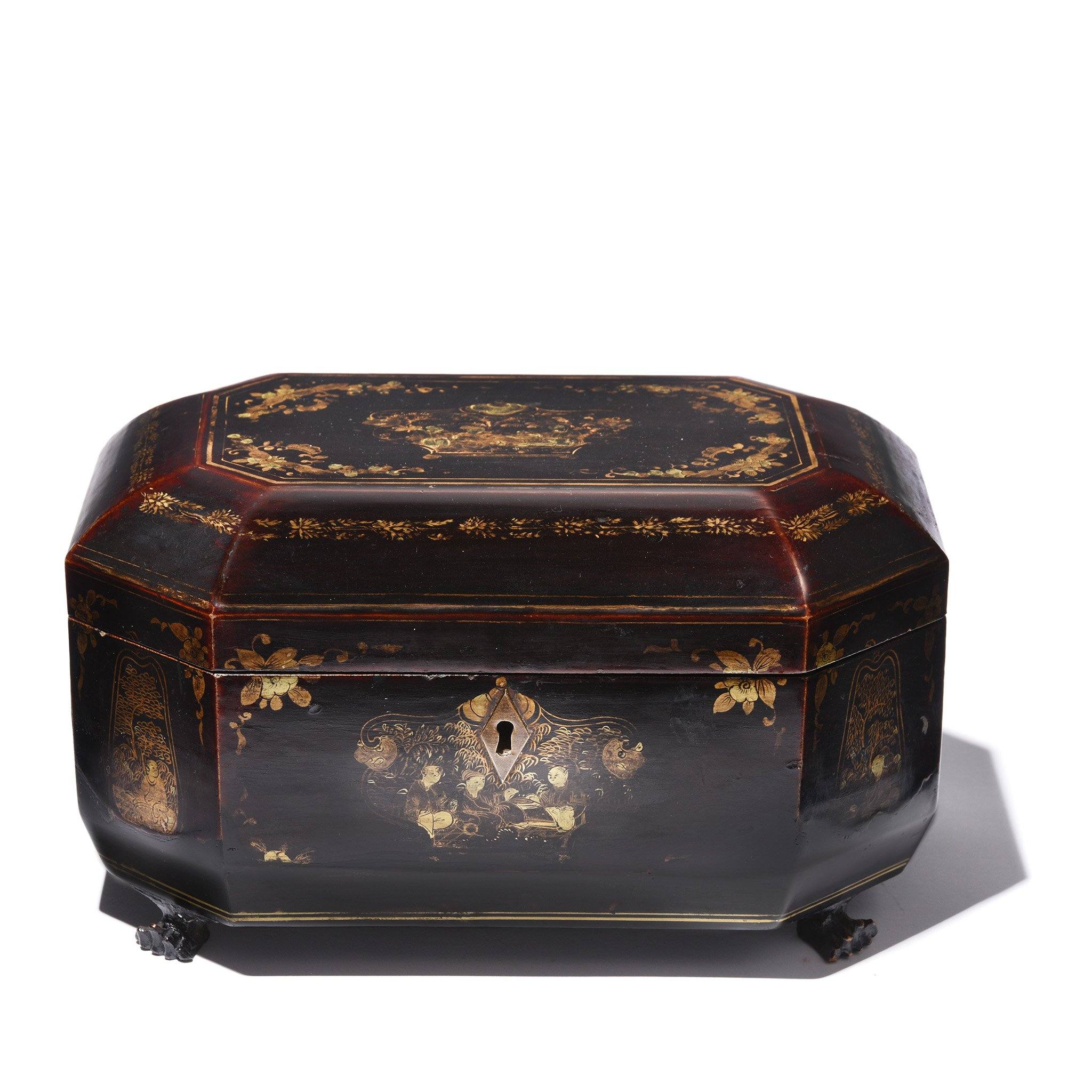
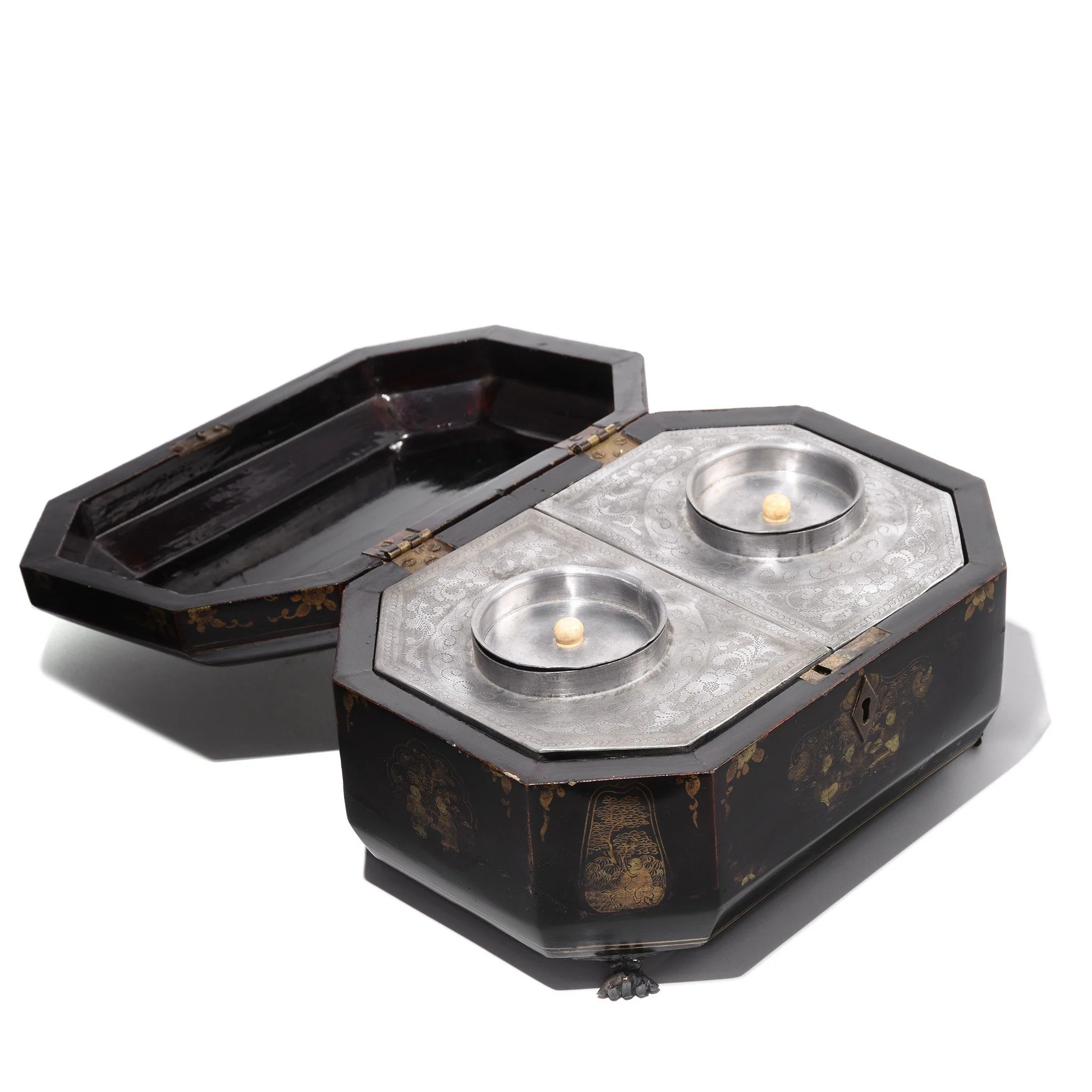
These Chinese export table cabinets were made for wealthy members of the Western upper class in the Qing dynasty including the Georgians when Chinoiserie was all the rage in the early 19th century. Black lacquer export sewing kits, game boxes, tea caddies, and chess tables were also made.
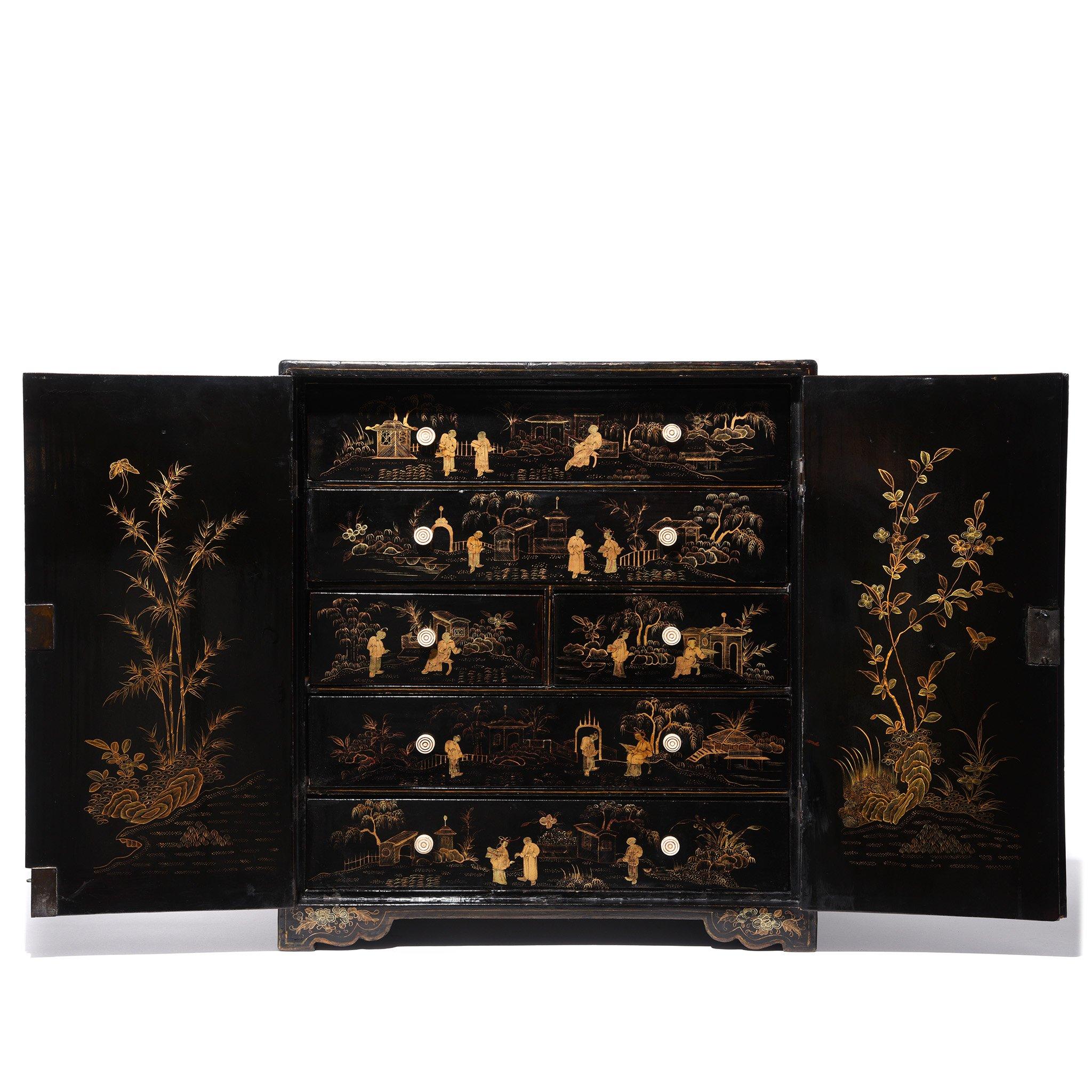
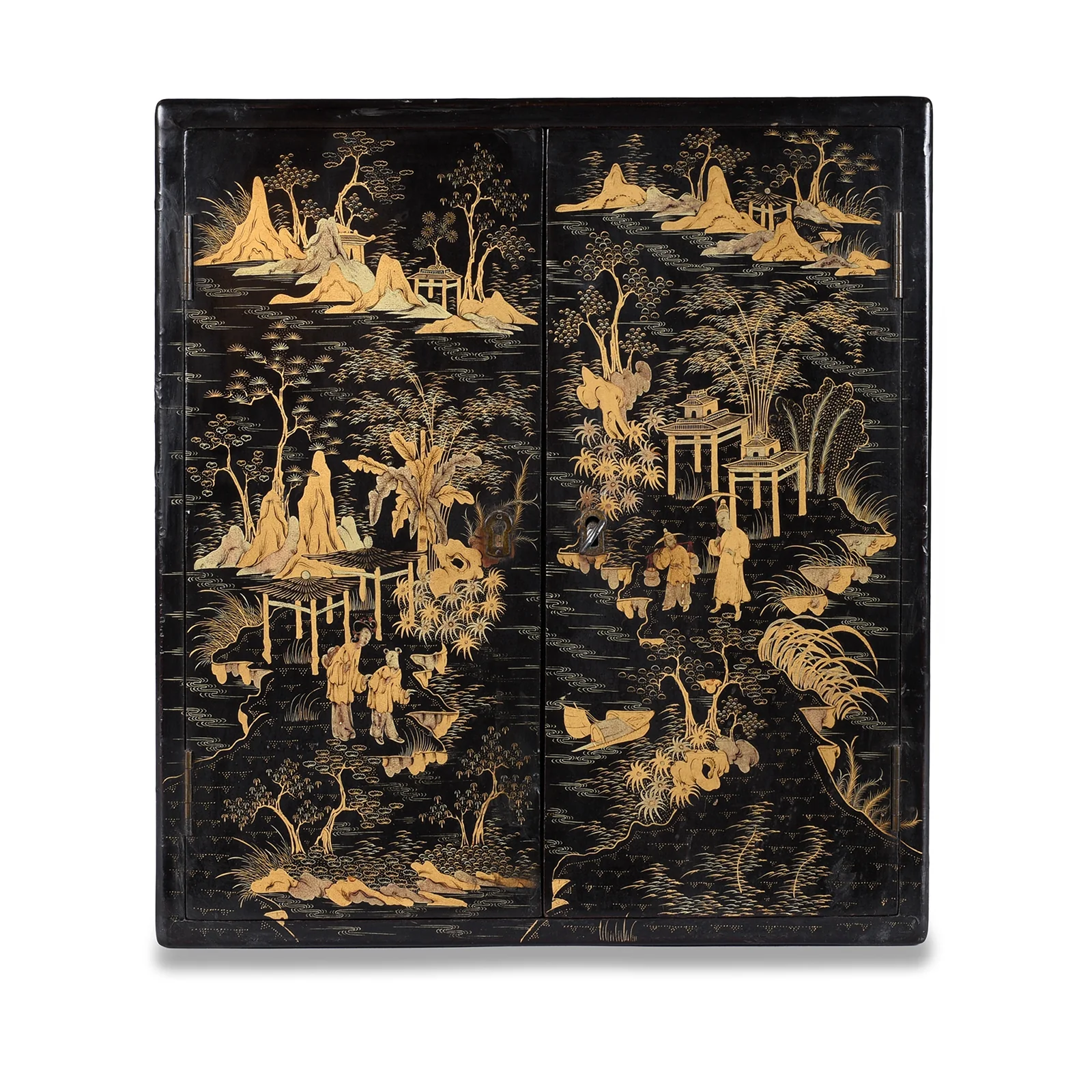
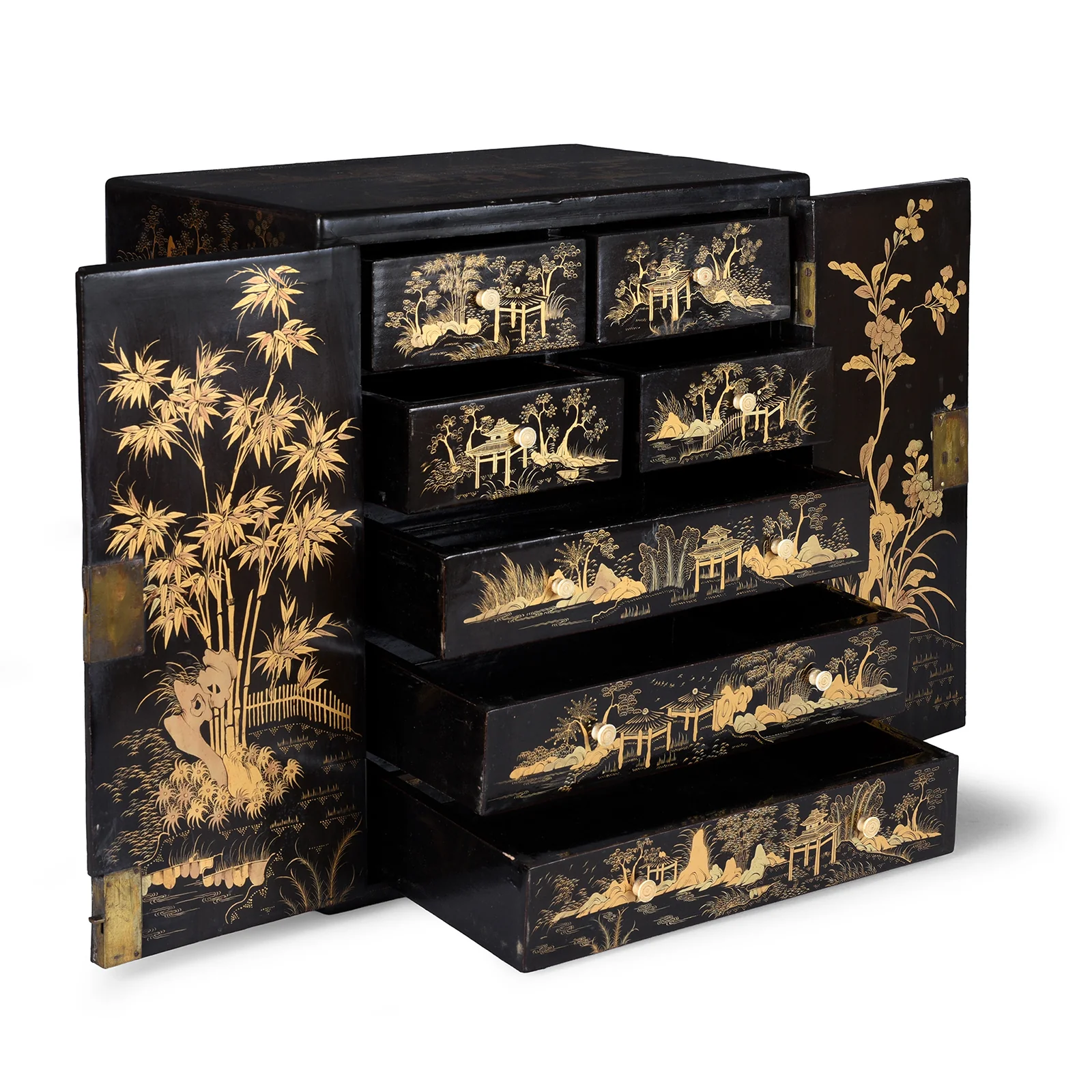
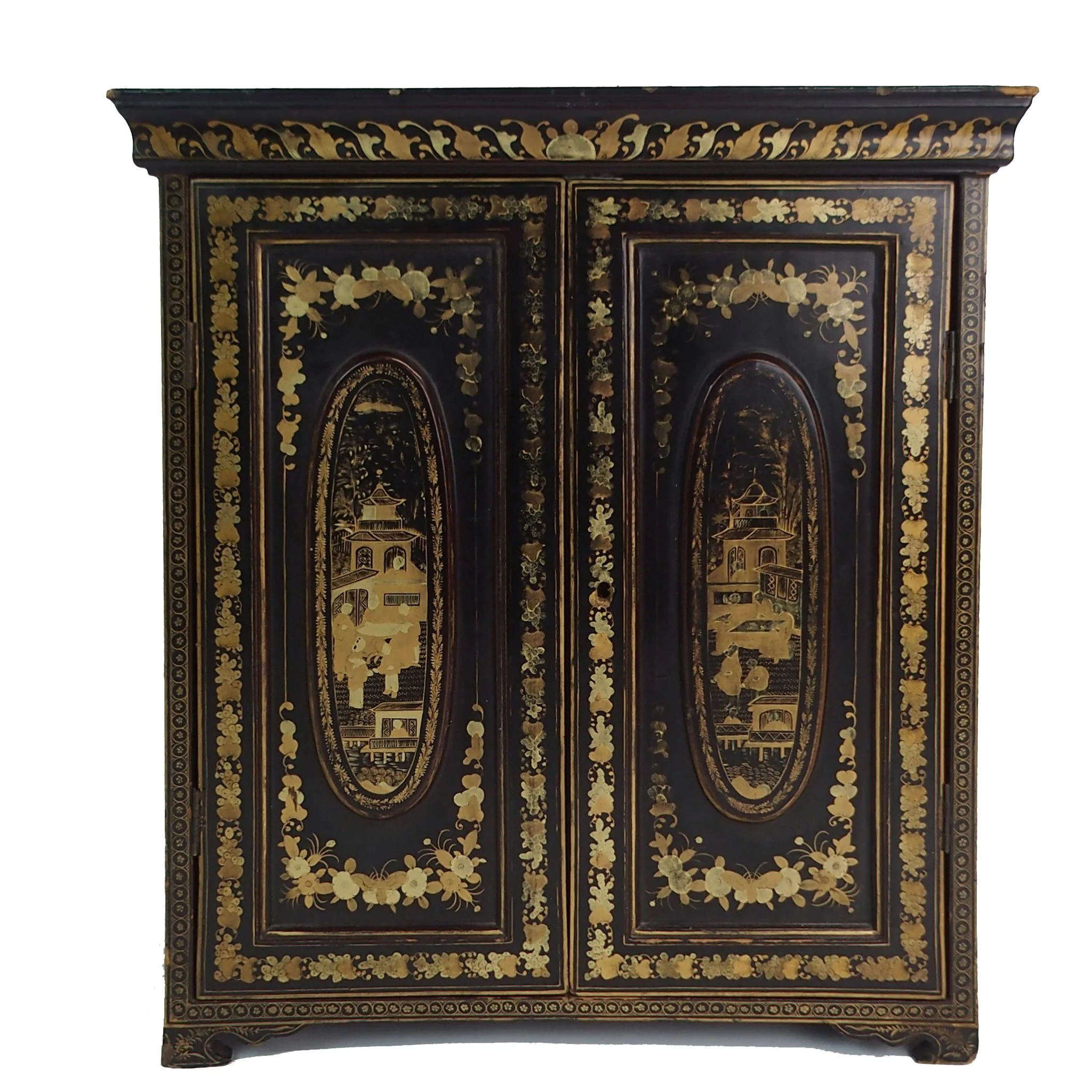
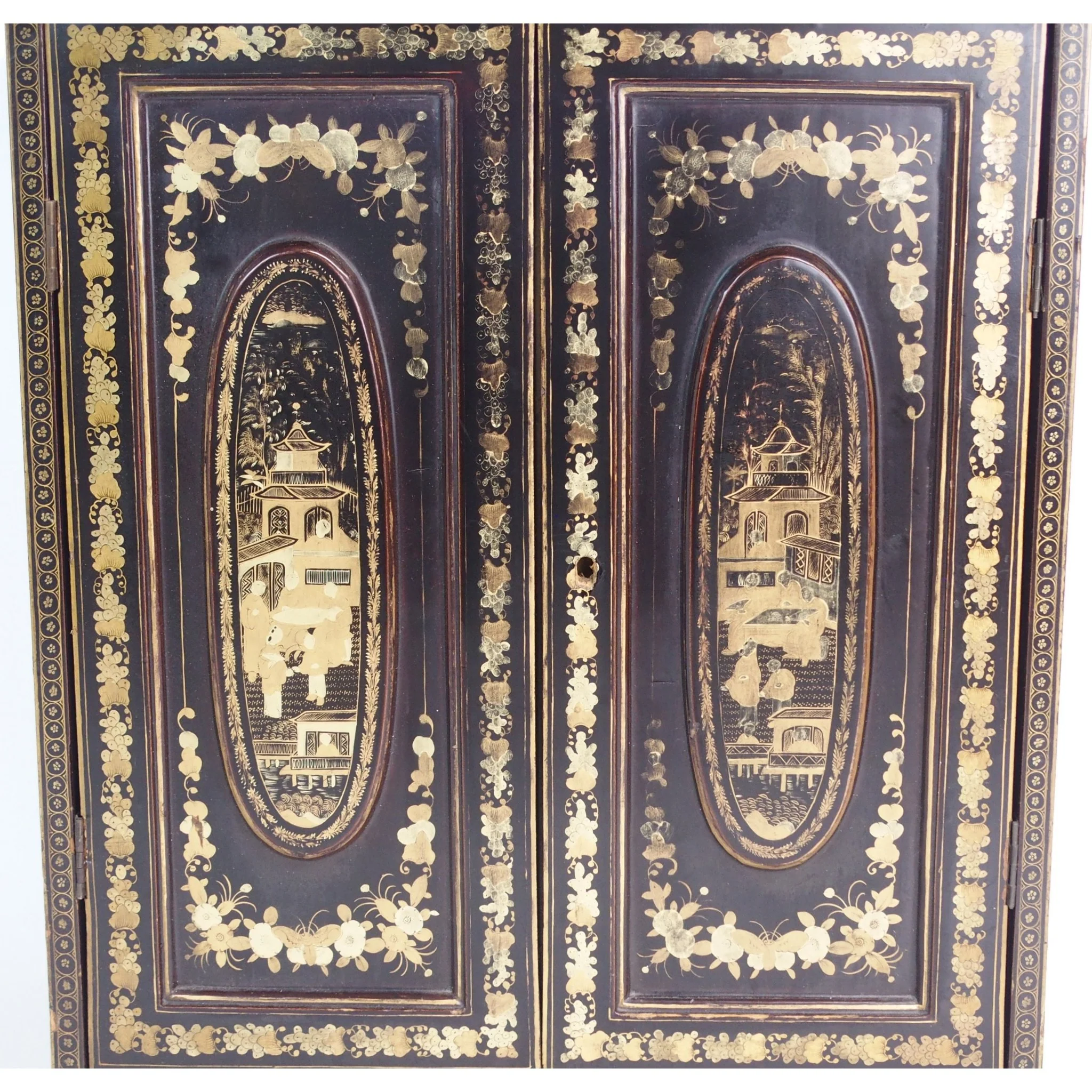
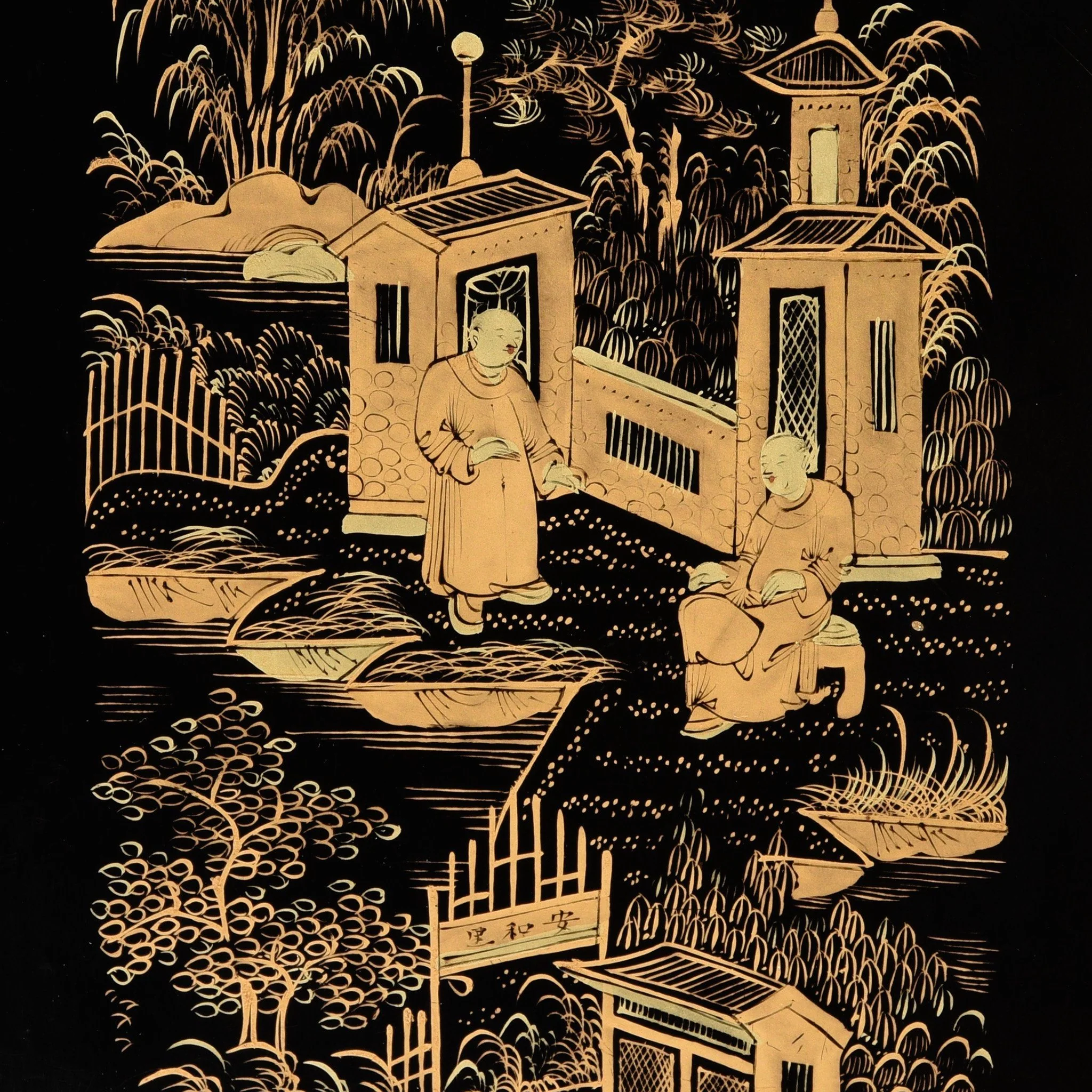
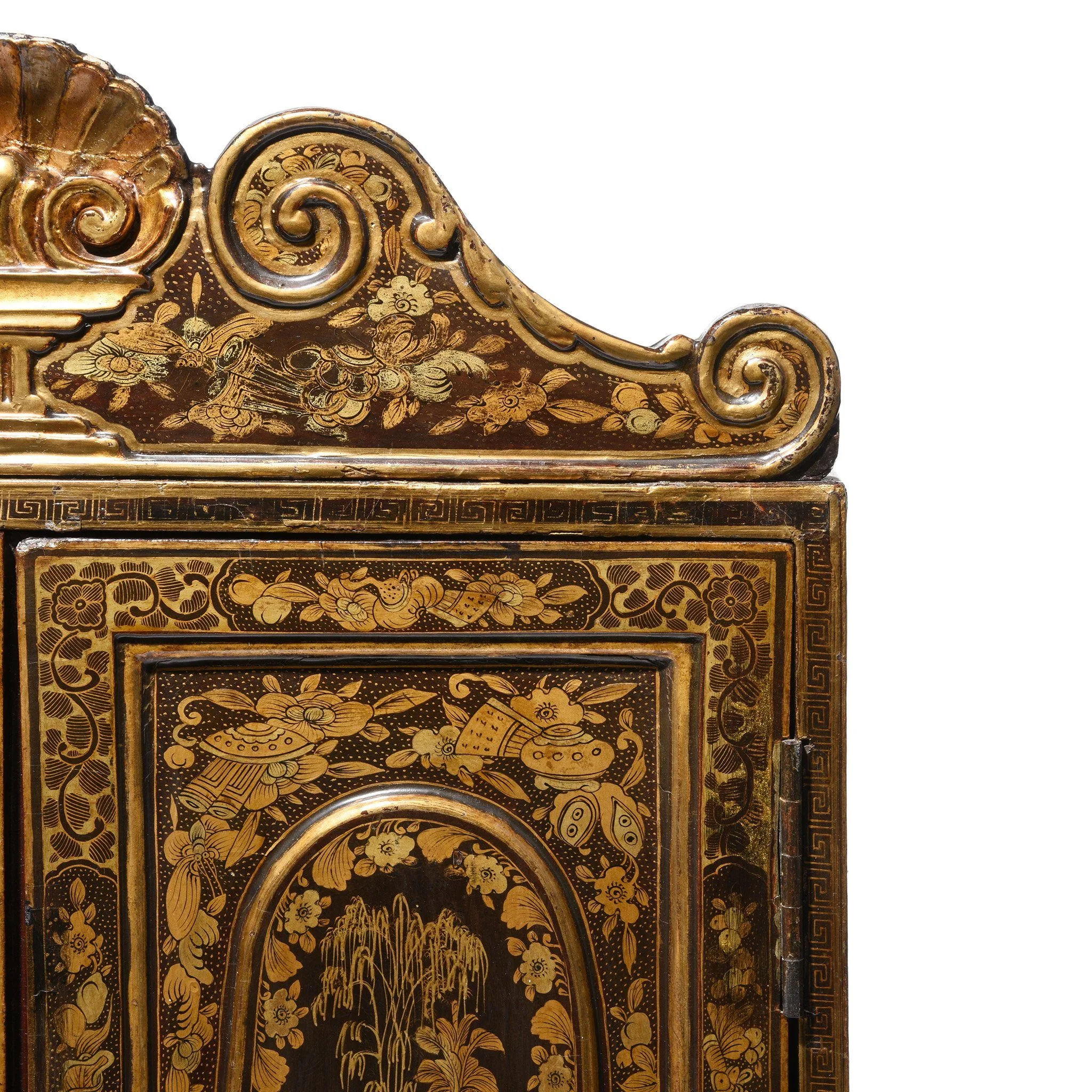
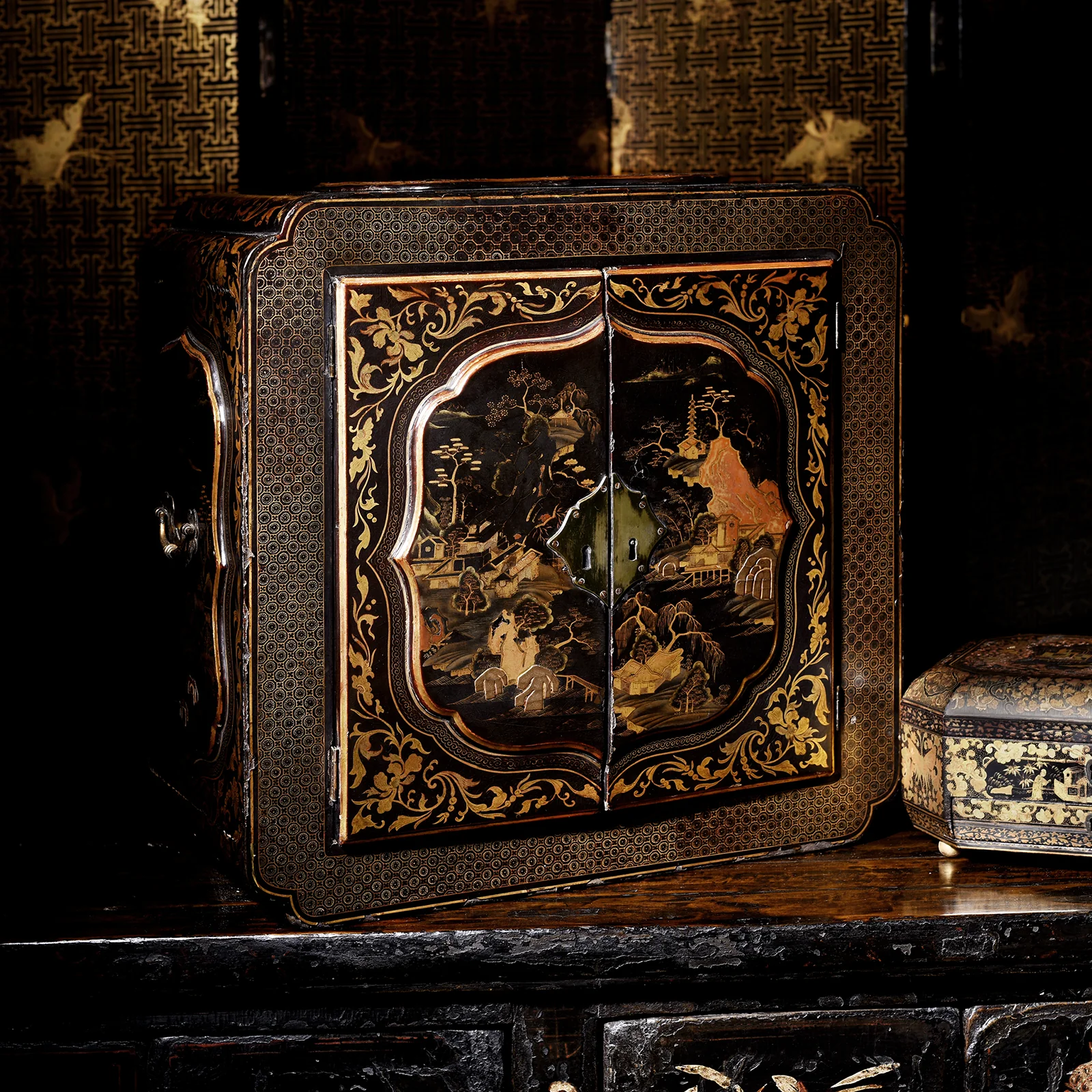
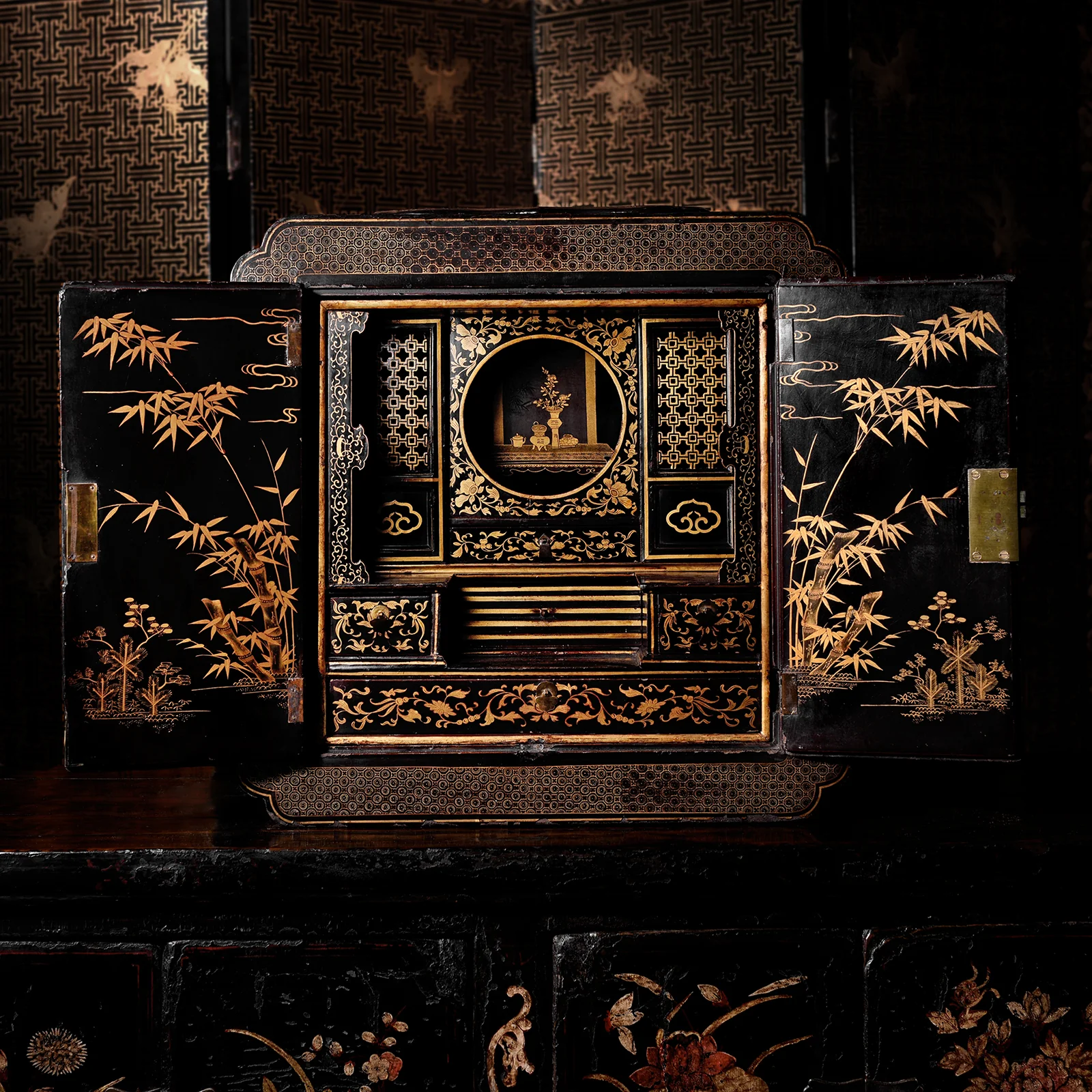
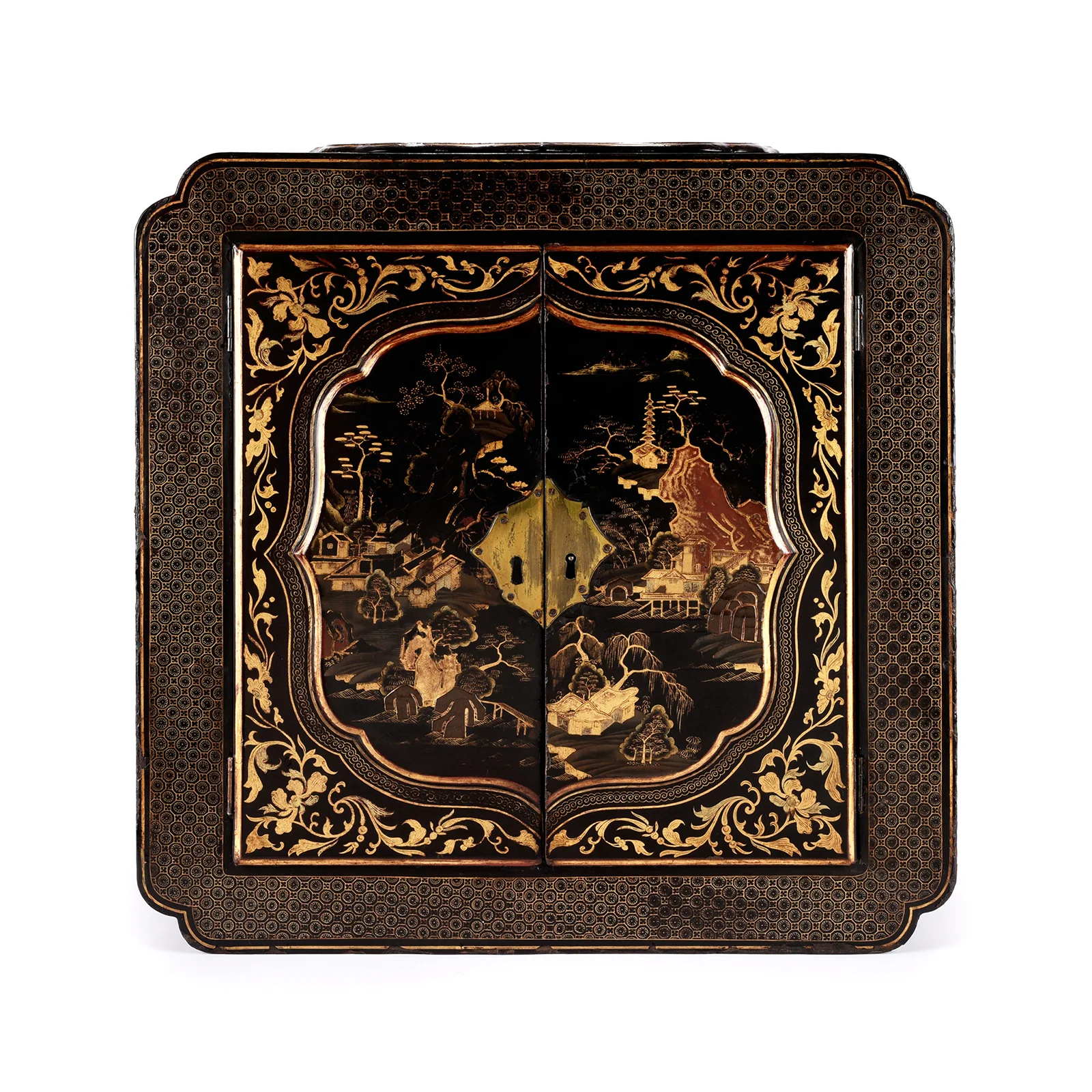
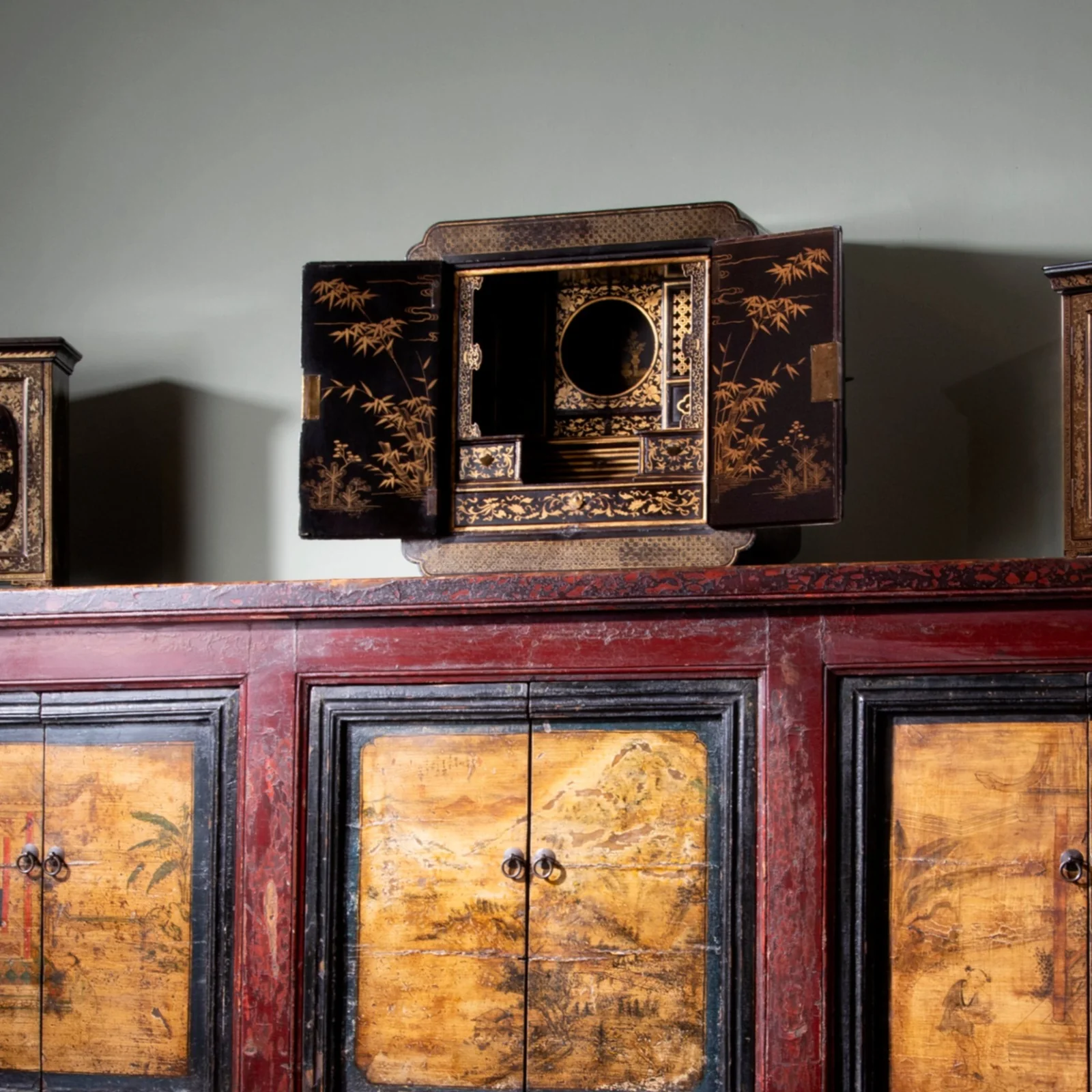
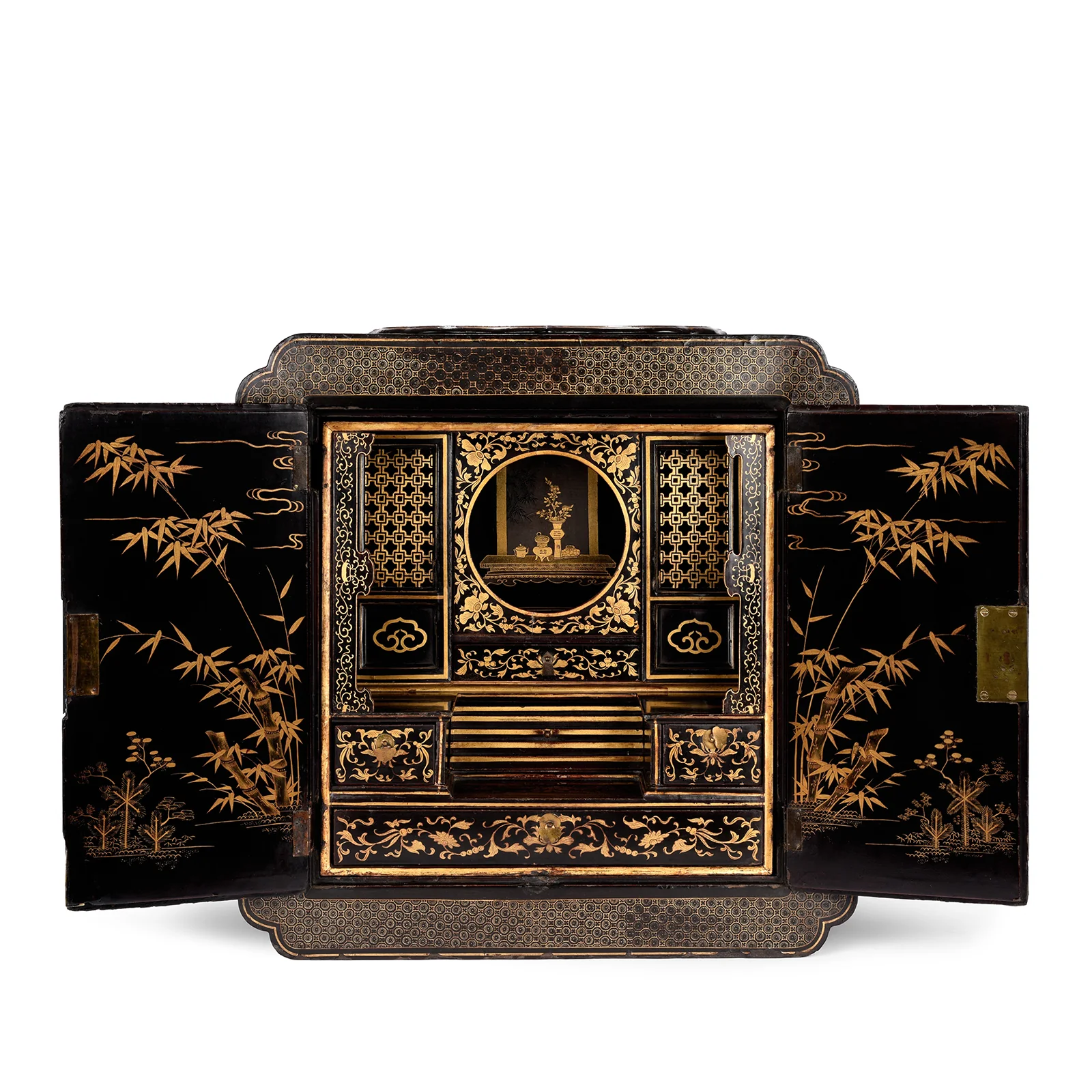
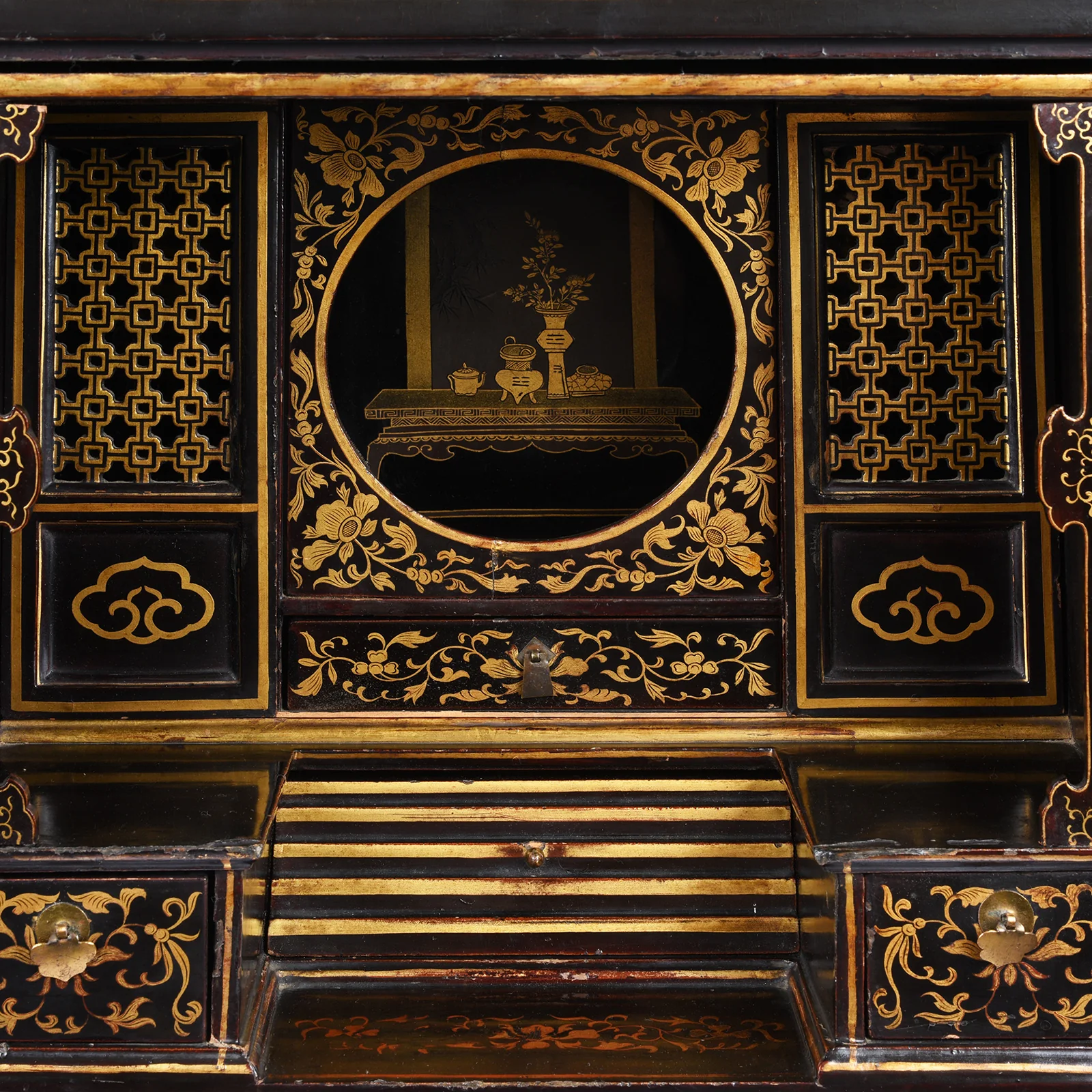
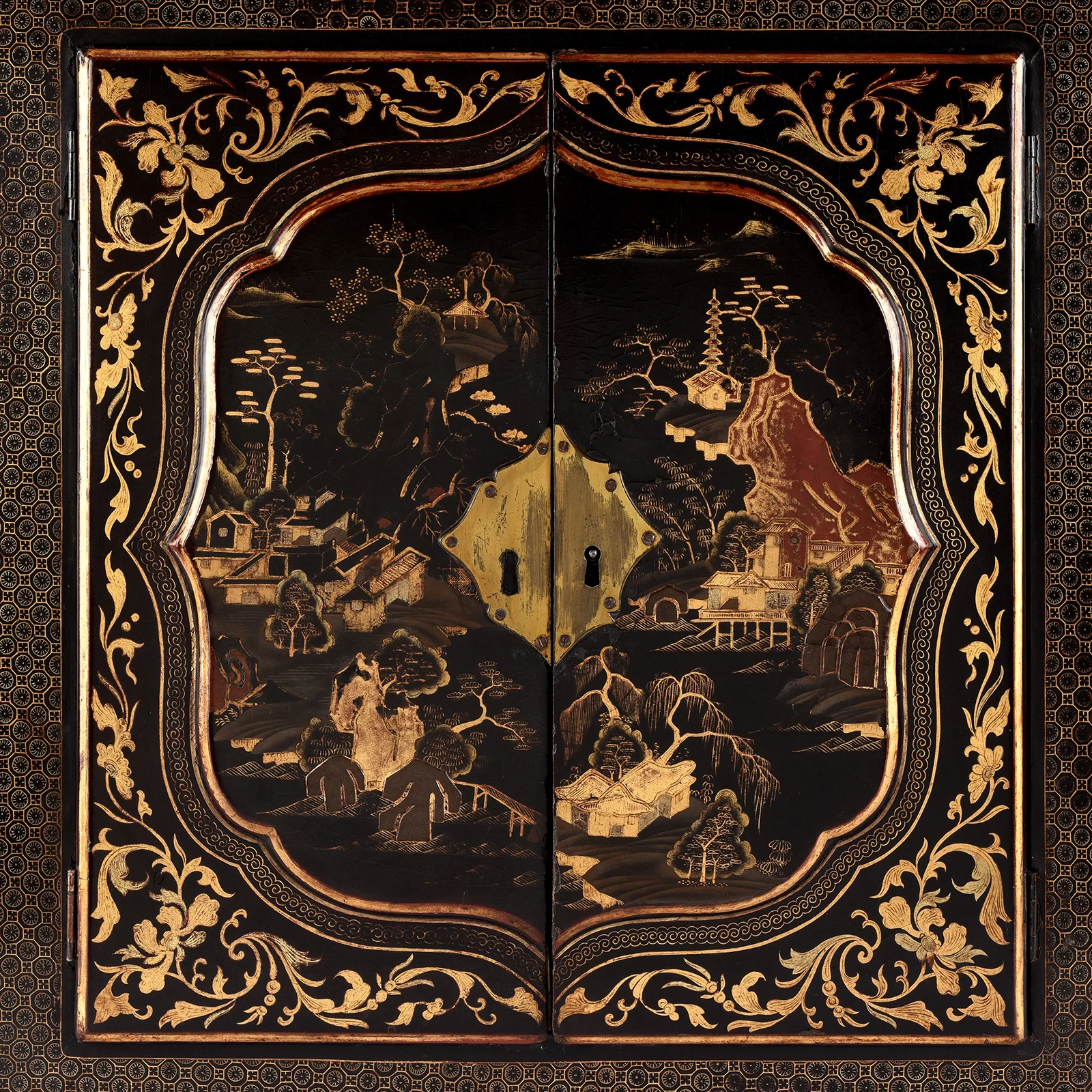
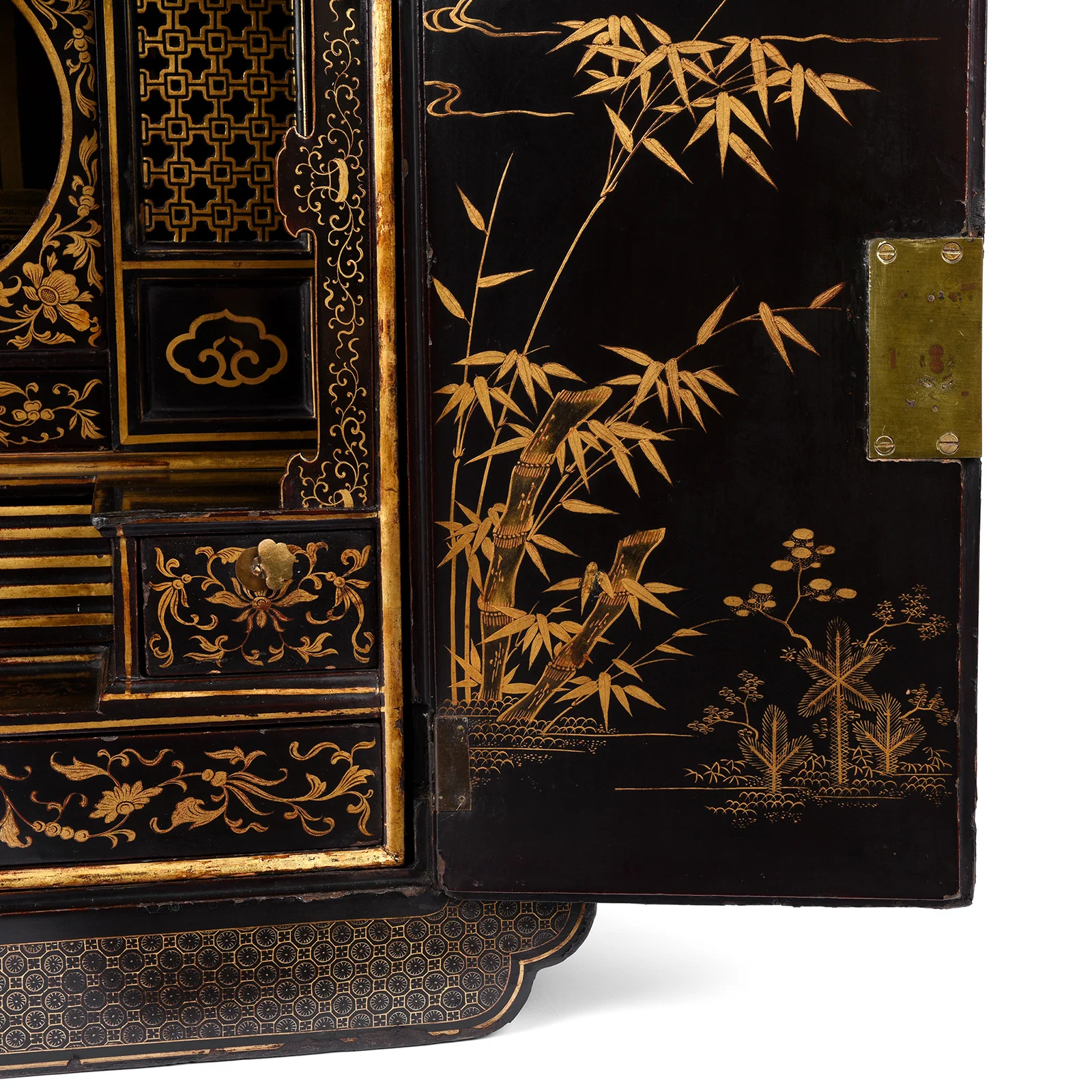
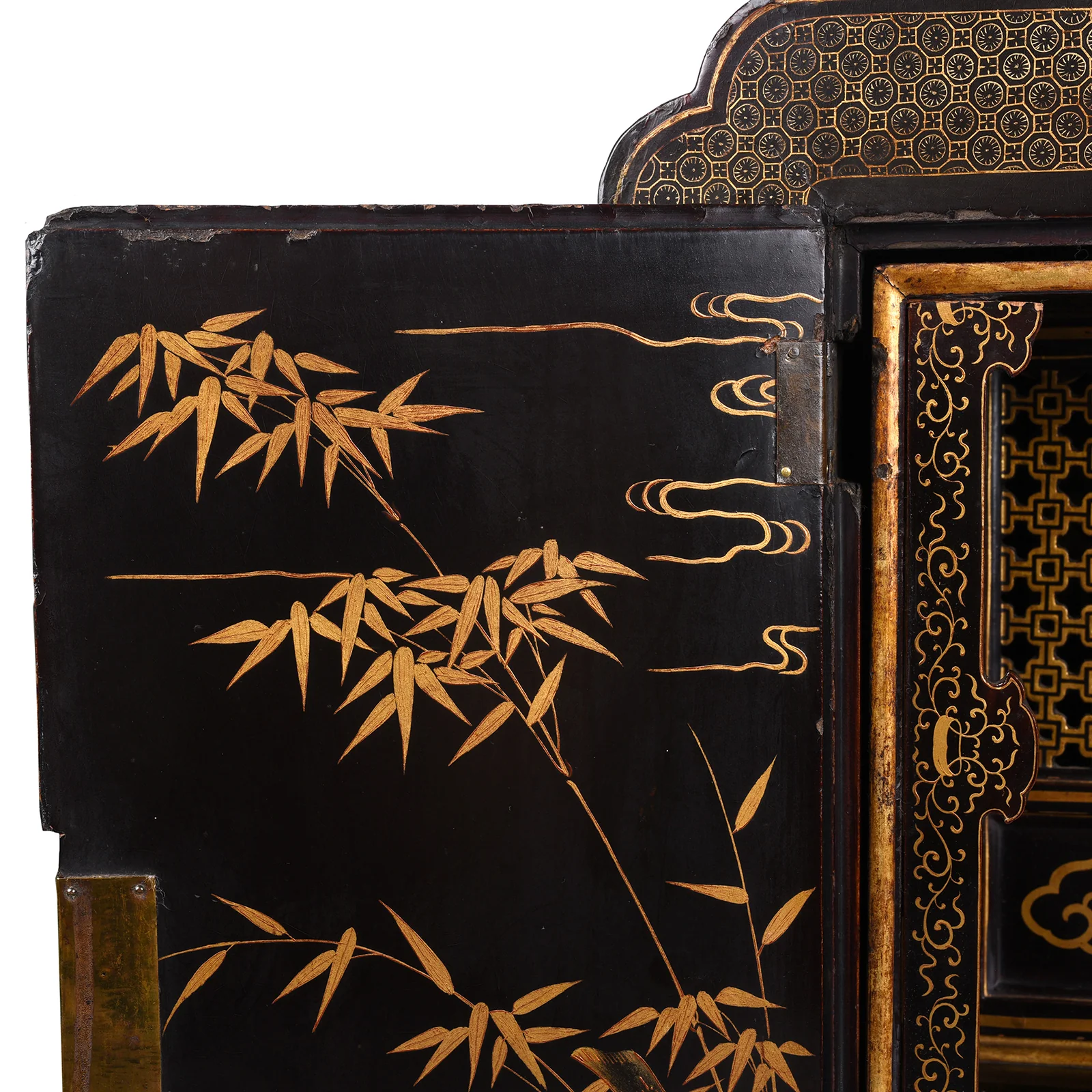
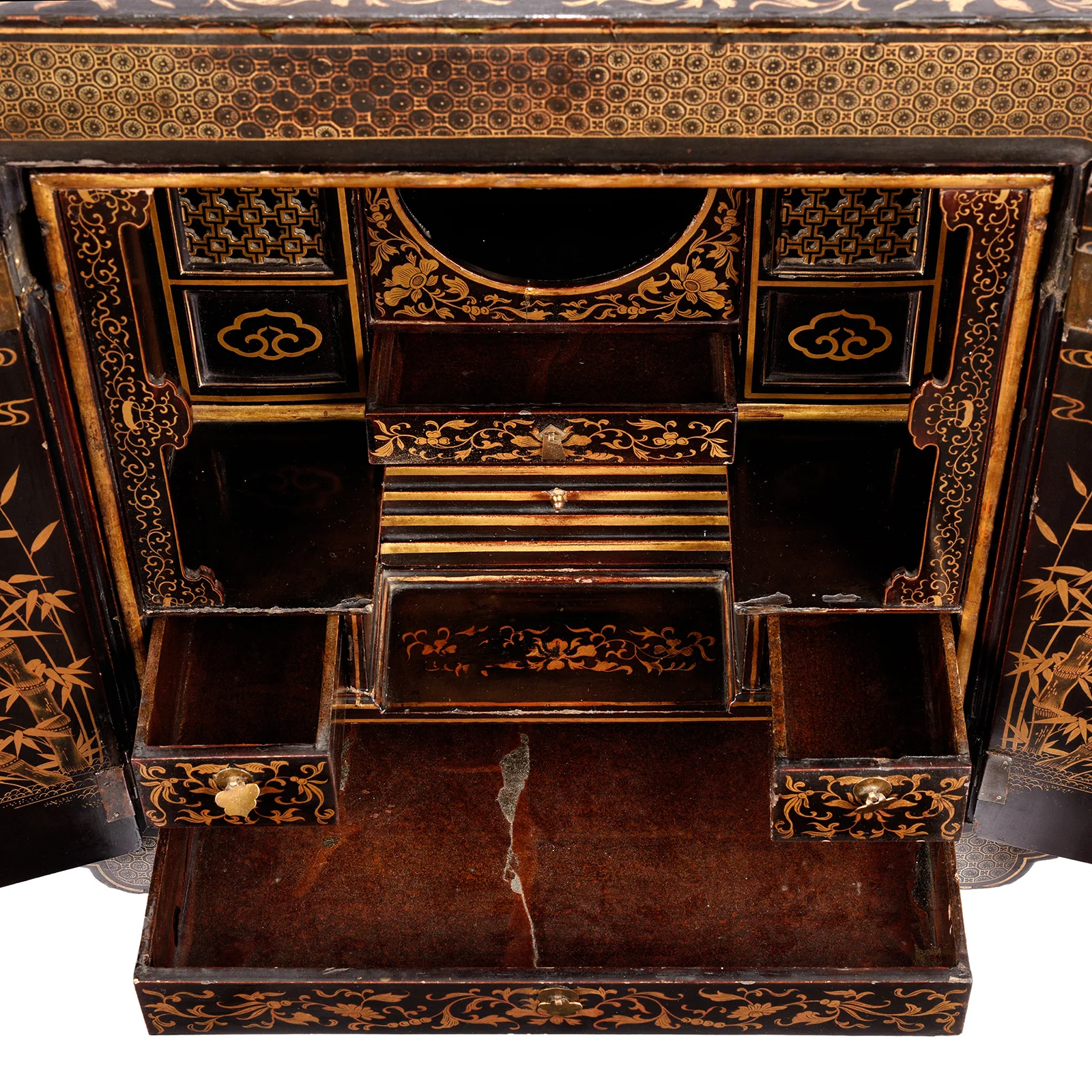
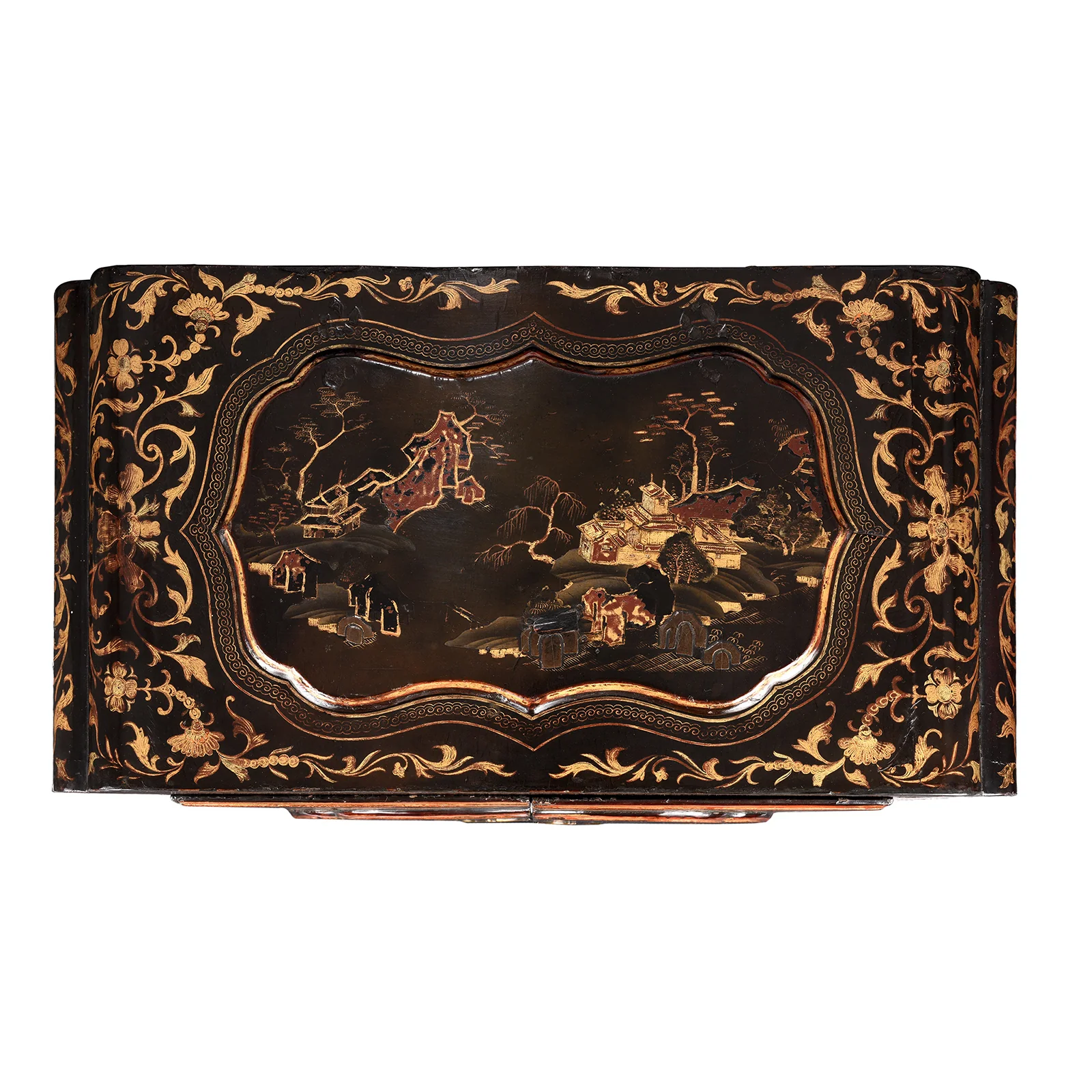
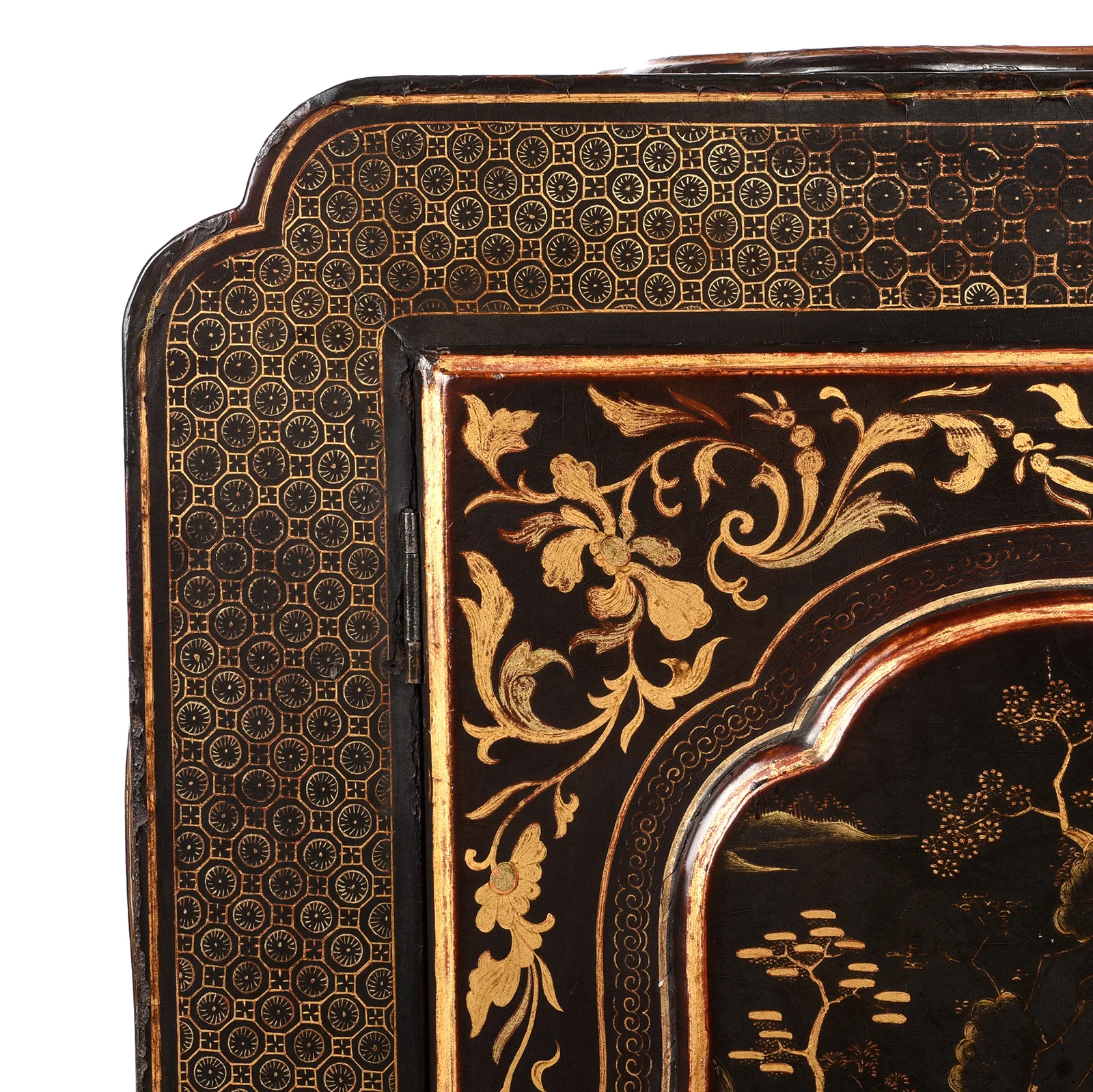
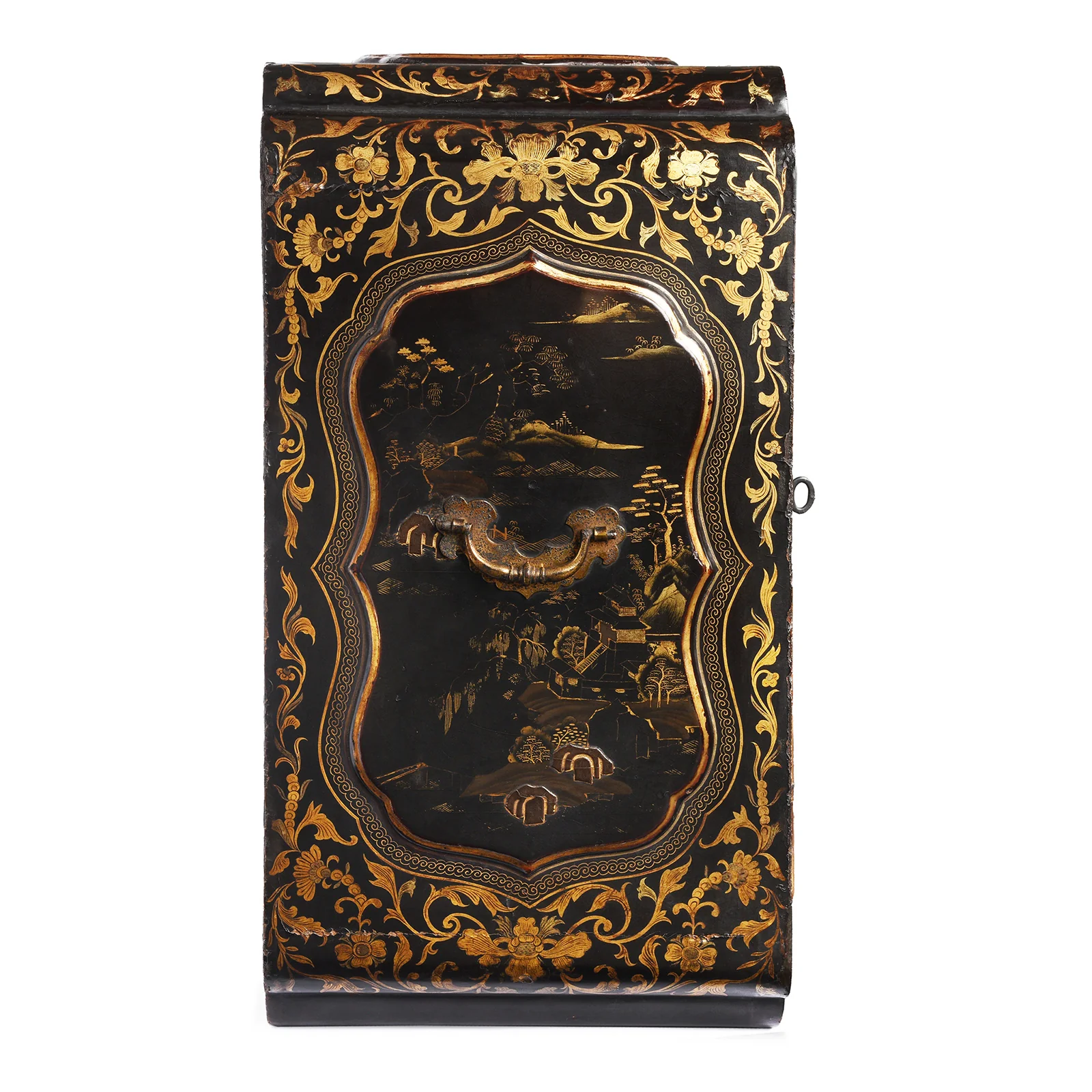
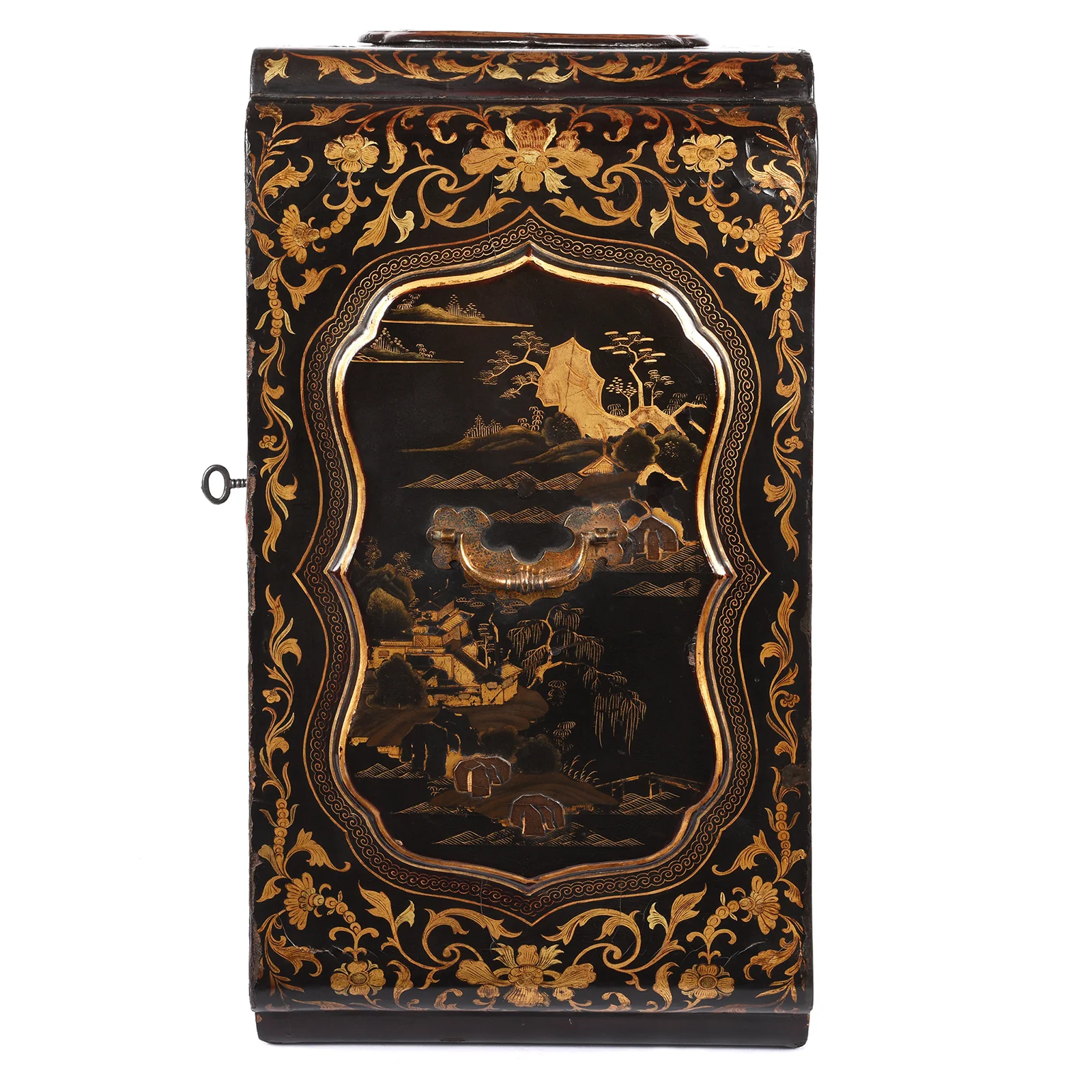
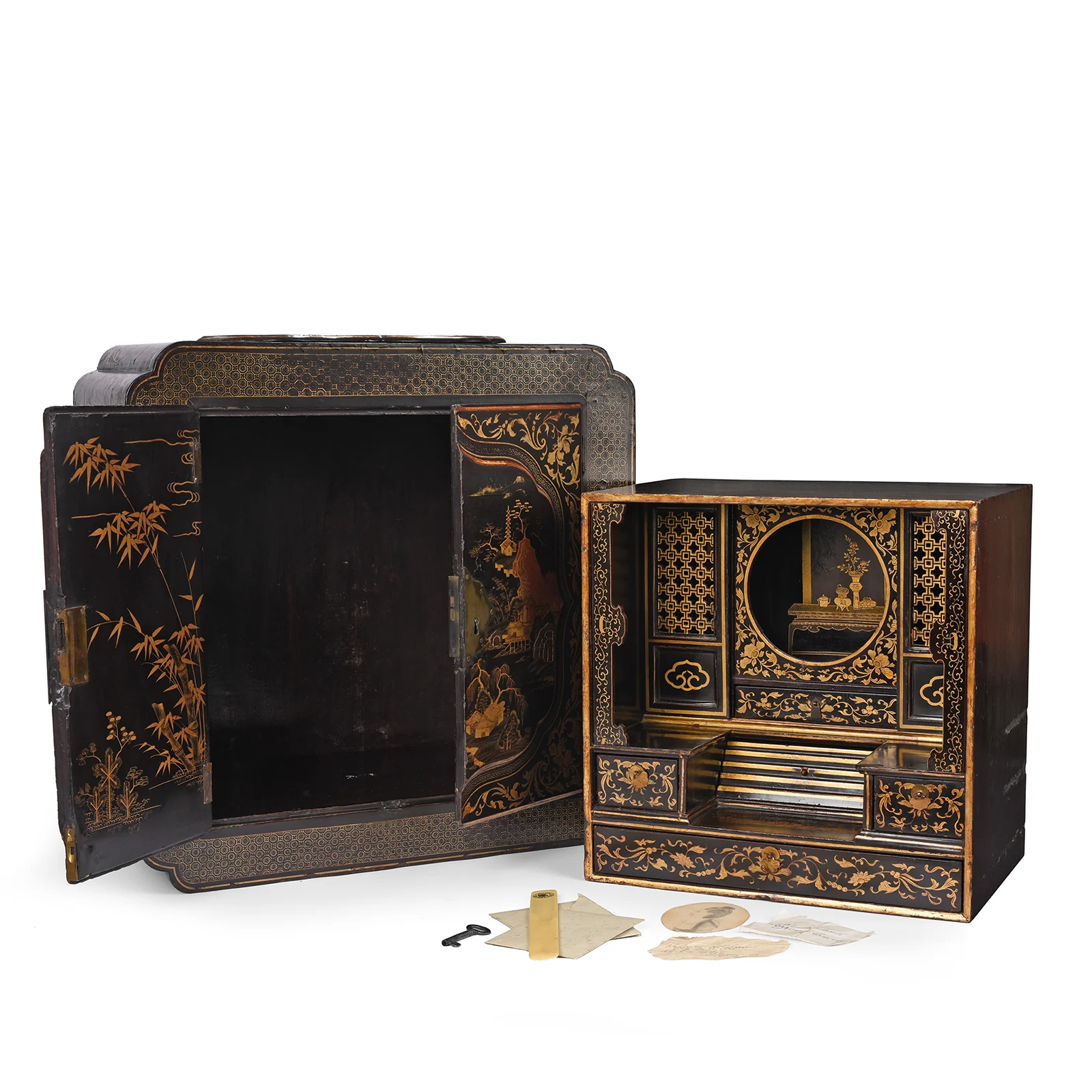
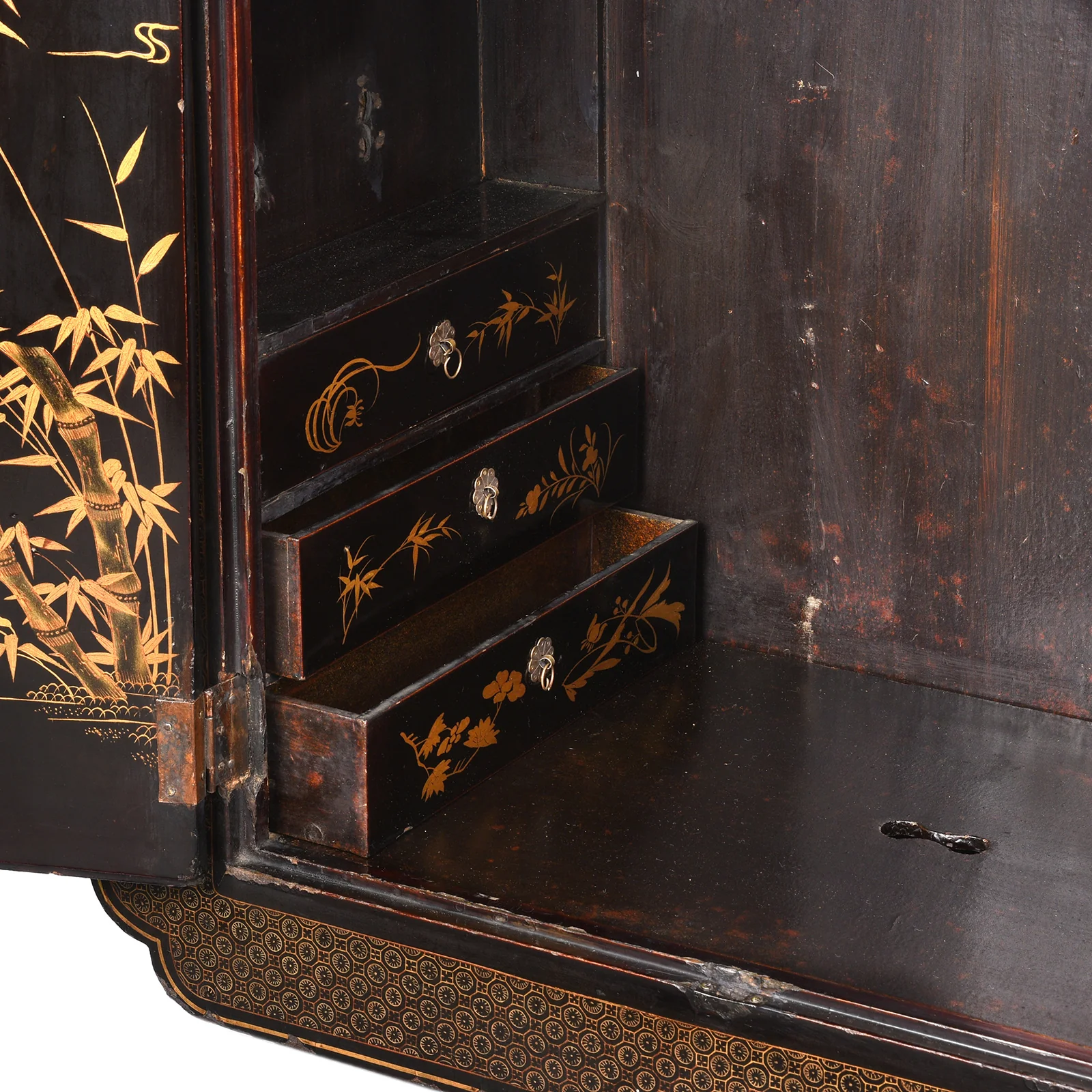
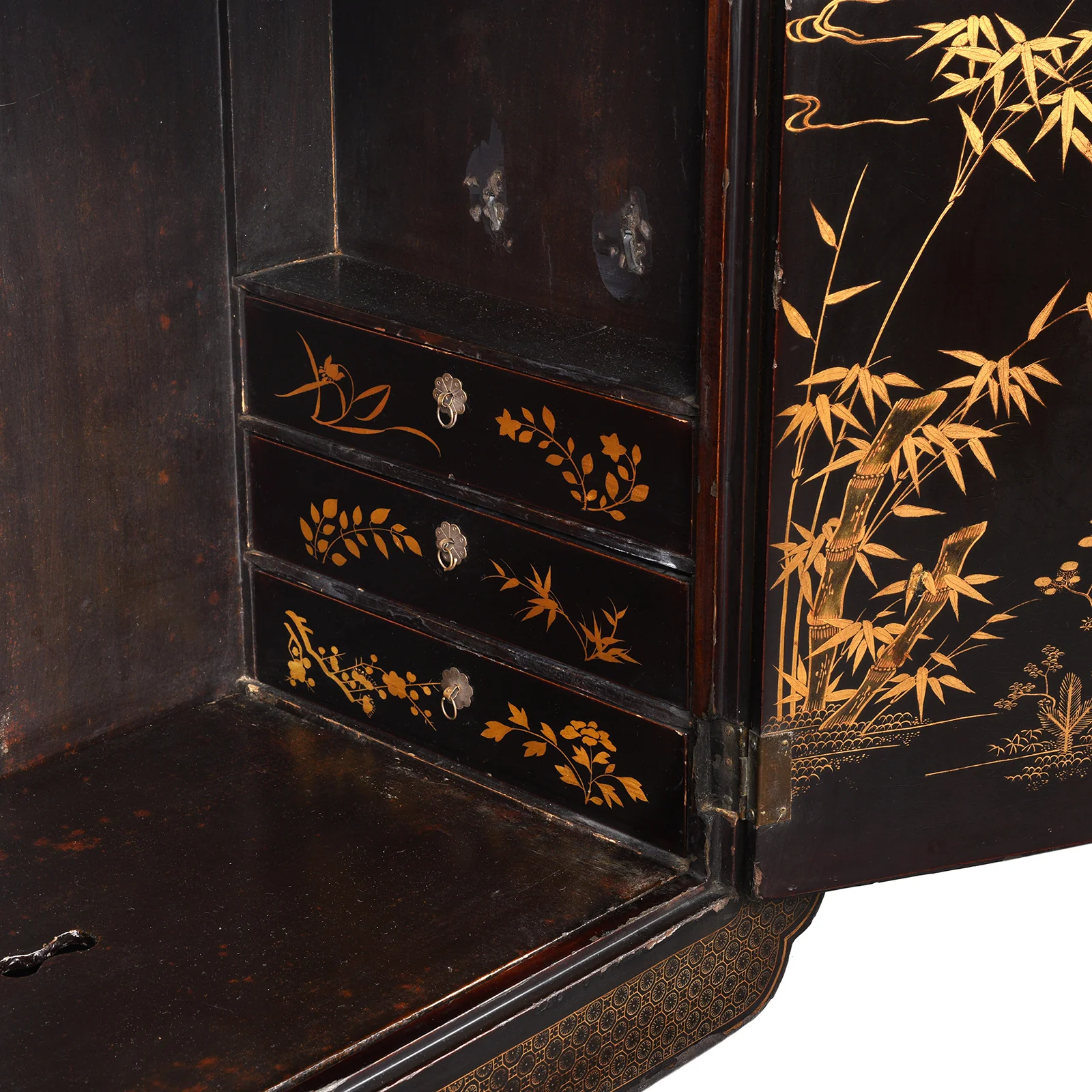
The front of the cabinet depicts raised panels of gilt buildings and landscapes with the top front and sides surrounded by flowers and foliage. The interiors of the doors depict bamboo, pine, and prunus. The elaborate interior is a Japanese temple with a central drawer forming steps leading to a circular window with a view of a table with Buddhist emblems on two small drawers. The interior box can be removed to reveal secret drawers.
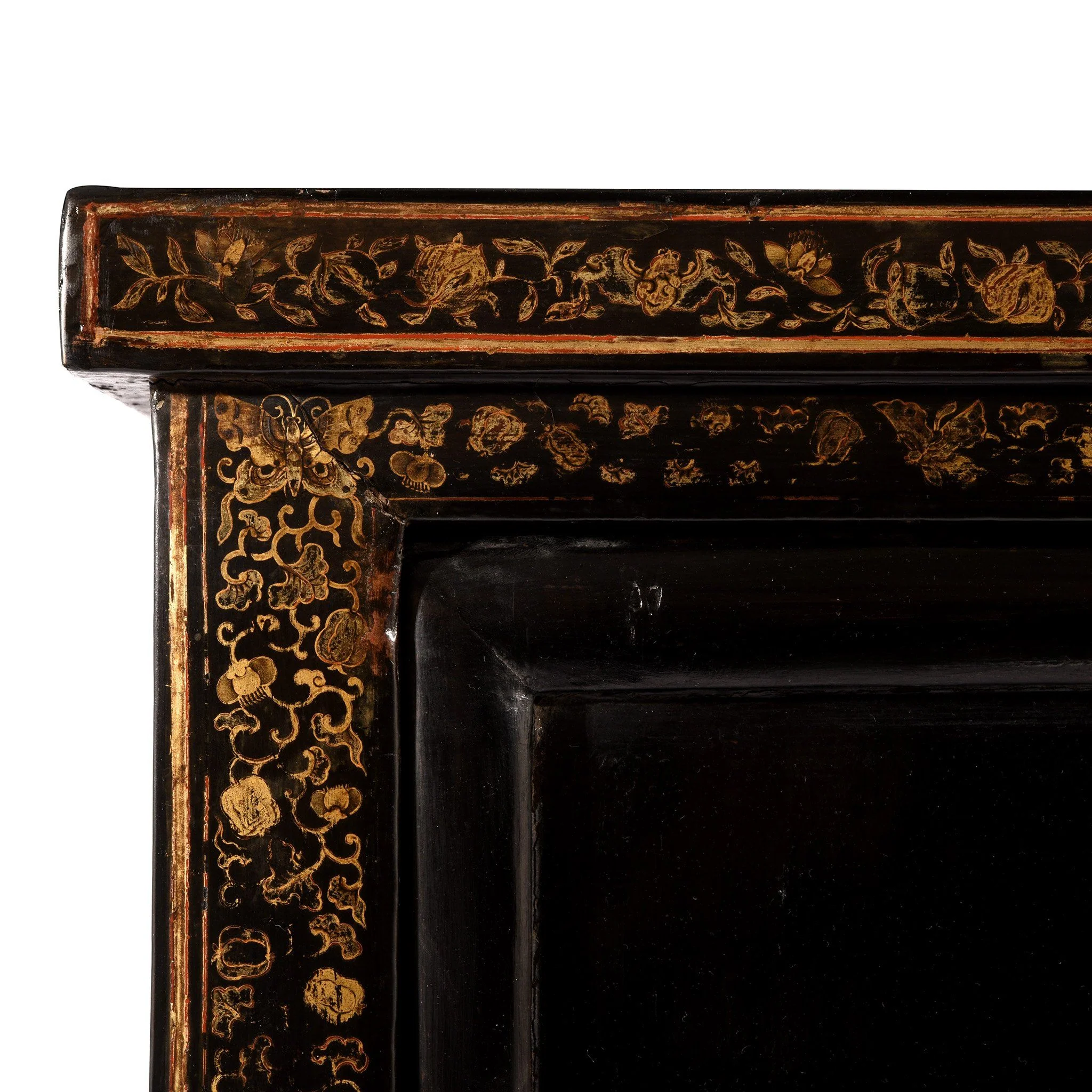
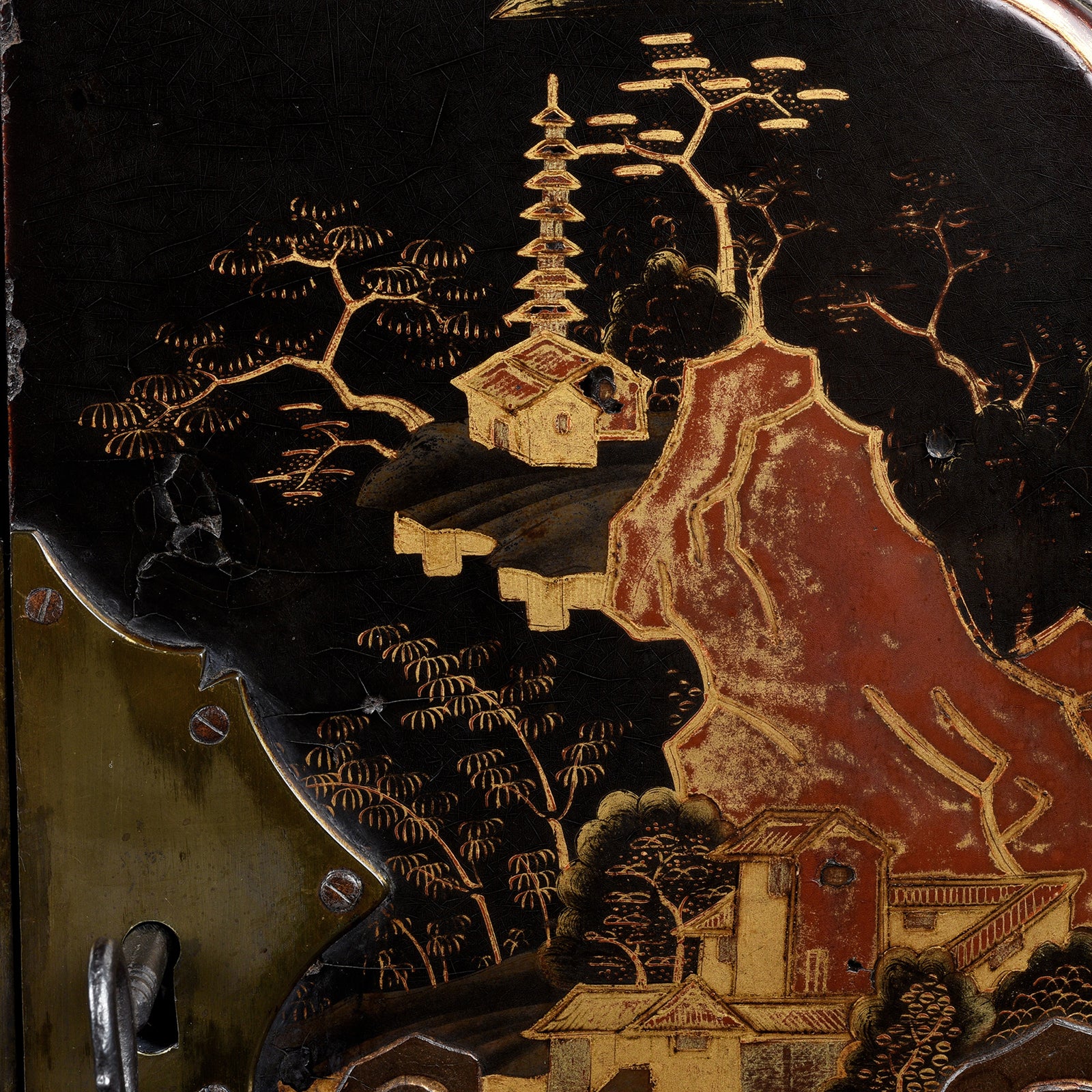
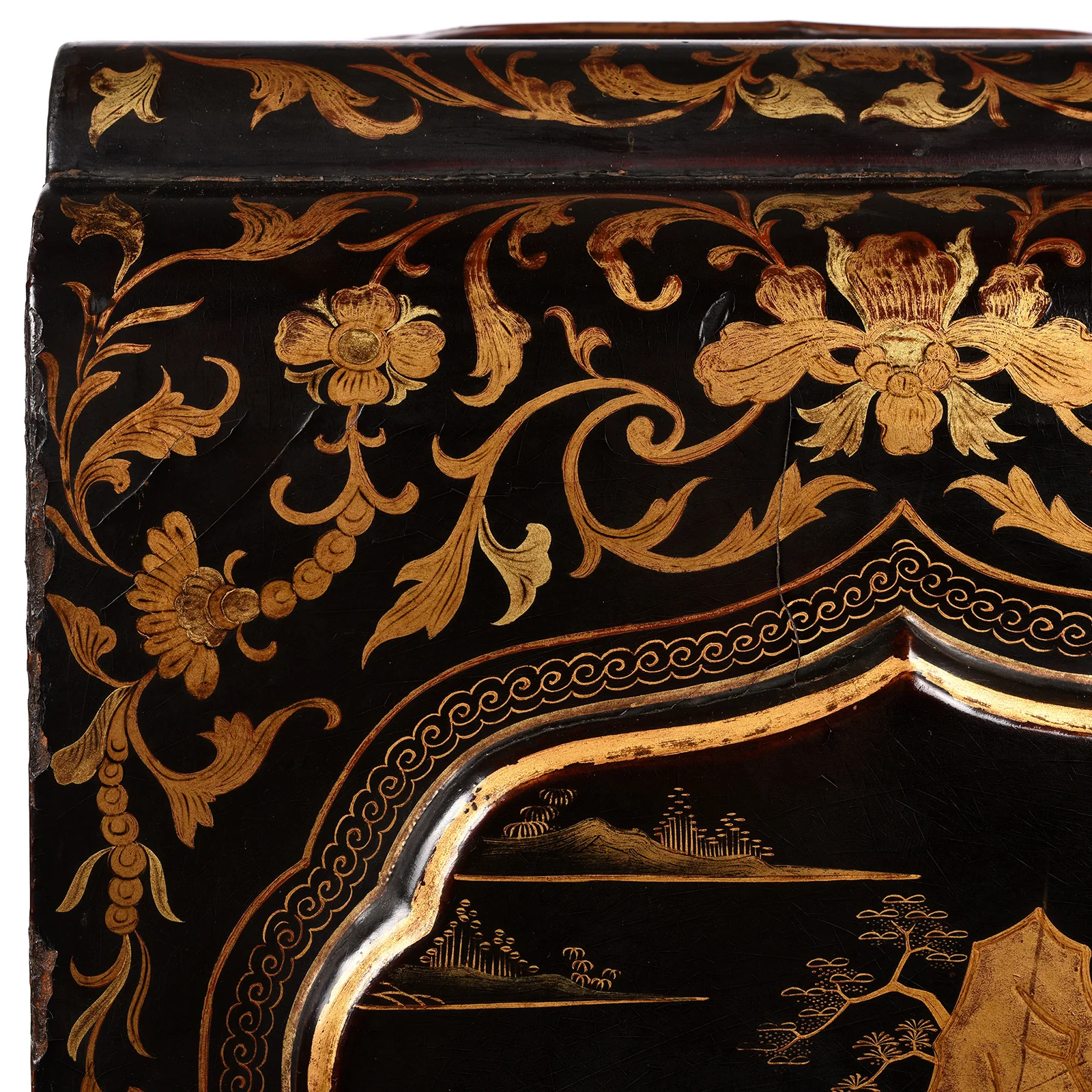
This gilt work would have been done using the maki-e technique which was perfected in Japan. This technique involves sprinkling pure gold dust onto urushi lacquer as it dries. An incredibly sophisticated and advanced technique. The textured work is created by layering red lacquer before finishing.
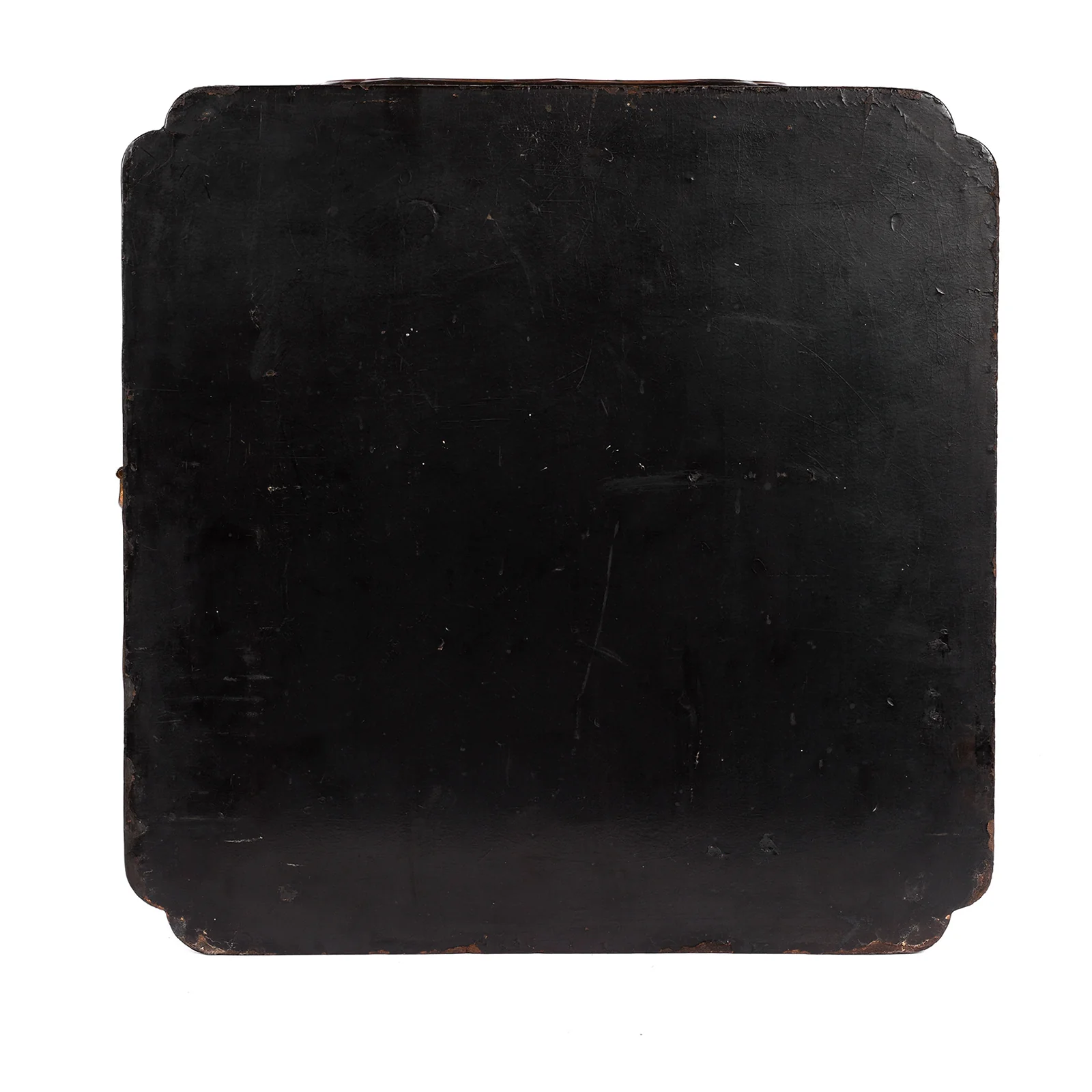
These pieces are fragile pieces of history and are usually found damaged especially the tops, however, the condition of this piece is excellent given its fragility & age. This jewellery cabinet has been checked over in our workshop and small restorations made to stop the aging process. There are areas of visible wear which can be seen in the photographs.
Similar examples and further information can be found in The Decorative Arts of The China Trade by Crossman.
A nearly identical cabinet likely made by the same workshop in Canton can be found in Christchurch Mansion in Ipswich.
Dimensions:
35.5 x 28 x 52 (wxdxh cms)
From China
UK Delivery Charge - except Highlands & Islands £15
More delivery options available at checkout
More Images
Gilt Black Lacquer Chinese Export Shrine Cabinet - Ca 1820
This excellent Chinese export cabinet is one of a kind, deeply unusual in form, and comes with excellent provenance. It's one of the highest quality Chinese export cabinets we've seen and is on par with many of the pieces in the Peabody Essex Museum, the leading museum for Canton export ware.
The cabinet was made in Canton in the early 19th century and merges traditional Chinese black lacquer & maki-e gilt work with British brass hardware & depictions of Japanese style shrines. This cabinet was purchased from Apperly Court in Gloucestershire and was purchased by Algernon Strickland (1816 - 18/09/1835) as a present to his 'Aunt Julia' (Juliana Sabrina Strickland 1765 - 21/09/1849) for 'Fanny Strickland' (Frances Strickland, Algernon's sister 1803 - 10/04/1888). As Algernon died in 1835 of Yellow Fever, this cabinet was made before 1832.
These Chinese export table cabinets were made for wealthy members of the Western upper class in the Qing dynasty including the Georgians when Chinoiserie was all the rage in the early 19th century. Black lacquer export sewing kits, game boxes, tea caddies, and chess tables were also made.
The front of the cabinet depicts raised panels of gilt buildings and landscapes with the top front and sides surrounded by flowers and foliage. The interiors of the doors depict bamboo, pine, and prunus. The elaborate interior is a Japanese temple with a central drawer forming steps leading to a circular window with a view of a table with Buddhist emblems on two small drawers. The interior box can be removed to reveal secret drawers.
This gilt work would have been done using the maki-e technique which was perfected in Japan. This technique involves sprinkling pure gold dust onto urushi lacquer as it dries. An incredibly sophisticated and advanced technique. The textured work is created by layering red lacquer before finishing.
These pieces are fragile pieces of history and are usually found damaged especially the tops, however, the condition of this piece is excellent given its fragility & age. This jewellery cabinet has been checked over in our workshop and small restorations made to stop the aging process. There are areas of visible wear which can be seen in the photographs.
Similar examples and further information can be found in The Decorative Arts of The China Trade by Crossman.
A nearly identical cabinet likely made by the same workshop in Canton can be found in Christchurch Mansion in Ipswich.
Dimensions:
35.5 x 28 x 52 (wxdxh cms)
From China
UK Delivery Charge - except Highlands & Islands £15
More delivery options available at checkout
Product Information
Product Information
Shipping & Returns
Shipping & Returns
Description
This excellent Chinese export cabinet is one of a kind, deeply unusual in form, and comes with excellent provenance. It's one of the highest quality Chinese export cabinets we've seen and is on par with many of the pieces in the Peabody Essex Museum, the leading museum for Canton export ware.
The cabinet was made in Canton in the early 19th century and merges traditional Chinese black lacquer & maki-e gilt work with British brass hardware & depictions of Japanese style shrines. This cabinet was purchased from Apperly Court in Gloucestershire and was purchased by Algernon Strickland (1816 - 18/09/1835) as a present to his 'Aunt Julia' (Juliana Sabrina Strickland 1765 - 21/09/1849) for 'Fanny Strickland' (Frances Strickland, Algernon's sister 1803 - 10/04/1888). As Algernon died in 1835 of Yellow Fever, this cabinet was made before 1832.
These Chinese export table cabinets were made for wealthy members of the Western upper class in the Qing dynasty including the Georgians when Chinoiserie was all the rage in the early 19th century. Black lacquer export sewing kits, game boxes, tea caddies, and chess tables were also made.
The front of the cabinet depicts raised panels of gilt buildings and landscapes with the top front and sides surrounded by flowers and foliage. The interiors of the doors depict bamboo, pine, and prunus. The elaborate interior is a Japanese temple with a central drawer forming steps leading to a circular window with a view of a table with Buddhist emblems on two small drawers. The interior box can be removed to reveal secret drawers.
This gilt work would have been done using the maki-e technique which was perfected in Japan. This technique involves sprinkling pure gold dust onto urushi lacquer as it dries. An incredibly sophisticated and advanced technique. The textured work is created by layering red lacquer before finishing.
These pieces are fragile pieces of history and are usually found damaged especially the tops, however, the condition of this piece is excellent given its fragility & age. This jewellery cabinet has been checked over in our workshop and small restorations made to stop the aging process. There are areas of visible wear which can be seen in the photographs.
Similar examples and further information can be found in The Decorative Arts of The China Trade by Crossman.
A nearly identical cabinet likely made by the same workshop in Canton can be found in Christchurch Mansion in Ipswich.
Dimensions:
35.5 x 28 x 52 (wxdxh cms)
From China
UK Delivery Charge - except Highlands & Islands £15
More delivery options available at checkout