Teak Majus Dowry Chest From Saurashtra - 19th Century
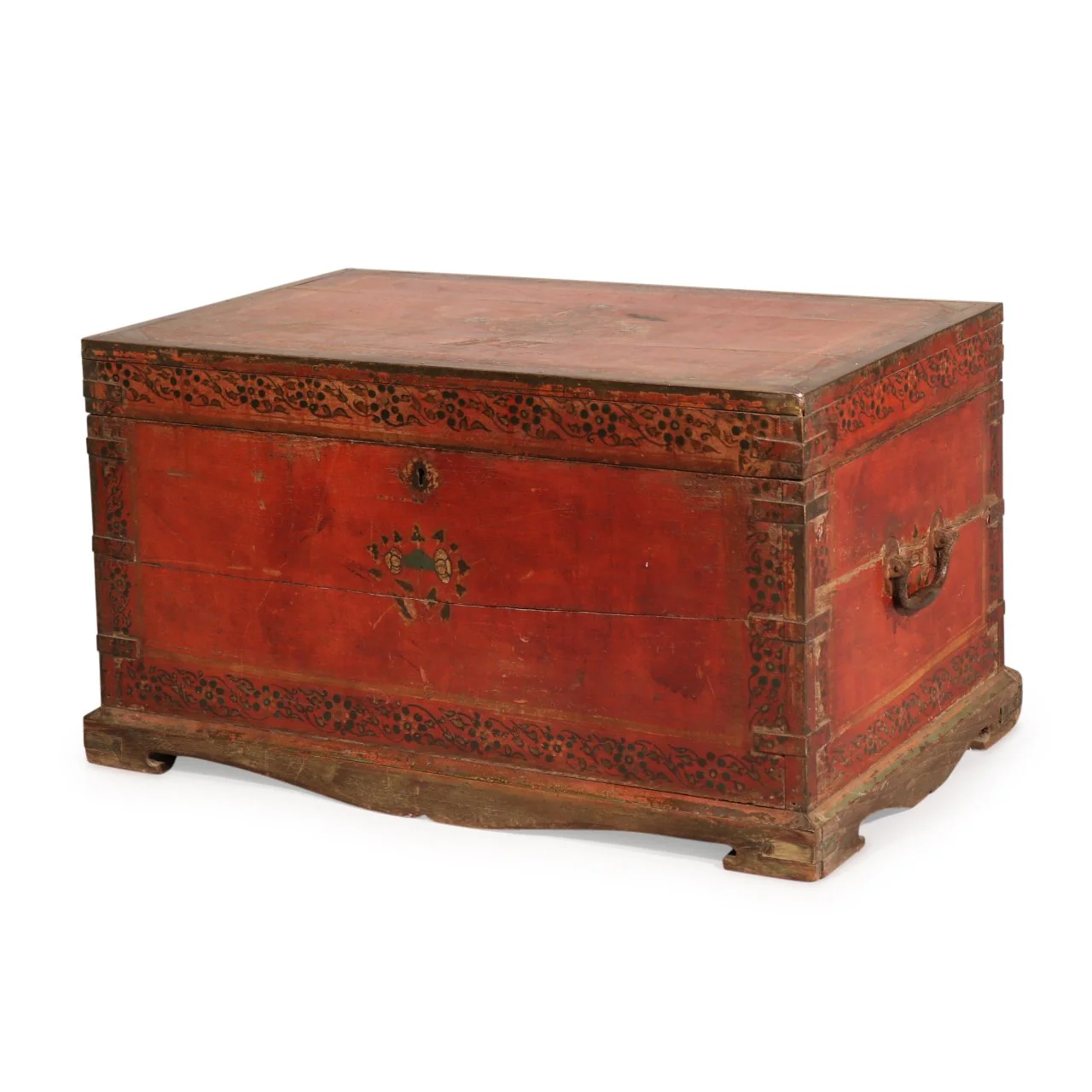
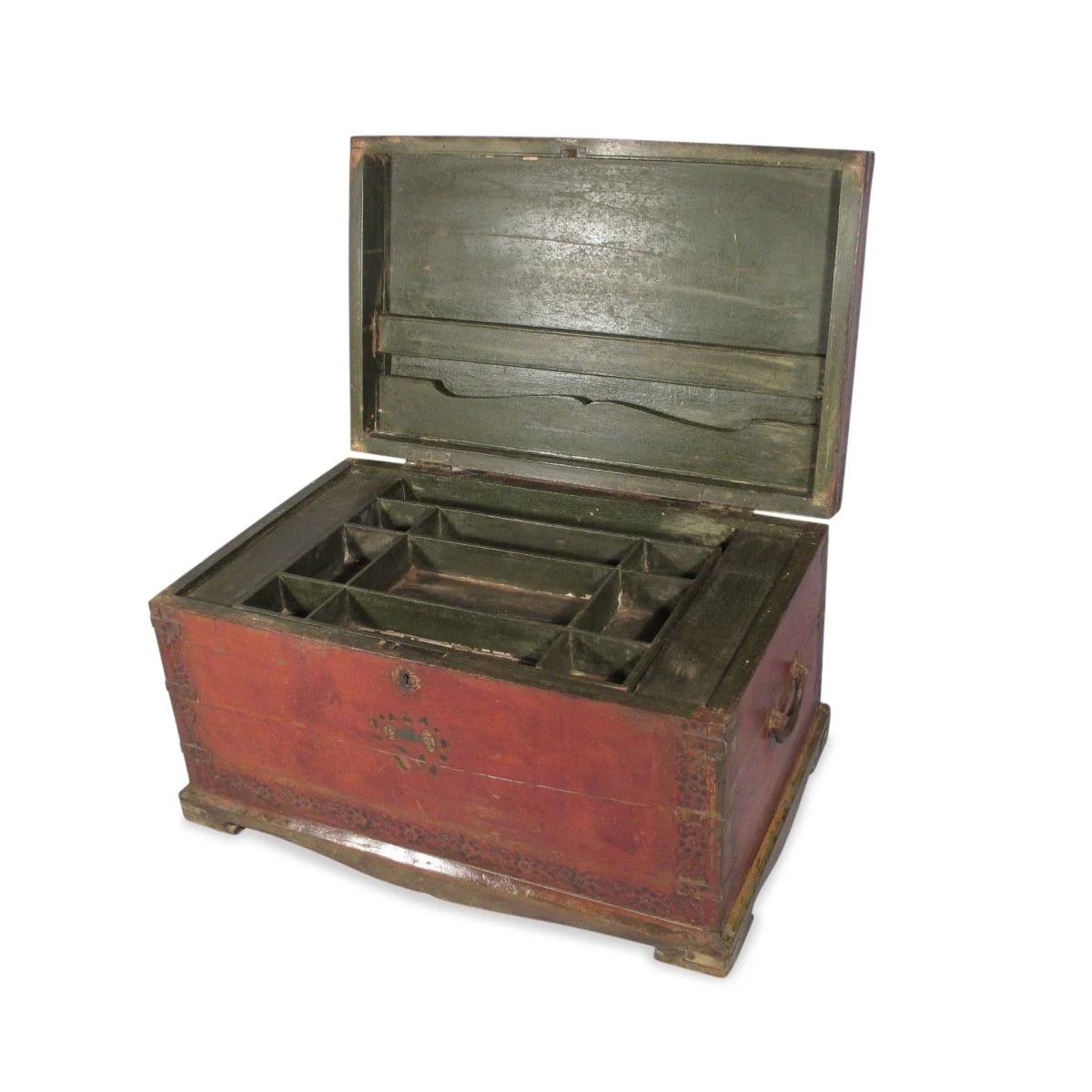
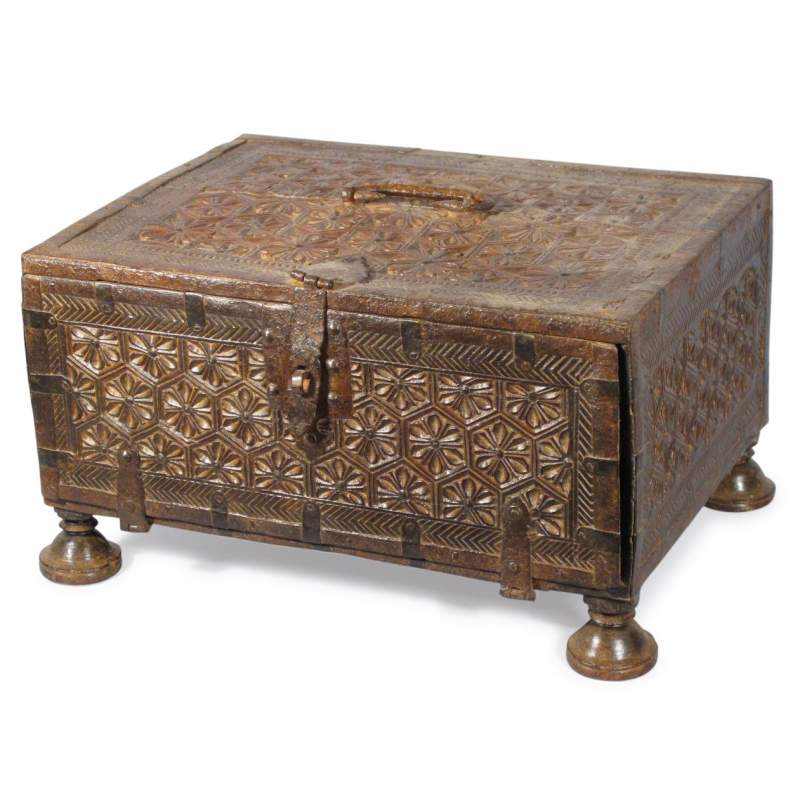
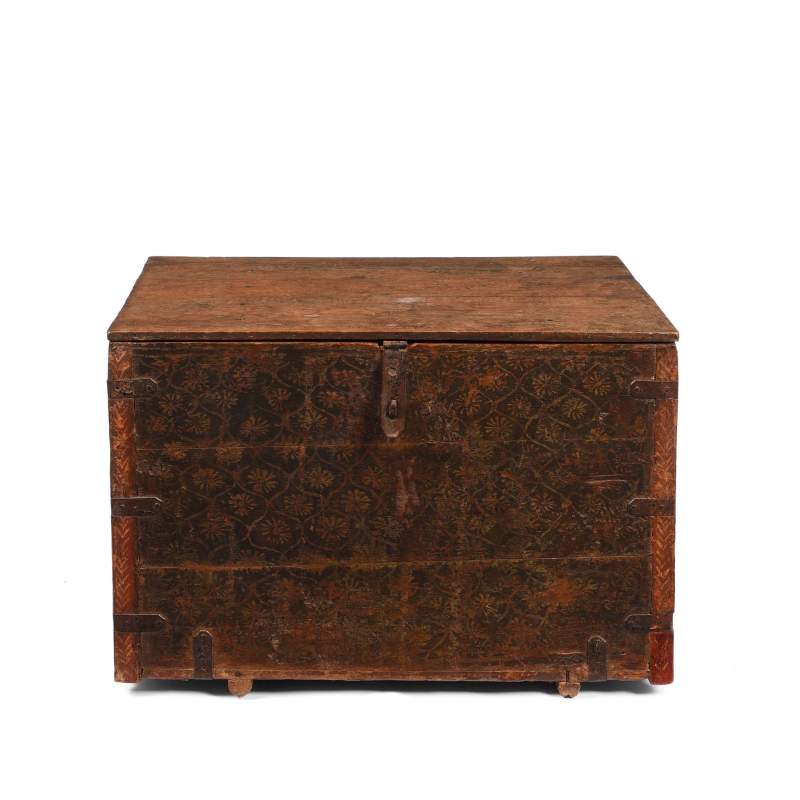
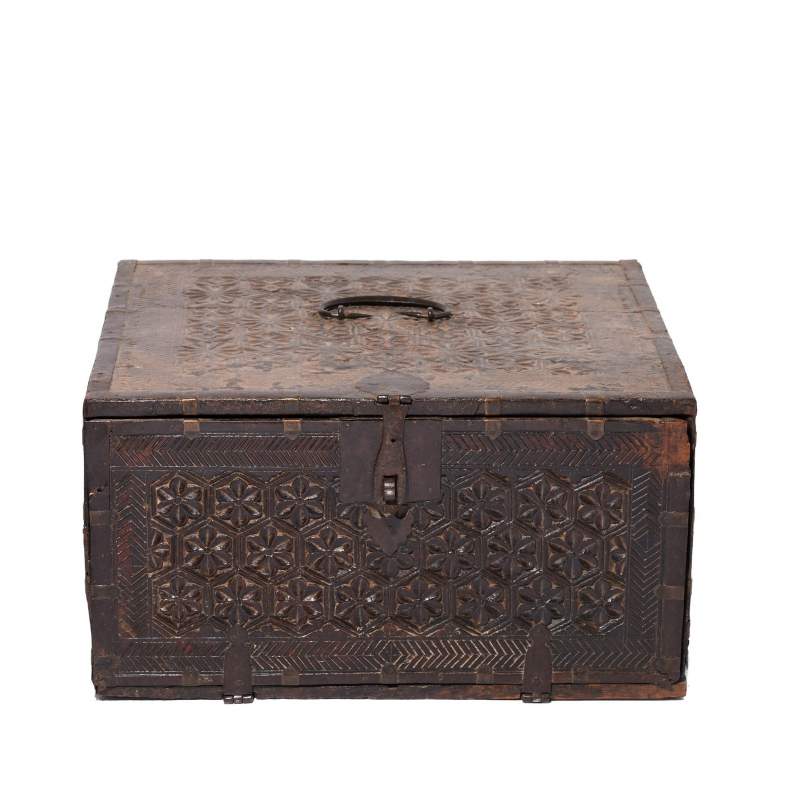
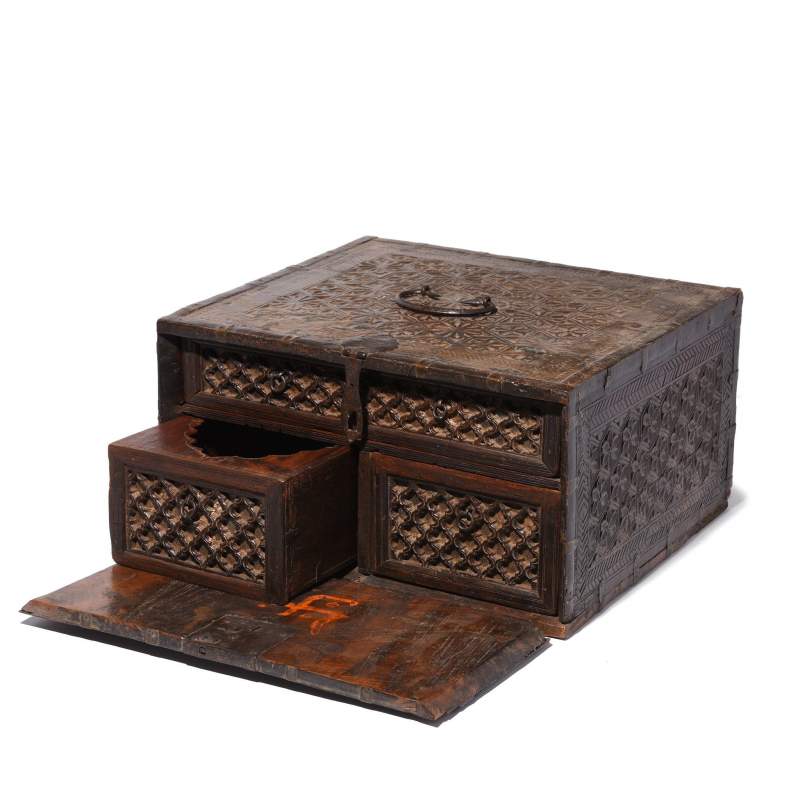
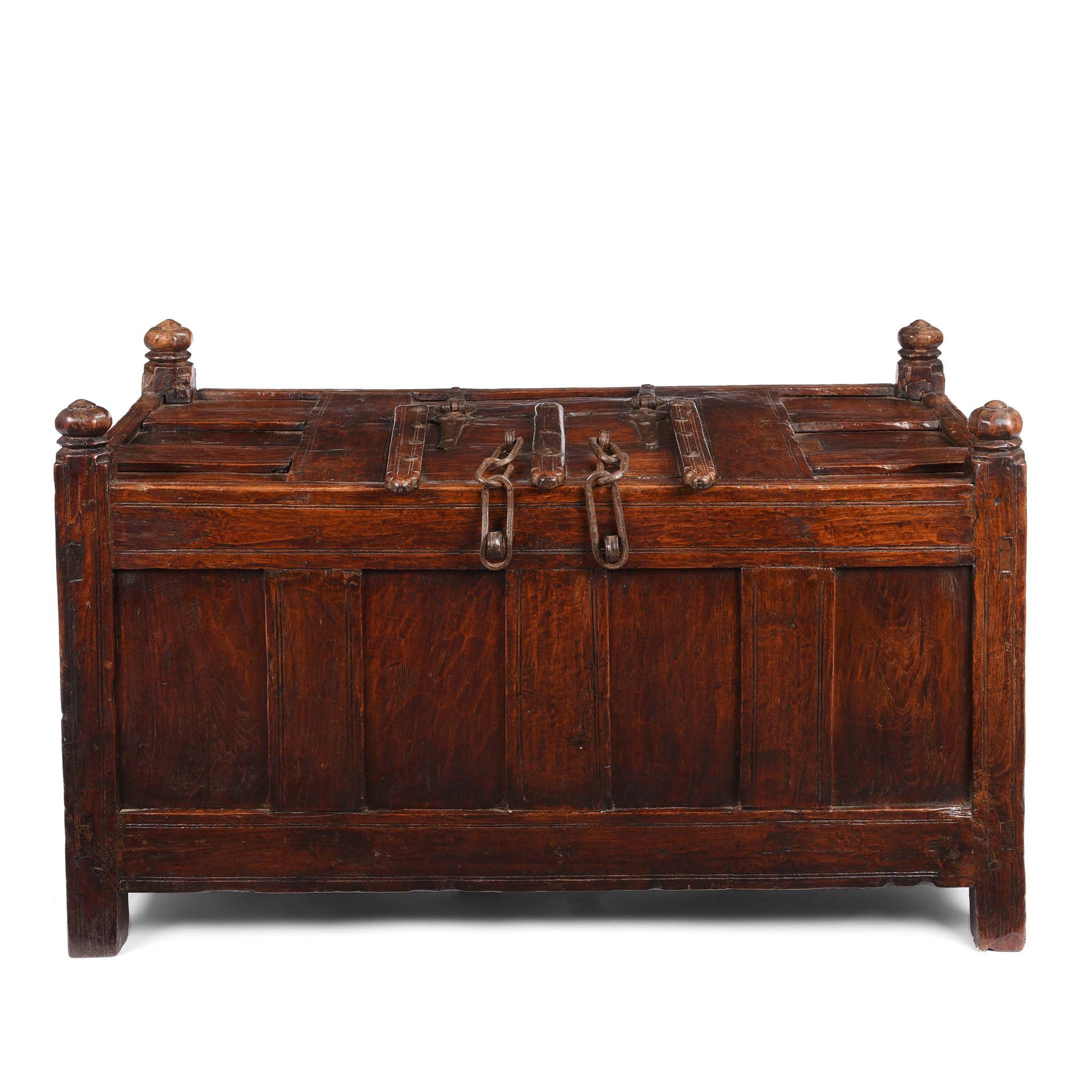
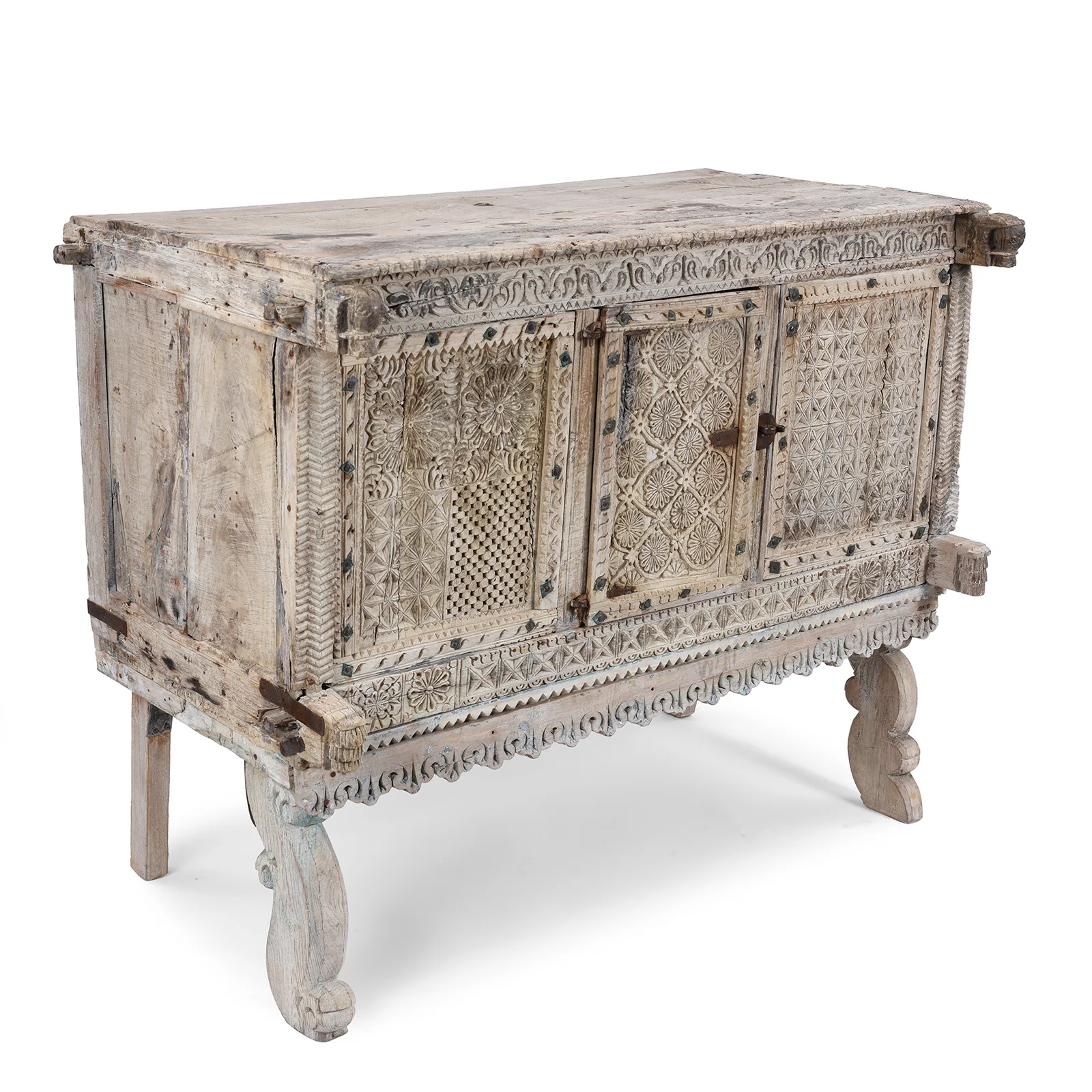
This beautifully carved and bleached antique Indian dowry chest is a classic rustic dowry chest, called a Majus (also spelled Majju or Manjush) chest in India. These chests were traditionally used to transport a bride’s possessions to her new home — including jewellery, silk saris, and brass cooking pots — and were often repurposed for storing food or household valuables.
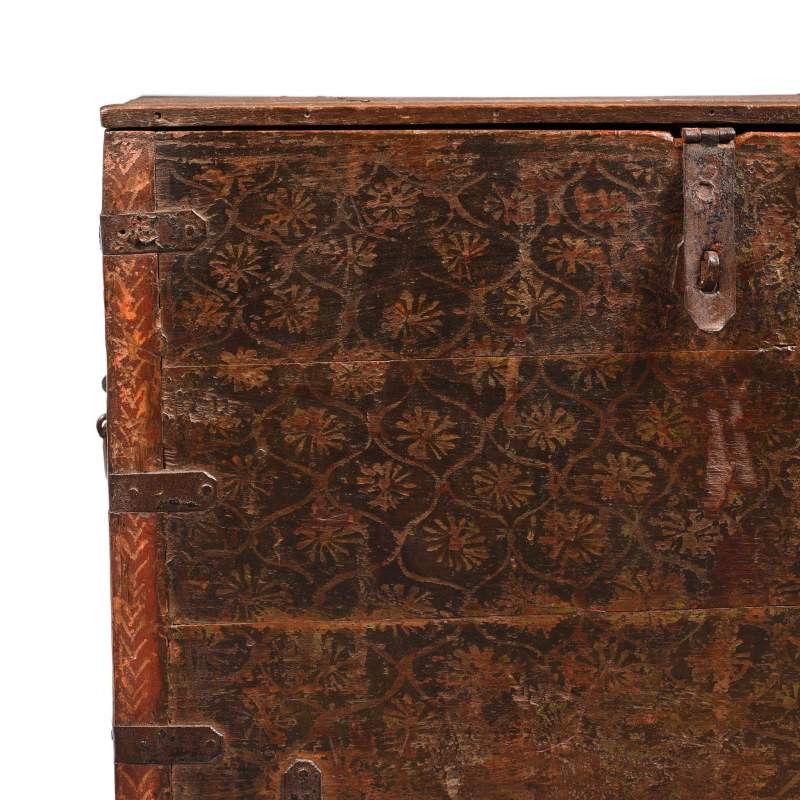
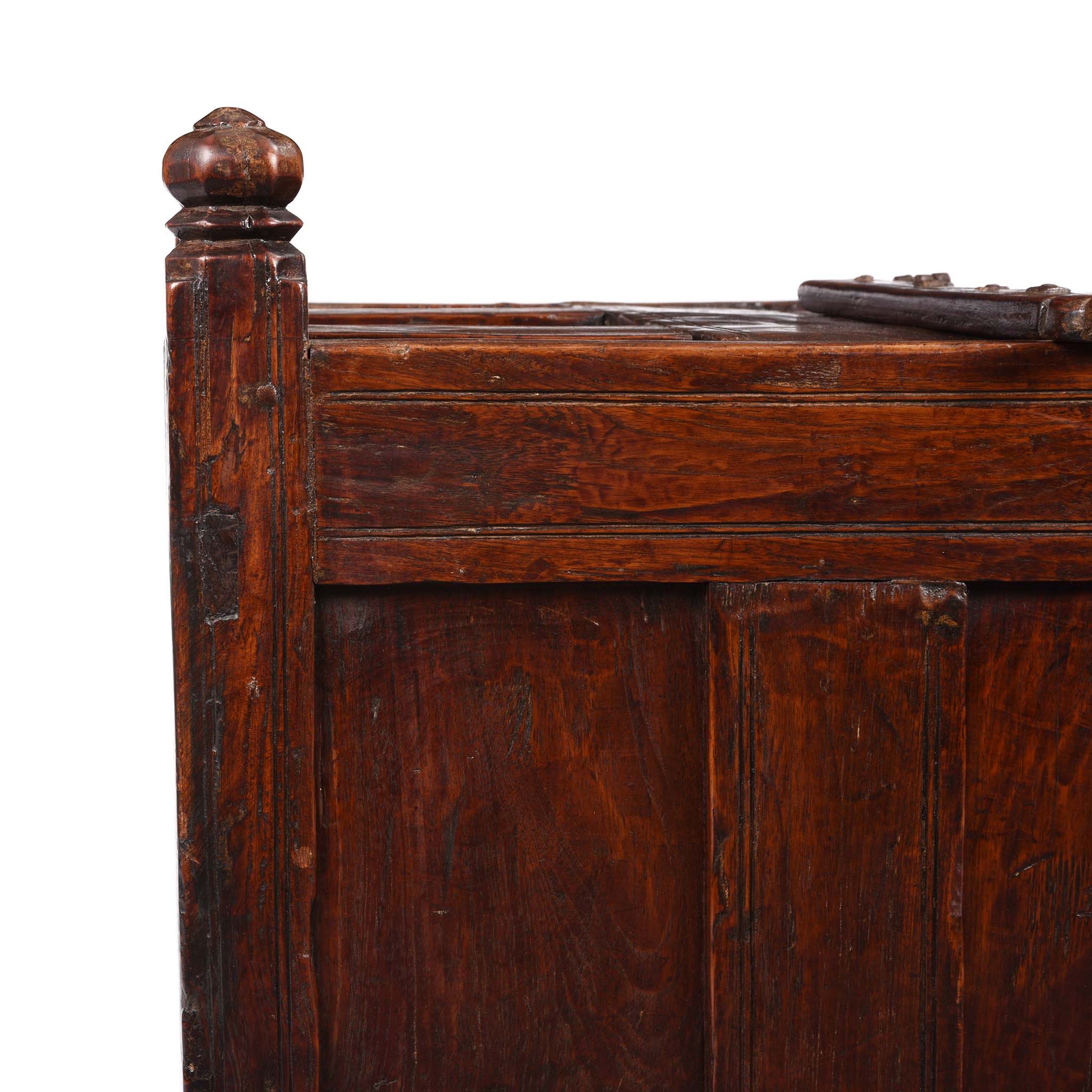
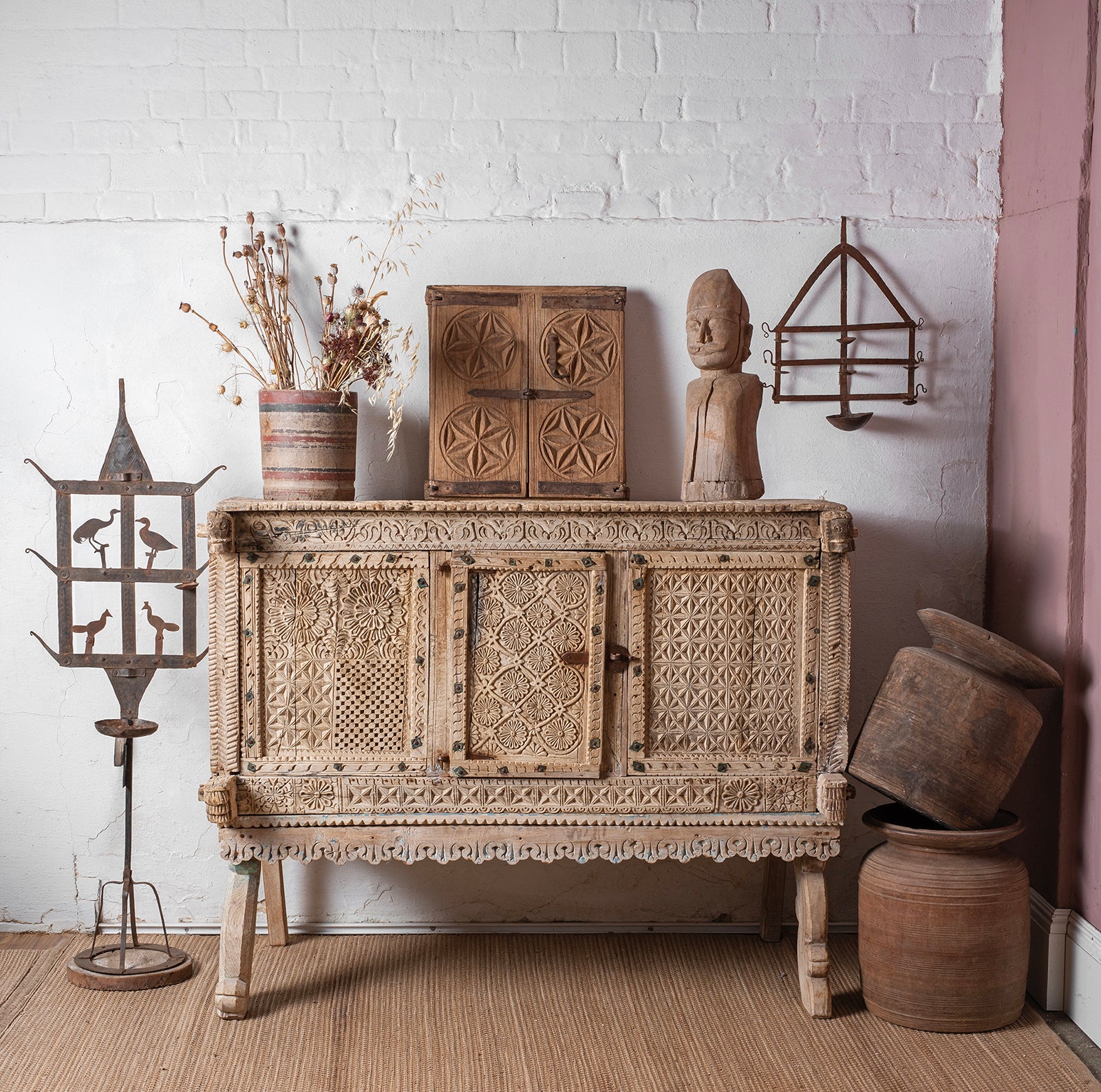
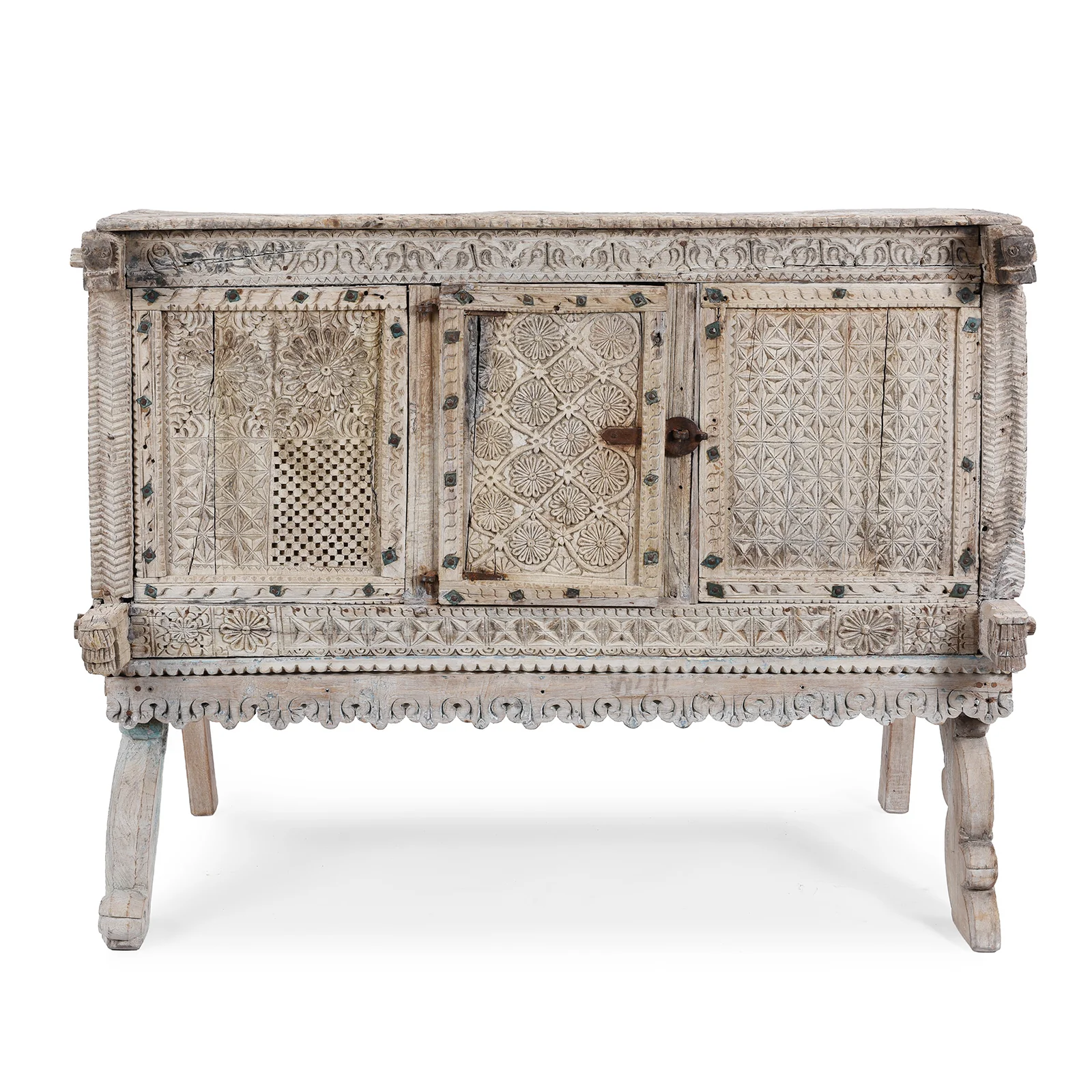
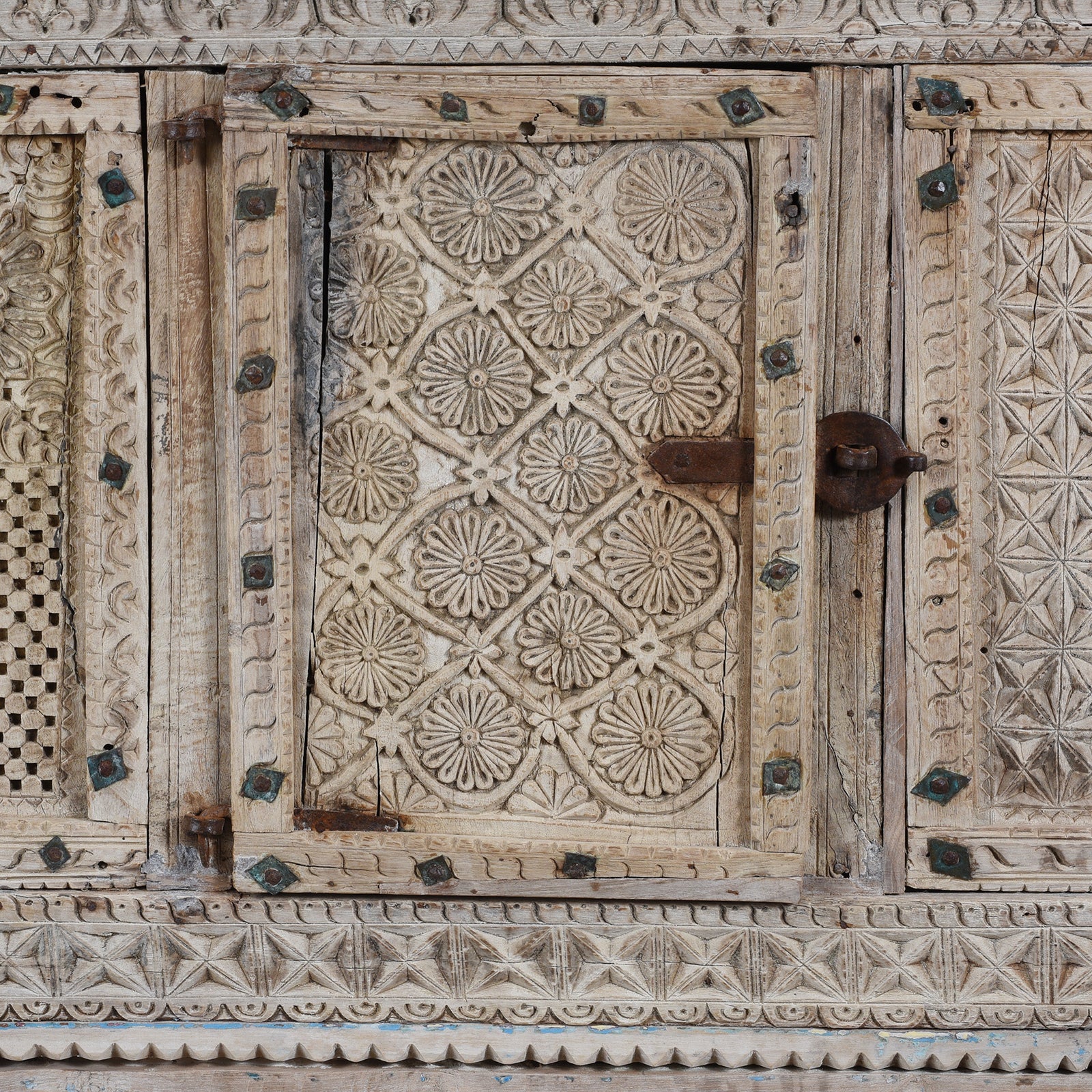
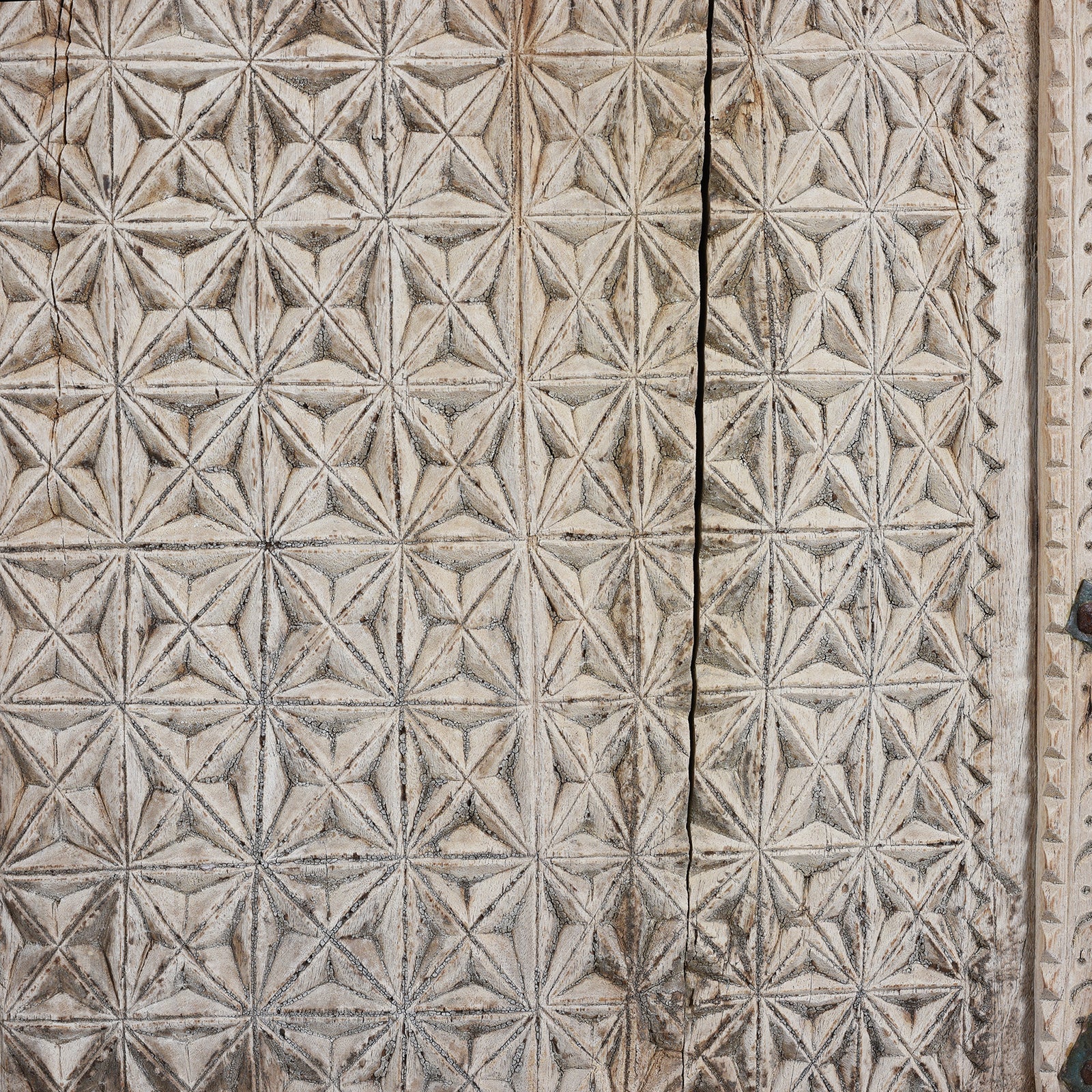
This remarkable example is richly decorated with Mughal-inspired floral and geometric carvings, forming a dense and intricate surface pattern across its front. The chest is framed by delicately carved horse-head finials on each top corner, a distinctive regional feature symbolising strength and protection. Crafted from solid teak wood, the piece retains a bleached, timeworn finish that highlights the depth of its original carving and centuries of use.
Similar examples of these Gujarati dowry chests can be seen in “Folk Art & Culture of Gujarat: A Guide to the Collection of the Shreyas Folk Museum of Gujarat” by Jyotindra Jain.
- Origin: Saurashtra, Gujarat, India
- Date: 19th Century
- Materials: Solid teak wood
- Features: Deep geometric and floral carving, horse-head corner finials, original iron fittings, bleached patina
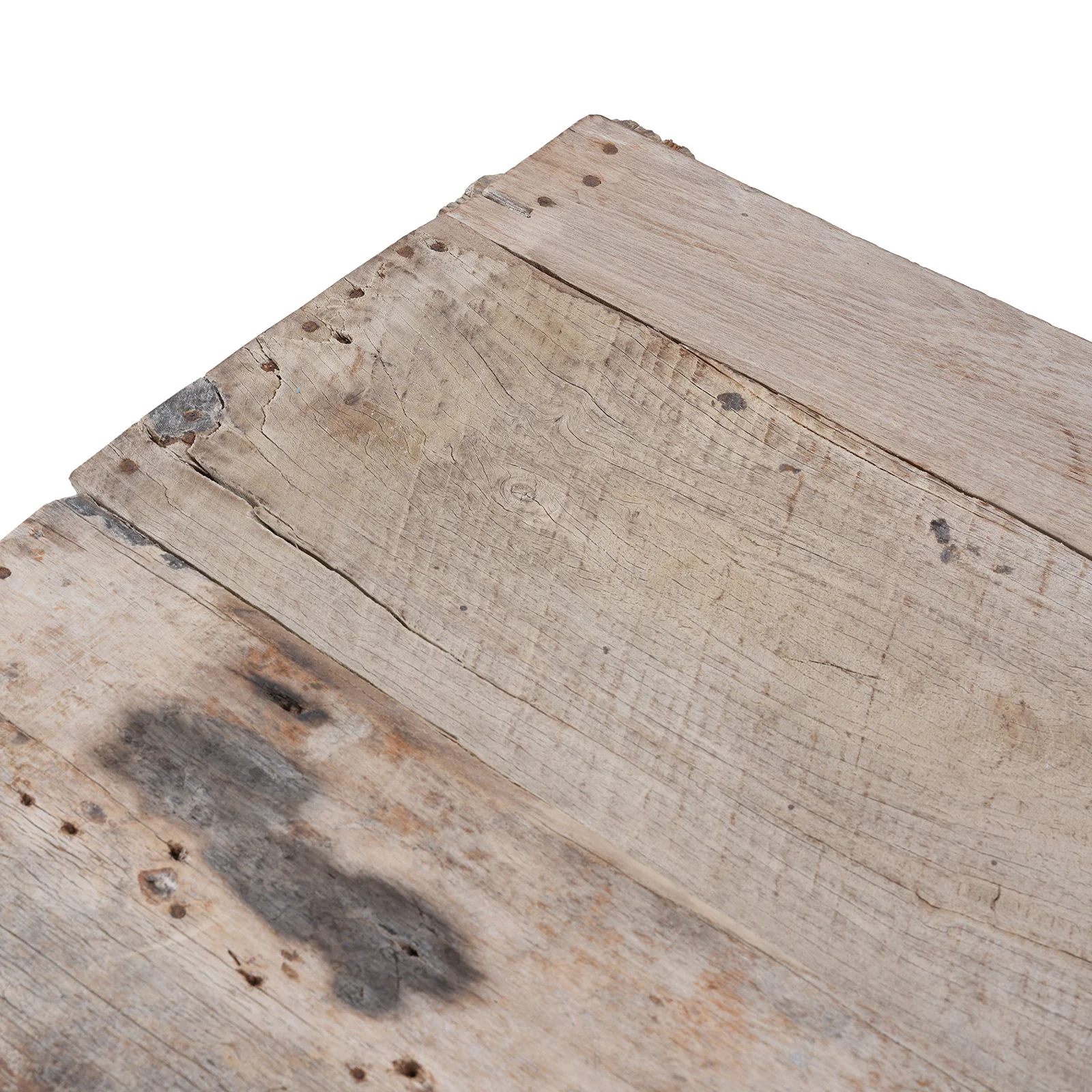
- Condition: Naturally aged surface with weathering and wear consistent with age and use
- Dimensions: W120 x D65 x H97 cm
- Reference: Folk Art & Culture of Gujarat by Jyotindra Jain, Shreyas Folk Museum of Gujarat
Original: $2,545.48
-65%$2,545.48
$890.92More Images






Teak Majus Dowry Chest From Saurashtra - 19th Century
This beautifully carved and bleached antique Indian dowry chest is a classic rustic dowry chest, called a Majus (also spelled Majju or Manjush) chest in India. These chests were traditionally used to transport a bride’s possessions to her new home — including jewellery, silk saris, and brass cooking pots — and were often repurposed for storing food or household valuables.
This remarkable example is richly decorated with Mughal-inspired floral and geometric carvings, forming a dense and intricate surface pattern across its front. The chest is framed by delicately carved horse-head finials on each top corner, a distinctive regional feature symbolising strength and protection. Crafted from solid teak wood, the piece retains a bleached, timeworn finish that highlights the depth of its original carving and centuries of use.
Similar examples of these Gujarati dowry chests can be seen in “Folk Art & Culture of Gujarat: A Guide to the Collection of the Shreyas Folk Museum of Gujarat” by Jyotindra Jain.
- Origin: Saurashtra, Gujarat, India
- Date: 19th Century
- Materials: Solid teak wood
- Features: Deep geometric and floral carving, horse-head corner finials, original iron fittings, bleached patina
- Condition: Naturally aged surface with weathering and wear consistent with age and use
- Dimensions: W120 x D65 x H97 cm
- Reference: Folk Art & Culture of Gujarat by Jyotindra Jain, Shreyas Folk Museum of Gujarat
Product Information
Product Information
Shipping & Returns
Shipping & Returns
Description
This beautifully carved and bleached antique Indian dowry chest is a classic rustic dowry chest, called a Majus (also spelled Majju or Manjush) chest in India. These chests were traditionally used to transport a bride’s possessions to her new home — including jewellery, silk saris, and brass cooking pots — and were often repurposed for storing food or household valuables.
This remarkable example is richly decorated with Mughal-inspired floral and geometric carvings, forming a dense and intricate surface pattern across its front. The chest is framed by delicately carved horse-head finials on each top corner, a distinctive regional feature symbolising strength and protection. Crafted from solid teak wood, the piece retains a bleached, timeworn finish that highlights the depth of its original carving and centuries of use.
Similar examples of these Gujarati dowry chests can be seen in “Folk Art & Culture of Gujarat: A Guide to the Collection of the Shreyas Folk Museum of Gujarat” by Jyotindra Jain.
- Origin: Saurashtra, Gujarat, India
- Date: 19th Century
- Materials: Solid teak wood
- Features: Deep geometric and floral carving, horse-head corner finials, original iron fittings, bleached patina
- Condition: Naturally aged surface with weathering and wear consistent with age and use
- Dimensions: W120 x D65 x H97 cm
- Reference: Folk Art & Culture of Gujarat by Jyotindra Jain, Shreyas Folk Museum of Gujarat